
If you’ve spent any time around comic book fans, you’ve heard the term thrown around like everyone already knows what it means. “Claremont’s X-Men run is the greatest ever.” “You gotta read Hickman’s run.” But what is a comic book run, exactly? It’s not just a stack of consecutive issues. It’s something more specific, more exciting, and honestly more important to understanding comics as both an art form and a collectible. Whether you’re a new reader or a seasoned collector brushing up on the basics, this guide breaks it all down.
Table of Contents
- Key Takeaways
- What is a comic book run, really?
- Why runs matter for storytelling
- Runs and collecting: what you need to know
- How to read comic book runs today
- Our take on why runs are everything
- Track and value your runs with Zap-Kapow Comics Club
- FAQ
Key Takeaways
| Point | Details |
|---|---|
| Runs are about creative teams | A comic book run is defined by who writes and draws it, not just the issue numbers. |
| Runs shape character identity | The best runs redefine how fans understand a character for years, even decades. |
| Storytelling arcs form within runs | Most runs contain multiple story arcs of 2 to 6 issues that build a larger narrative. |
| Collecting runs means chasing legacy | Collectors prize runs for creative impact and story significance, not just rarity alone. |
| New readers can start anywhere | You don’t need decades of back issues. Jumping-on points make runs accessible right now. |
What is a comic book run, really?
A comic book run is a series of issues on a title produced by the same core creative team, typically a writer and artist, forming a cohesive body of work. Think of it less like a playlist and more like an album. The individual songs (issues) connect, build on each other, and together say something a single issue never could.
According to one story-focused breakdown, runs consist of multiple story arcs, each spanning roughly 2 to 6 issues, that contribute to a larger narrative structure focused on character or team development. When a run ends, usually because the creative team changes, the book often shifts in tone, style, and direction. That shift is what marks one era from the next.
Here’s where the confusion happens. A lot of people assume a run is just any string of issues from the same series. It’s not quite that simple. The comic book run meaning is really about creative consistency. You could have the same title running for 300 issues with 10 different writers. That’s one series, but potentially 10 different runs.
It’s also worth knowing the differences between formats:
- Ongoing series: A title with no predetermined end date, where multiple runs can happen over decades (think Amazing Spider-Man or Batman).
- Limited series: A story with a fixed number of issues, typically with a defined endpoint. These are essentially one self-contained run by design.
- Miniseries: Very similar to a limited series, just usually shorter (4 to 6 issues).
- Run within an ongoing: A creator’s tenure on a long-running title. This is the most common use of the term.
Chris Claremont’s 17-year X-Men run from issue #94 to #279 is the gold standard example. Same title, same universe, but his era is treated as its own distinct creative world. That’s the run.
Pro Tip: When researching a character, look up who wrote the title during a particular era first. That creative team tells you more about the tone and quality of the story than the issue numbers alone.
Why runs matter for storytelling
Here’s the thing about serialized comics. A single issue can be great. But it takes a run to truly transform a character. That’s the magic of the format.
Creative consistency allows writers and artists to develop themes, plant seeds, and pay them off across dozens of issues. That level of depth is hard to achieve when creators rotate every arc. When a creative team has time to breathe, you get richer character exploration, more meaningful story beats, and a sense that someone genuinely cares about where the story is going.
Think about it this way:
- Runs establish a character’s voice. The way Spider-Man sounds, the moral dilemmas he faces, even his humor. These get defined and refined over a long run by a single writer who has a clear vision.
- Runs create tonal eras. Frank Miller’s Daredevil run made the character dark and street-level. That wasn’t just a story choice. It reshaped how Daredevil was written for the next 40 years.
- Runs act as entry points. New readers don’t need to start at issue #1 from 1963. A new creative team taking over a title is a natural jumping-on point with a fresh story direction.
- Runs leave legacies. Jonathan Hickman’s House of X/Powers of X redefined mutant society so thoroughly that every X-Men story since has operated in the world he built. That’s the power of a run done right.
Major publishers have leaned into this with intentional strategy. Marvel’s 2018 “Fresh Start” initiative and DC’s recurring relaunch strategies are specifically designed to create accessible entry points, essentially announcing: “A new run starts here. Come on in.”
“Runs allow deeper exploration of characters than standalone issues ever could. They give creators the space to build something that matters.” — Comic Book Runs from Story Perspective
A creative team change isn’t just a behind-the-scenes shuffle. It’s a signal to readers that the tone, direction, and feel of the book are about to shift. That makes understanding runs genuinely useful for navigating a character’s history.
Runs and collecting: what you need to know
From a collector’s standpoint, the comic book run meaning gets even richer. Collectors don’t just chase issue numbers. They chase legacy. And legacy is built by runs.
Here’s a quick look at how runs compare as collectibles:
| Run type | Collectibility factors | Examples |
|---|---|---|
| Long iconic run | High. Defines a character era, creator legacy is strong | Claremont on X-Men, Miller on Daredevil |
| Modern landmark run | Growing. Reshapes franchise direction, market interest builds | Hickman’s House of X/Powers of X |
| Short creative run | Moderate. May contain key issues but lacks sustained legacy | A 12-issue run with one memorable story arc |
| Limited or miniseries | Variable. Self-contained story, valued by story quality and creator name | Batman: The Dark Knight Returns |
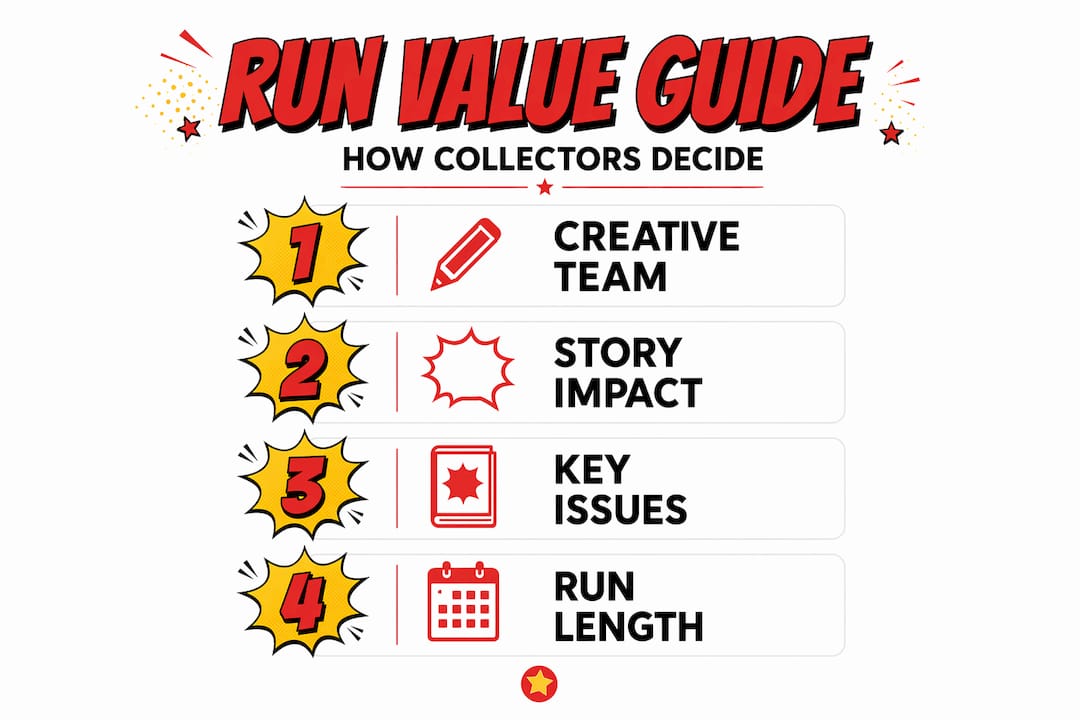
Collectors evaluate runs based on creative impact and story significance, not just the sequence of issue numbers. A “complete run” isn’t always about owning every single issue. Sometimes it’s about owning the key story arcs that define that creative team’s vision. Trade paperback collections and reading orders further complicate things, since they can group or split arcs differently than the original monthly releases.
Editors also play a huge role in maintaining run coherence. They smooth transitions between creative teams and keep a consistent narrative tone. That’s why some long-running series feel unified even when creators rotate. Good editorial work quietly holds a run together.
Knowing how run value is calculated can help you make smarter buying decisions, especially when shopping for key issues. Understanding comic value factors like rarity, demand, and condition goes hand in hand with knowing which runs carry the most cultural weight. And if you’re protecting serious investments, insuring your collection is worth thinking about alongside your comic collection appraisal strategy.
Pro Tip: When building a run collection, prioritize the first and last issues of a creative team’s tenure. The debut issue often carries the most demand, while the final issue closes a chapter collectors want to complete.
How to read comic book runs today
Good news: you don’t need a spreadsheet and six months of prep time to start reading comic book runs. Seriously. One of the biggest myths in comics is that you have to read everything from the beginning to understand anything. That’s not how the best runs work.
Industry experts agree that jumping in at a current volume or a fresh relaunch is a perfectly sensible approach. Here’s how to do it without the overwhelm:
- Find the creative team first. Look up who’s currently writing your favorite character. That’s your run. Start there.
- Use curated reading guides. Sites and communities dedicated to reading orders break down which issues belong to which run. Digital platforms have made this even easier.
- Start with relaunches. When a title renumbers back to #1 with a new team, that’s your invitation. Publishers design those moments specifically for new readers.
- Don’t fear trade paperbacks. Collected editions group story arcs neatly and are often the easiest way to read a complete run without hunting down 40 single issues.
- Explore classics after you’re hooked. Once you love a character, going back to their iconic older runs feels exciting rather than like homework. Check out tips for starting your collection to get organized from the beginning.
- Watch market trends. When a run starts generating buzz, prices on key issues move fast. Staying informed helps you grab important issues before demand spikes.
The best comic book runs work as accessible long-form stories. You can start at the beginning of a run without knowing the full 60-year history of a character. That’s literally the point of the format.
Our take on why runs are everything
We’ve seen a lot of debates about the “right” way to read comics. Single issues vs. trades. Digital vs. print. But honestly? The most important thing is understanding what a run IS, because that’s the lens through which comics make the most sense.
Runs are where the magic lives. They’re the place where a writer and artist get real time with a character and actually say something meaningful. Not just fill an issue slot. When you read a great run, you’re reading someone’s genuine creative vision, sustained over months or years. That’s rare in any storytelling medium.
From a collecting angle, runs are also where the real value sits long term. A single key issue can spike and drop. But a beloved run with sustained cultural relevance? That holds up. Think about how Claremont’s X-Men work still drives pricing trends and reader conversation decades later. Or how Hickman’s mutant saga completely reset what collectors consider “essential X-Men reading.” That’s staying power.
We think every fan, whether you’re reading for fun or building a serious collection, benefits from thinking in terms of runs. It gives you a framework. It helps you understand why a book feels different when a creative team changes. And it makes the whole history of comics feel navigable instead of overwhelming.
Embrace the run. It’s the heart of the medium.
Track and value your runs with Zap-Kapow Comics Club
So now you know what defines a comic book run. The next step is knowing what your runs are actually worth and keeping track of them like a pro.
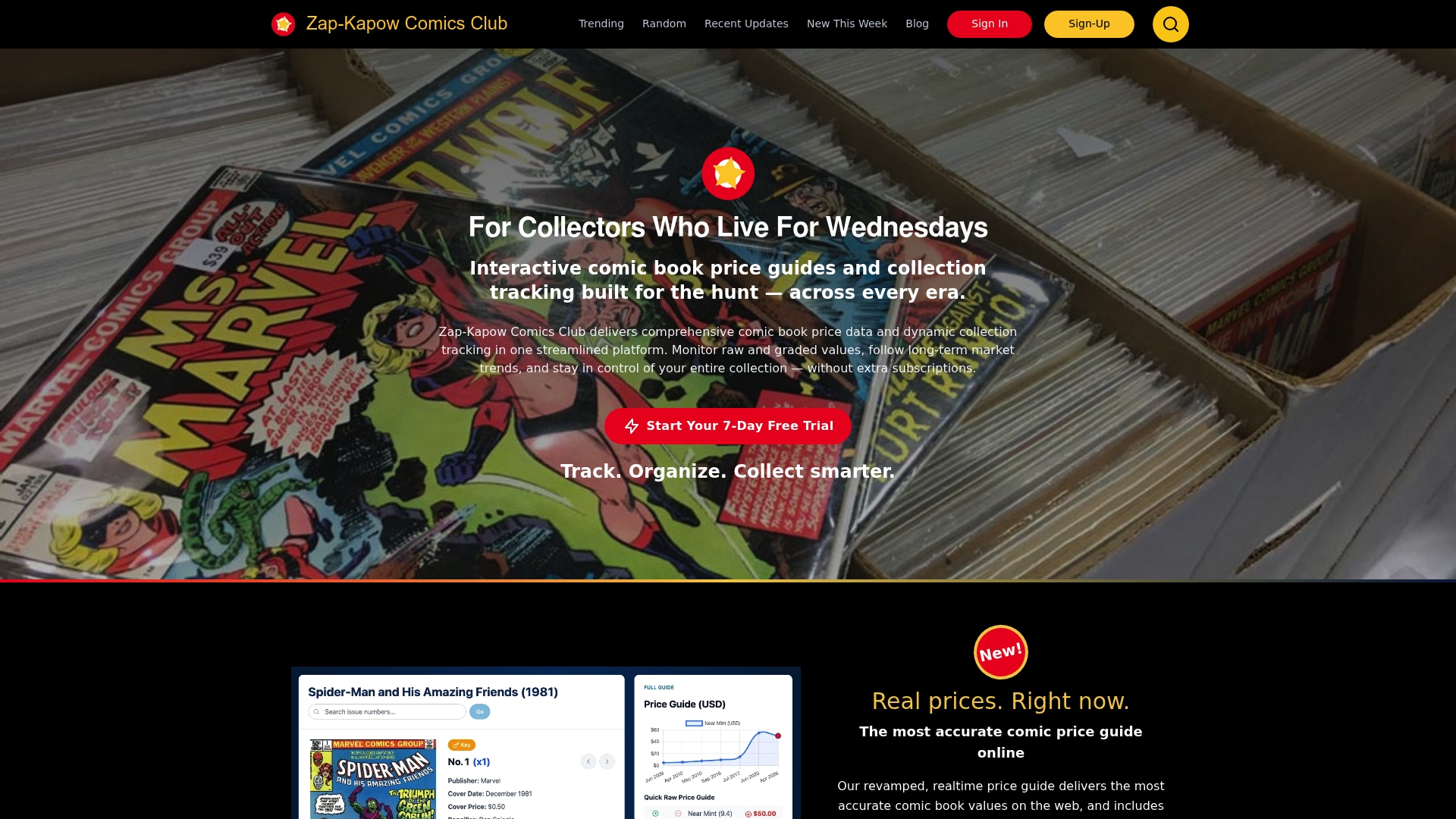
Zap-Kapow Comics Club is built for exactly this. The platform gives you access to comprehensive price data for raw and graded copies, so you can see what a key run issue trades for right now versus six months ago. Want to know if your complete Claremont X-Men run is climbing or cooling? The long-term market trends have you covered. You can also check currently trending titles to see which runs collectors are chasing in 2026, or pull up recent price updates before you buy or sell. No extra subscriptions, no juggling multiple tools. Just clean, useful data for serious comic fans.
FAQ
What is the comic book run meaning in simple terms?
A comic book run refers to the body of work produced on a title by a consistent creative team, typically a writer and artist. It’s defined by creative continuity rather than just consecutive issue numbers.
How is a run different from a series?
A series is the overall title (like Amazing Spider-Man), while a run is a specific creator’s tenure within that series. One series can contain many different runs over its lifetime.
Do I need to read every issue to understand a comic book run?
No. New readers don’t need full continuity to enjoy a run. Starting at a relaunch or a new creative team’s first issue is a widely accepted and publisher-supported approach.
What are some of the best comic book runs to start with?
Chris Claremont’s X-Men (issues #94 to #279) and Jonathan Hickman’s House of X/Powers of X are considered essential reading for anyone exploring the best comic book runs. Both are defining examples of what a run can achieve.
How do collectors determine the value of a comic book run?
Collectors assess runs based on creative impact and legacy, not just issue scarcity. Key first issues from a beloved creative team’s tenure typically carry the highest demand and market value.
Recommended
- What Is Comic Book Grading? A Collector’s Guide - Zap-Kapow Comics Blog
- What Makes a Comic Book Rare: A Collector’s Guide - Zap-Kapow Comics Blog
- How Comic Book Auctions Work: A Bidder’s Guide - Zap-Kapow Comics Blog
- Comic Book Collecting 101: How to Start Your Collection (10 Essential Tips for New Collectors) - Zap-Kapow Comics Blog