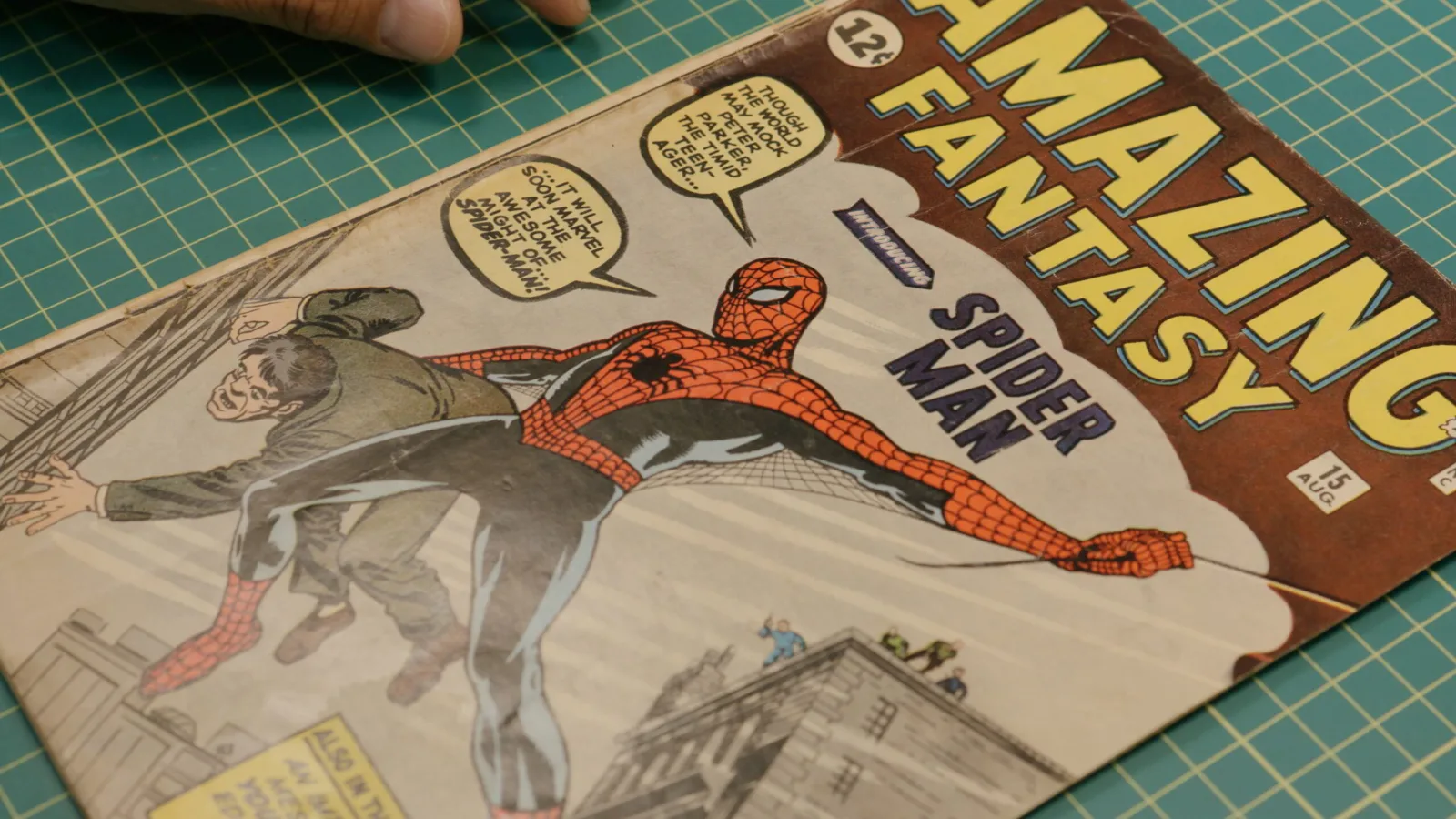
If you’ve ever argued with a seller about whether a comic is “Fine” or “Very Fine,” you already know why comic book grading exists. What is comic book grading, exactly? It’s a standardized system that assigns a numerical score to a comic based on its physical condition, replacing vague descriptions with objective, trusted values. That single shift changes everything — from how much you pay at a convention to how confidently you sell on the secondary market. This guide breaks down the grading scale, label colors, professional services, and the self-grading skills every serious collector needs.
Table of Contents
- Key takeaways
- What is comic book grading and why it matters
- How the comic grading scale works
- Label colors and restoration: what you need to know
- Professional grading services: process, cost, and timing
- How to self-grade and prep comics before submitting
- Our take on grading as a tool, not a verdict
- Track your graded comics with Zap-Kapow Comics Club
- FAQ
Key takeaways
| Point | Details |
|---|---|
| Grading standardizes condition | A numerical score replaces subjective descriptions, removing bias from buyer-seller transactions. |
| The 10-point scale rules | Grades run from 0.5 (Poor) to 10.0 (Gem Mint), with each step reflecting specific physical defects. |
| Label color tells the full story | Blue, yellow, green, and purple labels signal restoration status and signature authentication at a glance. |
| Professional grading has real costs | Fees range from $25 to $150-plus per book, so cost-benefit analysis matters before you submit. |
| Self-grading saves money | Learning to assess your own comics accurately helps you avoid costly surprises from a grading service. |
What is comic book grading and why it matters
At its core, comic book grading assigns a numerical score based on a comic’s wear, defects, and overall eye appeal. Think of it as the difference between a car salesman saying “runs great” and an independent mechanic handing you a full inspection report. One is opinion. The other is evidence.
Before standardized grading existed, condition terms like “Good,” “Fine,” and “Near Mint” meant wildly different things to different sellers. One person’s Near Mint is another person’s “it’s only got three spine ticks and a subscription crease.” That subjectivity caused disputes, tanked trust, and cost collectors real money. Grading fixed that.
Here’s why it matters specifically for your collection:
- Market value is directly tied to grade. A CGC 9.8 copy of a key issue can be worth ten times more than the same book in a CGC 6.0. Same issue, completely different asset.
- Buyer confidence skyrockets. When a book is in a graded slab, the condition is certified. No more guessing games.
- Selling becomes easier. A graded book has a universally recognized condition score, which speeds up transactions and justifies your asking price.
- It protects the book long-term. The encapsulation process seals the comic in an archival-quality holder, slowing deterioration.
Professional grading provides impartial assessments that build market trust by removing personal bias and grade inflation. CGC, the dominant grading company, helped turn the comic market into a legitimate collectibles category that serious investors now track alongside sports cards and vintage toys.
Pro Tip: Even if you never plan to submit a book for grading, understanding the grading scale makes you a sharper buyer. You’ll spot overgraded raw books instantly and negotiate from a position of knowledge.
How the comic grading scale works
The standard comic book condition grading scale runs from 0.5 to 10.0. Each grade corresponds to a specific set of physical characteristics. Here’s a breakdown of the key grades and what they actually look like in hand:
| Grade | Label Name | Condition Description |
|---|---|---|
| 10.0 | Gem Mint | Absolutely perfect. No defects of any kind. Extremely rare. |
| 9.8 | Near Mint/Mint | Nearly perfect with minimal handling or printing defects only. |
| 9.4 | Near Mint | Small defects allowed: minor spine ticks, tiny corner blunts. |
| 8.0 | Very Fine | Moderate handling. Small creases, some spine stress. |
| 6.0 | Fine | Clear signs of use but well cared for. Light creases, minor discoloration. |
| 4.0 | Very Good | Obvious handling, moderate wear, possible small tears. |
| 2.0 | Good | Heavy wear throughout, may have tape or stains. |
| 0.5 | Poor | Barely intact. Severe damage, missing pieces possible. |
A CGC 9.8 represents the gold standard most collectors chase. Modern books rarely exceed this grade because even factory-fresh comics can carry printing defects straight off the press. That’s not a myth. Uneven staple placement, color registration shifts, and bindery errors are all automatic grade reducers.
What physically drops a book’s grade? Significant defects including missing coupons, detached staples, water stains, and color-breaking creases can tank a grade several points in one shot. Even small things count. A half-inch spine split on a Silver Age book can drop it from a 7.0 to a 5.5. The grading scale rewards preservation.

Graders assess spine integrity, cover gloss, staple condition, interior page quality (including browning from acid degradation), and the presence of any amateur restoration attempts. Every one of those factors carries weight.
Pro Tip: When evaluating a raw book, check the spine first under good lighting. Spine ticks and stress lines are the most common grade killers and the easiest to miss in dim shop lighting.
Label colors and restoration: what you need to know
Not all graded comics wear the same label. The color of the label tells you something critical about the book’s history. This is something a lot of newer collectors overlook entirely, and it can cost them big at auction.
Here’s how the CGC label color system breaks down:
- Blue label (Universal): The standard. The book is unrestored and has no qualifying defects. This is what most collectors are hunting.
- Yellow label (Signature Series): A creator or celebrity signature was witnessed and authenticated by CGC directly. Still unrestored, but the signature adds a separate layer of value.
- Green label (Qualified): Something about the book prevents a full Universal grade. Maybe a missing Marvel Value Stamp or a detached centerfold. The book grades on everything else, but that defect is noted.
- Purple label (Restored): Any form of restoration has been applied. Color touch, trimming, page whitening, tape removal. Even minor work earns the purple label.
Here’s the thing about purple labels that stings: minor restorations cause a purple label designation and significantly reduce market value compared to an unrestored copy of the same grade. A purple label 7.0 can be worth dramatically less than a blue label 5.0. The market penalizes restoration hard.
Grading labels include detailed notes on defects, restoration types, and signatures, giving buyers complete transparency. That transparency is the whole point. Before buying any graded book, read the label notes carefully. Not just the grade number.
Collectors also need to understand restoration impact on market rules. Color touch is a particularly sneaky one. It can make a book look stunning in photos but it results in a purple label and a drastically reduced resale value. Know what you’re buying.
Professional grading services: process, cost, and timing
So how does a comic actually get graded? The process is more involved than most beginners expect.
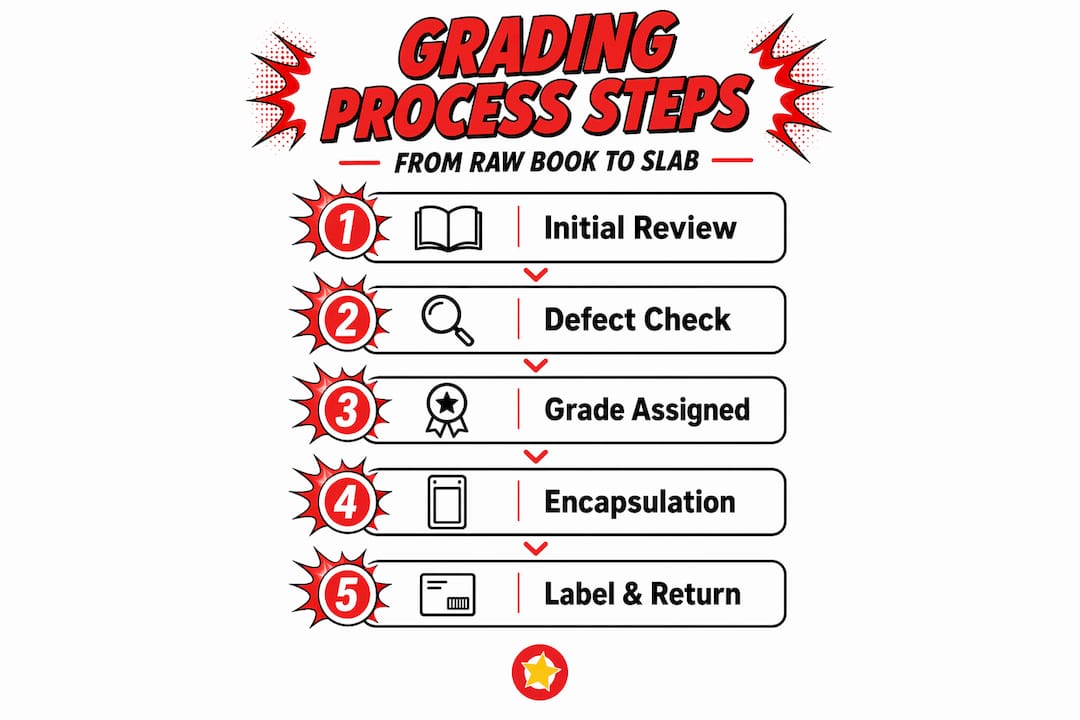
You submit your book to a grading company (more on which ones below), and it goes through a multi-step review. Professional grading requires evaluation by at least two trained graders before a grade is finalized and certified. This consensus model is what makes the grade defensible and trusted.
After grading, the book is encapsulated in a tamper-evident polycarbonate case. That’s the “slab” you see at comic shops and conventions. The label is sealed inside with the book, preventing swapping or tampering.
Here’s a quick comparison of the three main grading companies:
| Company | Starting Fee | Turnaround | Reputation |
|---|---|---|---|
| CGC | ~$25 per book | 30 to 75+ business days | Industry leader, highest resale trust |
| CBCS | ~$25 per book | Varies by tier | Strong second option, growing collector acceptance |
| PGX | Lower entry cost | Generally faster | Less market trust, lower resale premiums |
Fees and timelines at CGC range from $25 to $150-plus per book depending on service tier, declared value, and how fast you want the turnaround. Economy tiers can stretch to 75 business days as of mid-2025. Fast-track options cost considerably more.
Here’s the honest math you need to run: grading is not always profitable. If the grading fee, shipping, and any pressing costs total $80 and the book only gains $50 in market value from being slabbed, you’ve lost money. Always research raw versus graded prices before submitting. Check out our breakdown of raw vs. graded values to understand when slabbing actually pays off.
For a deeper look at which service fits your needs, our CGC vs. CBCS vs. PGX comparison breaks down the differences.
How to self-grade and prep comics before submitting
Self-grading accurately before you send anything off is one of the most valuable skills in this hobby. It saves you from submission surprises and helps you prioritize which books are actually worth the cost.
Here’s a practical pre-submission process:
- Set up your workspace properly. Use a clean, flat surface with no clutter. Handle comics only by their edges or with cotton gloves.
- Get the right lighting. A bright LED light held at a low angle to the cover reveals surface creases, spine ticks, and print defects that normal overhead lighting hides completely.
- Use magnification for close inspection. A jeweler’s loupe or magnifying glass helps spot color-breaking creases, staple rust, and page foxing that you’d otherwise miss.
- Work through a mental comic book condition checklist. Cover gloss, spine stress, corner wear, staple condition, interior page quality (yellowing, brittleness), and any tears or missing pieces.
- Consider pressing before submitting. Pressing before grading can substantially improve a grade by addressing light dents and non-color-breaking creases without damaging the book’s integrity or color. Many collectors press as a standard step before any submission.
- Be brutally honest with yourself. Grading is more art than science, requiring discipline and accurate defect identification rather than wishful thinking. If you think it’s a 9.2, it’s probably a 8.5.
Our self-grading guide walks through each defect type with examples so you can build this skill quickly.
Pro Tip: Take high-resolution photos of every comic before submission. If there’s a dispute about damage that occurred during shipping or handling, your photos are your documentation.
Our take on grading as a tool, not a verdict
We’ve seen collectors treat a CGC grade like it came down from Mount Olympus on stone tablets. It didn’t. Grading can vary slightly even within professional services because the process is consensus-based judgment rather than a formula. That same book submitted twice could get a 9.4 and a 9.6 depending on the day. That’s not a flaw in the system. It’s an honest reflection of how nuanced physical condition assessment actually is.
What grading gives you is a trusted reference point, not a mathematical absolute. Use it as a tool. A grade tells you roughly where a book sits in the condition spectrum and gives buyers a shared language. That’s enormously valuable. But don’t fetishize the number.
The restoration conversation is complicated too. We’re not against restored comics. A beautifully restored Golden Age book is still a beautiful piece of history. But the market has spoken clearly. Blue label beats purple label in resale value almost every time, regardless of how the grades compare. If you’re collecting for love of the medium, enjoy what you have. If you’re collecting as an investment, stick to unrestored copies and understand the market before you buy.
The bottom line? Learn to grade. Respect the scale. But don’t let a slab replace your own judgment as a collector.
Track your graded comics with Zap-Kapow Comics Club
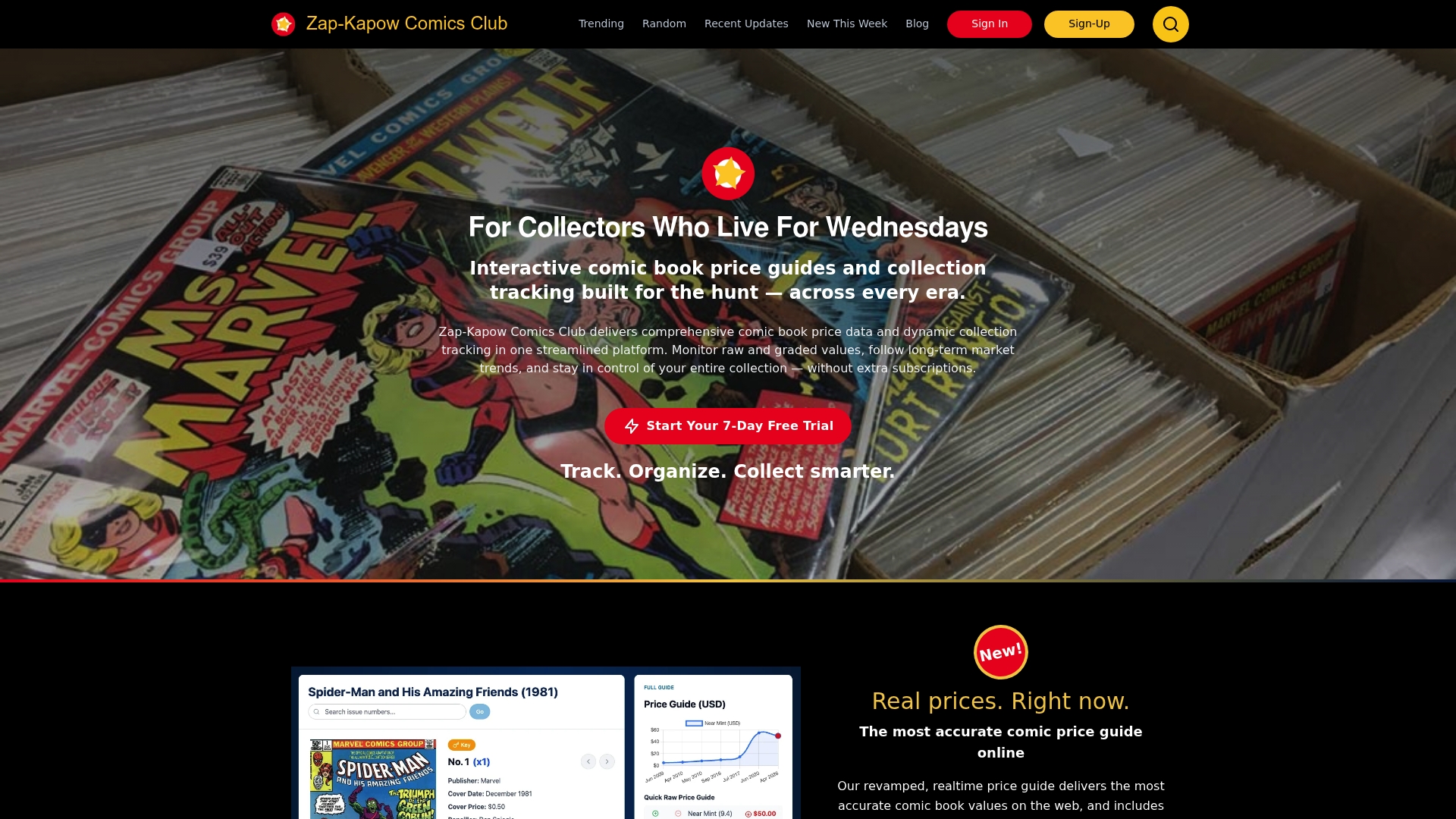
Once you understand comic book grading, the next challenge is keeping track of what you’ve got and what it’s worth. That’s exactly what Zap-Kapow Comics Club was built for. Our platform lets you catalog both raw and graded books, monitor market values, and follow trending titles in real time so you always know where your collection stands.
We pull recent price updates on graded comics across the market, so you’re never making decisions on stale data. Whether you’re deciding whether to submit a raw book or figuring out the right asking price for a slabbed key issue, Zap-Kapow Comics Club gives you the data to do it confidently. No extra subscriptions, no piecing together information from five different sites. Just one place to manage your whole collection like a pro. Check out Zap-Kapow Comics Club and see what your collection is actually worth.
FAQ
What is comic book grading in simple terms?
Comic book grading is the process of assigning a standardized numerical score to a comic based on its physical condition, covering factors like wear, creases, and eye appeal. The scale runs from 0.5 (Poor) to 10.0 (Gem Mint).
How does the comic grading scale work?
The 10-point scale rates condition at specific intervals, where each grade reflects a defined set of defects and overall presentation. Higher grades mean fewer defects and greater market value.
What do the different CGC label colors mean?
Blue means unrestored, yellow means a witnessed signature, green means a qualifying defect is noted, and purple means restoration has been applied. Purple labels typically carry lower resale value than blue labels of the same grade.
Is professional comic grading worth the cost?
It depends on the book’s raw value and expected graded value. Grading fees plus shipping can exceed the value gain on lower-value comics, so research current raw and graded prices before submitting anything.
Can I grade my own comics at home?
Yes. With proper LED lighting, magnification, and a clean workspace, you can accurately self-grade most comics. Just be honest about defects rather than optimistic, since grading companies assess condition without sentiment.
Recommended
- Guide: How To Grade Your Comic Books - Zap-Kapow Comics Blog
- CGC vs CBCS vs PGX: Choosing the Right Comic Grading Service - Zap-Kapow Comics Blog
- Raw vs. Graded: How Different Values Affect Your Collection - Zap-Kapow Comics Blog
- 10 High-ROI Comics That Are Actually Worth The Cost Of Grading - Zap-Kapow Comics Blog