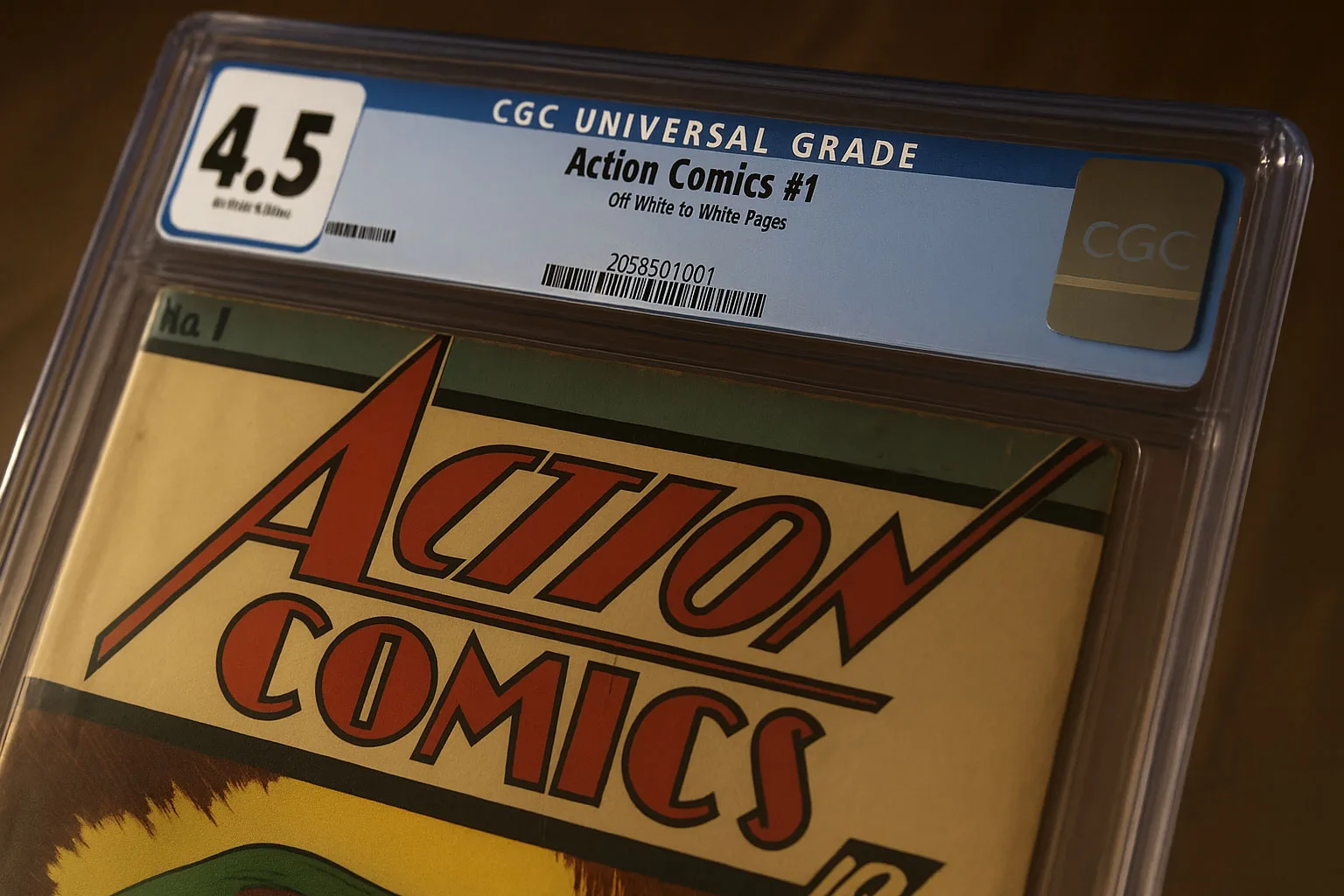
TL;DR – CGC vs CBCS vs PGX comic grading
- Best resale momentum: CGC usually commands the widest buyer pool and strong liquidity for modern and keys.
- Signature flexibility: CBCS is popular for verified signatures (VSP) when witnessing isn't possible.
- Budget route: PGX may be cheaper and faster at times, but market demand can be thinner.
- Turnaround & cost: All three vary by tier, declared value, and add-ons (pressing, fast track, sig services).
- Pressing & cleaning: Consider in-house or trusted third-party pressing to maximize grade before submission.
- Registry & census: CGC has the largest public census and registry; CBCS offers solid notes and verification tools.
- Your decision: If resale value matters most, pick CGC; if verified sigs or flexibility matter, consider CBCS; if cost/speed rule, look at PGX.
Discover how different comic book grading companies compare on reputation, price, turnaround and service — and decide which one is best for your collection.
In the world of comic collecting, getting your books professionally graded can dramatically affect their value. A trusted third‑party grade not only certifies a comic’s condition but protects it for years to come and gives buyers confidence. Today there are several players in the grading market, each with its own strengths and weaknesses. The Certified Guaranty Company (CGC) has become the industry’s gold standard, while the Comic Book Certification Service (CBCS) offers a strong alternative, and Professional Grading Experts (PGX) presents a lower‑cost, faster option. This guide compares the three services across key criteria, from resale value to pricing and turnaround times, to help you make an informed choice.
Why grades matter — and how grading works
Before diving into the comparisons, it’s important to understand why grading matters. A slabbed comic — one sealed in a hard plastic case with a grade label — tells buyers exactly what they’re getting. The grade reflects the book’s condition on a scale of 0.5 to 10, with 10 being pristine. Graded books are authenticated, protected from damage and easier to sell online. Because the grade is standardized, buyers are willing to pay more for a CGC 9.6 copy of a key issue than for a raw book described as “near mint.”
Each grading company operates similarly: you submit your comic by mail or at a convention, they evaluate the book’s condition and authenticity, assign a grade, and encapsulate it in a slab. The differences come down to reputation, precision, services and costs.
Company backgrounds and reputations
CGC: Founded in 2000, CGC was the first major grading authority and quickly set the benchmark for the hobby. It established consistent standards and introduced color‑coded labels (blue for universal, purple for restored, green for qualified and gold for pedigreed books). Because CGC has been around the longest and has graded millions of comics, its slabs generally command the highest resale values. Collectors trust the grade and the encapsulation, and many auction houses require CGC for high‑dollar items.
CBCS: CBCS launched in 2014 and was created by Steve Borock, the former president of CGC. Backed by Beckett Media, CBCS uses a grading scale nearly identical to CGC and is considered the closest alternative. In its early years, CBCS slabs were perceived as flimsy and the brand struggled to match CGC’s recognition. Today, CBCS cases are sturdier, and the company is respected for consistent grading and excellent signature authentication. CBCS books tend to sell for 10–20 percent less than equivalent CGC grades because the market still treats CGC as the premium label.
PGX: PGX entered the scene in 2002 but has faced controversy since its inception. Early scandals involving over‑grading, missed restoration and swapped books tarnished its reputation. As a result, PGX slabs do not command the same market premium, and many collectors avoid them for high‑value keys. Despite these issues, PGX continues to offer grading, pressing and cleaning services at a lower cost. For readers with lower‑value or mid‑grade books who simply want an affordable slab and quick turnaround, PGX may still be an option.
Grading standards and labels
Both CGC and CBCS use a numeric grading scale that starts at 0.5 and climbs in 0.5 increments up to 9.0, then in 0.2 increments to 9.8, with 9.9 and 10 reserved for nearly perfect books. CBCS has a slight difference at the very bottom: it will assign grades as low as 0.3 or 0.1 for coverless books, whereas CGC uses an “NG” (no grade) label for incomplete books.
CGC’s color‑coded labels make it easy to identify special situations at a glance. Purple labels indicate restored comics, green labels signify qualified books (for example, missing pages or unwitnessed signatures), and gold labels denote pedigreed comics from recognized collections. CBCS uses a yellow label for its Verified Signature Program (where a book signed years ago can be authenticated) and red or blue labels for regular grading. PGX uses similar labels but lacks the market recognition of either CGC or CBCS, and its grades may not be as precise.
Pricing and membership costs
CGC pricing: CGC requires submitters to purchase an annual membership. The basic membership starts around $25 per year and grants access to submission forms, while higher tiers (around $149 and $299) provide grading credits and discounts. Grading fees vary by tier and the book’s value. Modern books (post‑1975) cost roughly $24 per comic, with economy service for older or lower‑value books running higher. Express and walk‑through tiers can cost 3 percent of the fair market value of the book for a quick turnaround. Additional fees apply for pressing, restoration and fast track services.
CBCS pricing: CBCS does not require membership, although members can receive a 10 percent discount on grading. As of 2024, CBCS charges about $20 for modern comics (2001 and newer), $24 for books from 1975 to 2000 and $40 for pre‑1975 books. Pre‑screening fees are lower than CGC — around $4 compared with CGC’s $8. CBCS also offers express and premium tiers for expedited service at higher prices. Overall, CBCS tends to be slightly cheaper than CGC for new comics, though older books can cost about the same.
PGX pricing: PGX offers the lowest fees of the three: standard grading starts at roughly $14 per book, and rush grading at about $40. Books valued above a certain threshold (around $4,000) incur a surcharge of 1 percent of the value, up to $400. There is no membership fee, making PGX appealing for casual or budget‑conscious collectors. However, the lower cost is counterbalanced by the lower resale premiums PGX slabs command.
Turnaround times
Turnaround times can change depending on demand, mail delays and the level of service you select.
- CGC: The fastest service, “WalkThrough,” can get your book graded in two days but costs the most. Express service typically takes about five days. A modern submission on the standard tier often returns in three to four weeks, while economy and value tiers can take several months.
- CBCS: Standard submissions can take as long as six to eight months during busy periods. Vintage or premium tiers may cut this to ten weeks or less. CBCS offers express options, where a book can be graded in about two weeks, and a super‑express tier promising a one‑day turnaround for a significant fee.
- PGX: PGX is generally the fastest because it has fewer submissions. Standard service takes roughly 40 days, with express tiers offering 12‑day or even next‑day grading. If speed is your priority and resale value is secondary, PGX may be attractive.
Signature programs and extra services
One notable difference among the grading companies is how they handle autographs. CGC operates a Signature Series program: a certified witness must observe the signature for the book to receive a yellow label. Any unwitnessed autograph earns a green “qualified” label, which can reduce value because the signature is treated as a defect.
CBCS offers both a Witnessed Signature Program and a Verified Signature Program. The latter allows collectors to submit books with older autographs; CBCS will authenticate the signature and issue a yellow label. This flexibility makes CBCS popular for fans who have signed comics from conventions past.
PGX also authenticates signatures and provides pressing and cleaning services, but it lacks the robust witnessing network of CGC and CBCS, and its verification process is not as widely accepted.
Pros and cons summary
CGC
- Pros: Highest resale value; widely recognised and trusted; sturdy slabs; clear color‑coded labels; broad service offerings; fast express options.
- Cons: Membership required; higher fees; potential quality control issues when demand is high; inconsistent grading in recent years; unwitnessed signatures receive a green label that can hurt value.
CBCS
- Pros: Cheaper pricing for modern books; no mandatory membership; signature verification program; consistent grading; improved slab quality; friendly customer service at conventions.
- Cons: Lower resale values (often 10–20 percent below CGC); longer standard turnaround times; call‑center‑style customer service; does not grade magazines.
PGX
- Pros: Lowest fees; fastest turnaround times; no membership required; good option for low‑value or mid‑grade books when budget and speed matter more than resale value.
- Cons: Poor reputation from past scandals; inconsistent grading; lower resale premiums; limited acceptance for high‑value keys; less robust signature authentication.
Which grading service should you choose?
If you’re submitting high‑value keys or investment pieces, CGC remains the safest bet. The brand commands the highest premiums and is accepted by auction houses and most serious collectors. Just be prepared to pay membership fees and possibly wait longer for economy services.
For collectors focused on signed books or looking to save a little on grading fees, CBCS is a strong alternative. Its Verified Signature Program is unmatched, and its grading is often stricter, giving buyers confidence. You may sell your book for slightly less than a CGC equivalent, but the difference may be worth the lower fees and signature flexibility.
If speed and cost are your top priorities and the comics you’re grading are not extremely valuable, PGX might suit your needs. A PGX slab won’t fetch the same resale value, but it can offer protection and an official grade faster and cheaper than the other options.
Conclusion
Choosing the right grading service depends on your goals. CGC remains the industry leader, offering the highest resale value and broadest recognition. CBCS provides quality grading at lower prices and excels at signature authentication, though its slabs don’t sell for as much. PGX is the fastest and cheapest option but carries a reputational discount. No matter which service you choose, grading can protect your collection and unlock hidden value.
If you want to stay on top of your collection’s worth after grading, Zap‑Kapow Comics Club makes it simple. Our platform lets you catalogue your books, scan new issues, import spreadsheets and view both raw and graded market values in one subscription. With a free trial and no hidden fees, you can confidently track how your graded comics perform over time.
CGC vs CBCS vs PGX grading FAQs
Which grading company has the best resale value?
Marketplaces often show strong liquidity for CGC slabs, especially on keys and moderns. That said, demand can vary by title, grade, and timing.
When should I choose CBCS?
CBCS is a solid choice for verified signatures (VSP) when a witness wasn’t present. Many collectors also like their grader’s notes and consistency.
Why do some collectors pick PGX?
PGX can be a budget-friendly option with attractive turnaround estimates. If you value speed and cost over brand premium, it may fit your goals.
Do all three offer pressing and cleaning?
Each company handles services differently. You can use their in-house options (where available) or trusted third-party pressers before submitting.
What about cases, labels, and notes?
Slab aesthetics and label styles differ. Compare case clarity, label readability, and access to grader’s notes when deciding what you prefer.
How do turnaround times and prices compare?
They fluctuate by service tier, declared value, add-ons, and promos. Always check current pricing pages and TATs before you ship.
What if my priority is long-term collecting, not selling?
Pick the slab you like living with. Consider verified signatures, label look, grader’s notes access, and consistent encapsulation quality.
Any submission tips to maximize grade?
Pre-screen carefully, use mylar and full-backs, avoid spine stress during packing, consider pressing, and match the right tier to declared value.