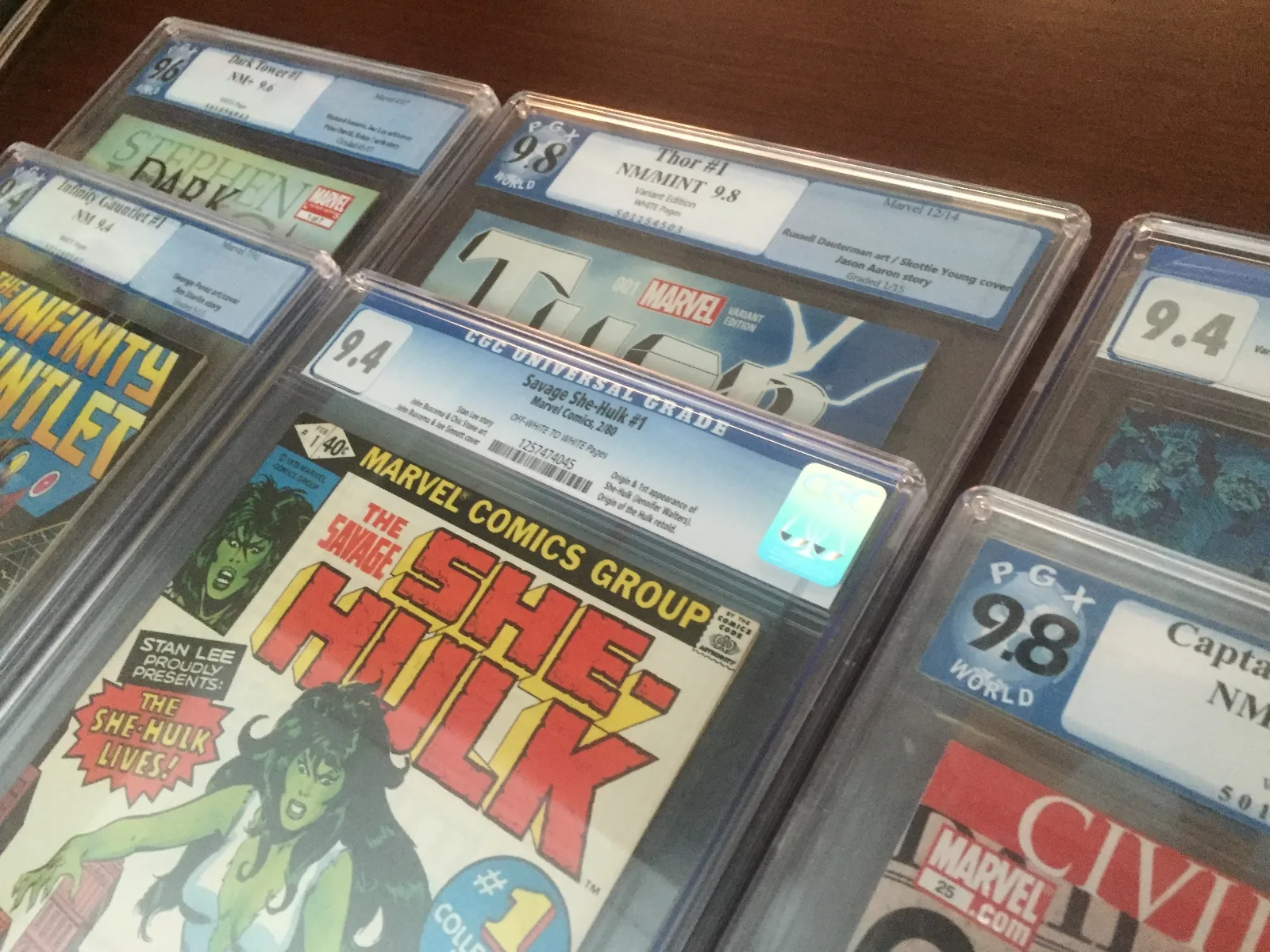
Understanding when to grade, when to stay raw, and why it matters for your comic‑book investment.
TL;DR – Raw vs graded values
- Certainty premium: Slabbed comics earn a premium because the grade is verified and protected.
- Net value matters: Compare slab premium minus grading, shipping, insurance, and time to see if grading pays.
- Grade sensitivity: Small bumps around key thresholds (e.g., 8.0, 9.0, 9.8) can swing value dramatically.
- Liquidity: Graded copies attract wider buyer pools online; raws can move quickly locally with more negotiation.
- Risk profile: Raws carry condition and restoration risk; grading reduces uncertainty but adds cost and turnaround.
- Pressing potential: Clean/press can lift grades and value; not every book benefits, and results are not guaranteed.
- Signatures: Witnessed or verified signatures usually add value slabbed; unverified sigs often discount when raw.
- Portfolio mix: Slab keys and high-value books; keep readers, runs, and low-premium issues raw.
- Exit strategy: If selling soon and the slab premium outweighs costs, grade; if not, sell raw to capture today’s demand.
- Protection & storage: Slabs offer durable display and protection; raws need proper bags, boards, and climate control.
The debate over raw versus graded comics is almost as old as the hobby itself. To some collectors, slabs are the gold standard: they lock in value, authenticate your book and provide that satisfying sense of permanence. To others, a comic isn’t truly enjoyed unless you can flip through its pages, feel the paper and maybe even lend it to a friend. Which side you fall on doesn’t just influence how you enjoy your collection—it affects its value too. In this guide we’ll unpack the differences between raw and graded comics, how grading affects prices, and when it makes sense to send a book in for certification.
What is a raw comic?
A raw comic is any comic book sold or traded in its natural state—unstamped, unsealed and ungraded. You can pick it up at a shop or convention and examine it with your own eyes. Raw books are flexible: you can read them, share them and store them in whatever way suits you. They’re generally cheaper and more widely available than their graded counterparts.
From a value standpoint, however, raw comics come with uncertainty. Without a standardized grade, the condition is whatever you and the seller say it is. That means two collectors could disagree on the grade of the same book, and hidden issues like spine ticks or colour touch might be hard to spot. Because there is no third‑party certification, it’s also easier for unscrupulous sellers to misrepresent condition or hide restoration.
Q&A: How can I tell if my raw comic is in high grade?
Assessing a raw comic’s grade takes practice. You’ll want to inspect the cover for creases, colour breaks and spine wear; check that the pages are still white or cream rather than tan; and verify that staples are rust‑free. Comparing your book to third‑party grading guides can help you determine whether it might be worth sending for certification.
What does “graded” mean for a comic?
A graded comic has been submitted to a professional grading company like CGC, CBCS or PGX. The grader examines the book’s condition, assigns a numerical grade (on a 10‑point scale), encapsulates it in a tamper‑evident plastic slab and affixes a label certifying its authenticity and grade. Graded books are sealed, protecting them from further wear and clearly identifying their condition.
Grading companies bring three big benefits:
- Encapsulation – The slab protects the book from moisture, handling and accidental damage.
- Authentication – Certification confirms that the comic is genuine, not a counterfeit or unauthorized reprint.
- Reputation – Reputable grading firms are trusted by buyers. A CGC 9.6 is universally understood, removing ambiguity for online sales.
Q&A: Do grading companies ever make mistakes?
Yes. While misgrading is rare, no system is perfect. A slabbed comic might be graded too high or too low, and shipping can occasionally damage a book. Still, grading companies offer guarantees and the errors are exceptions, not the rule.
Why do graded comics sell for more?
Collectors pay a premium for certainty. Knowing that a key issue has been authenticated and graded gives buyers confidence that they’re getting what they pay for. A graded book’s encapsulation preserves its condition and provides a clear benchmark for quality. As one article notes, grading increases the value of a comic because it provides encapsulation, authenticates the book and leverages the reputation of trusted grading companies.
It isn’t just about the slab itself—it’s about peace of mind. On community forums, collectors explain that there isn’t a fixed percentage difference between raw and graded values; it depends on supply, demand and grade. In one example a raw 9.0 Silver Age book might sell for $75–$100, while the same book graded at 9.0 commands $200–$300. The wider gap reflects the assurance that the graded copy is exactly as described.
Q&A: Is the price difference always that big?
Not always. Common modern books or low‑grade copies might see only a modest bump in value when graded. For truly rare or high‑grade keys, however, the premium can be substantial.
Pros of grading your comics
- Value appreciation – Graded books often fetch higher prices than raw equivalents because buyers trust the grade and authenticity.
- Protection – Encapsulation prevents further wear, moisture damage and handling issues, preserving the comic’s condition.
- Ease of sale – A third‑party grade eliminates disputes and makes online transactions smoother. Buyers see the grade and know exactly what they’re getting.
- Peace of mind – Slabbed comics offer assurance that the book is genuine and in the grade stated.
Q&A: Do graded comics increase in value faster than raw ones?
Generally, yes. High‑grade slabbed copies of key issues often appreciate more quickly because their condition is locked in. However, market forces still matter; a book that falls out of favour will lose value whether raw or graded.
Cons of grading your comics
- Cost – Grading fees, shipping and insurance add up, and for lower‑value books these costs may exceed any resale premium.
- Risk of misgrading or damage – While rare, misgrading can occur, and shipping risks may damage the book.
- Limited handling – Once slabbed, you can’t read or open the comic without breaking the case and voiding the certification.
- Availability – Some books may be hard to find in graded form, and waiting times for grading services can be long.
Q&A: Can I crack a slab and resubmit for a better grade?
Yes, but it’s risky. Removing a comic from its slab exposes it to potential damage, and the new grade could be the same or lower. Collectors occasionally resubmit books they believe were misgraded, but it’s not guaranteed.
Should you grade your comic?
Grading makes sense when the book’s potential value exceeds the cost of grading. If you own a rare first appearance, a high‑grade Bronze Age key or any comic likely worth hundreds of dollars, grading can provide a strong return on investment. However, grading a $50 book may not be worth it; the costs could eat up any price premium. Consider your goals: are you preserving an investment or keeping the book for personal enjoyment?
Q&A: How do I decide whether to grade?
Do your homework. Check recent sales of raw and graded copies of your issue on Zap‑Kapow’s price guide. Assess the book’s condition yourself and use a grading guide to estimate its grade. Factor in grading fees and shipping. If the numbers add up and you’re comfortable parting with the book for several months, grading may be worthwhile.
Are raw comics worth less?
Not necessarily. Raw comics are more affordable, and for readers or casual collectors, that’s the appeal. You can enjoy the story, handle the book and collect issues without worrying about slab fees. Many collectors buy raw because they trust the seller and prefer to grade later or not at all. For new releases or books under $100, staying raw keeps costs low and options open. That said, raw books are susceptible to misgrading, restoration and hidden damage, which can make their market value less certain.
Q&A: Can raw comics ever be worth more than graded?
In rare cases, yes. If a slabbed copy was overgraded or damaged during encapsulation, a pristine raw copy might command a higher price. But typically, a high‑grade slabbed comic outsells its raw counterpart.
How much more do graded comics sell for than raw?
There’s no universal markup. For high‑grade key issues, graded comics often sell for multiples of their raw counterparts because the grade is locked in and buyers have full confidence. For lower‑grade or common books, the difference might be minimal, and grading may not pay for itself. Collectors should research recent sales and consider the cost of grading before sending books in.
Q&A: Will grading always increase a comic’s value?
Almost always, but there are exceptions. Grading can occasionally lower a comic’s value if restoration is discovered, if the grade comes back lower than expected or if the book is damaged in transit. Still, the majority of graded books see a value boost.
Balancing investment and enjoyment
The best collections strike a balance between investment‑grade books and readable raw copies. Graded comics offer security and higher resale value, but they come with higher costs and a slab that locks the book away. Raw comics let you enjoy the medium’s tactile pleasures but carry more risk. Your decision should reflect your goals: investment, reading enjoyment or a bit of both.
Zap‑Kapow Comics Club makes the process easier. With a database of more than 450,000 issues and both raw and graded values with 15+ years of history, you can see at a glance what your books are worth in any state. The platform lets you import collections, scan new purchases, track daily price updates and decide whether it’s time to grade—without paying extra for a separate price guide. Whether you stay raw, go graded or do both, Zap‑Kapow puts all the information you need in one place.
Q&A: Where can I find accurate raw and graded values?
Zap‑Kapow Comics Club’s price guide offers daily updates for raw and graded comics across hundreds of thousands of issues. Join the club, you can track your collection’s value over time, monitor market trends and make informed decisions about grading, buying and selling.
Ready to see what your collection is really worth? Join the Zap‑Kapow Comics Club today for a free trial. Scan your books, import your lists and unlock the full power of an all‑in‑one comic catalog and price guide—no add‑ons required.
Raw vs graded comic value FAQs
When should I grade instead of selling raw?
Grade when the expected slab premium clearly exceeds grading, shipping, insurance, and time costs, especially for keys and high-grade candidates.
How do I estimate if grading is worth it?
Find recent slab comps for the target grade, subtract all fees and likely turnaround, and compare to realistic raw comps in the current market.
Do signatures change the raw vs graded equation?
Yes. Witnessed or verified signatures typically add value slabbed; unverified signatures can lower value versus unsigned raws.
Will pressing and cleaning increase value?
Often for pressable defects. Results vary and add cost and time, so model ROI using conservative grade expectations.
Are raws harder to sell online?
They can be, due to grade uncertainty. Detailed photos, honest pre-grades, and return policies help build buyer confidence.
What risks come with keeping books raw?
Undetected defects, hidden restoration, and transit damage. Use mylar, full-backs, and careful handling to mitigate risk.
Should I crack and resubmit a slab to chase a higher grade?
Only if comps support a meaningful premium for the next grade. Factor in crack risk, regrading variability, and all costs.
How does venue affect realized price?
Auctions set fast market prices with volatility; fixed-price and live streams can earn premiums with the right audience and timing.
How should I store raws vs slabs?
Raws: mylar, acid-free boards, upright in boxes, cool and dry. Slabs: upright, padded spacing, avoid heat and direct sunlight.
What if I need cash quickly?
If the slab premium will not cover fees in time, sell raw now. If it will and you can wait, grading may net more.