
If you’ve spent any time in comic collecting circles, you’ve heard the term “key issue” thrown around like confetti at a con. But key issue comics explained properly goes way deeper than just “this one’s worth a lot of money.” Key issues are the heartbeat of comic history. They mark cultural turning points, introduce iconic characters, and encode social commentary that still resonates decades later. Whether you’re building a collection or just want to understand what makes a certain issue matter, this guide covers the whole picture.
Table of Contents
- Key takeaways
- Key issue comics explained: what makes an issue “key”?
- Comic eras and the cultural context they create
- Narrative depth and social themes in key issues
- Key issue comic book value and the collector market
- Why key issues deserve more than a price check
- Track and value your key issues with Zap-Kapow Comics Club
- FAQ
Key takeaways
| Point | Details |
|---|---|
| Key issues go beyond value | A key issue marks narrative milestones, cultural shifts, and character debuts, not just a high price tag. |
| Appearance types affect significance | Cameo, full, first cover, and first solo appearances each carry distinct weight for collectors and readers. |
| Era context shapes meaning | Golden, Silver, Bronze, and Modern Age eras define which issues qualify as cultural or thematic landmarks. |
| Grading dramatically impacts price | CGC certification can push key issue prices up by 300% or more compared to raw ungraded copies. |
| Restoration reduces value | Restored books trade lower than authentic high-grade originals, so condition authenticity matters enormously. |
Key issue comics explained: what makes an issue “key”?
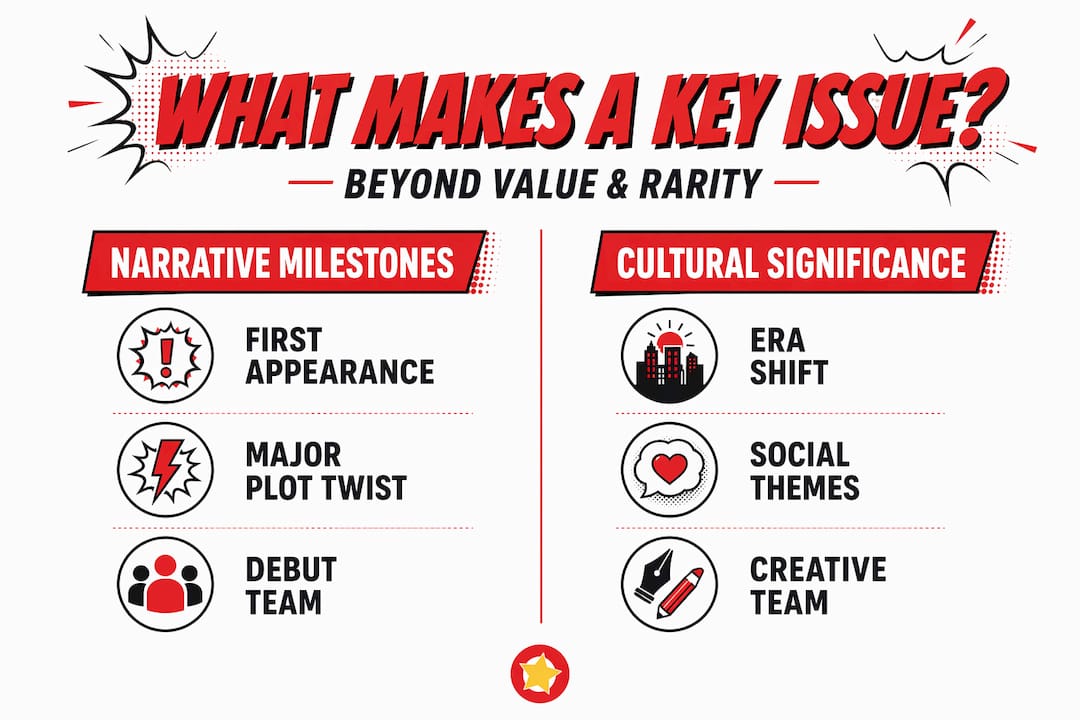
At its core, a key issue contains major firsts or canonical milestones that set it apart from every other issue in a run. We’re talking about first appearances, origin stories, major plot events, or pivotal creative shifts. A “key” isn’t just a buzzword. It’s a specific designation with real criteria behind it.
Here’s where it gets fun (and a little nerdy). Not all firsts are created equal. Collectors have developed a whole taxonomy of appearance types:
- Cameo appearance: The character shows up briefly, sometimes in shadow or without a name. Amazing Fantasy #15 gave us Spider-Man’s full debut, but some characters tease their existence issues before the real reveal.
- First full appearance: This is the canonical debut most valued by collectors. The character is fully introduced, named, and active in the story. This is usually the key issue.
- First cover appearance: The character appears on the cover for the first time, which may or may not align with their interior debut.
- First solo title: When a character graduates from team books or anthology series to their own standalone title. Think of Wolverine going from X-Men to his own mini-series.
- Origin issue: The issue that tells the backstory, not always the same as the first appearance. Batman’s origin has been retold multiple times, but Detective Comics #27 is still the key.
Collectors often build layered collections that include all appearance types for beloved characters, since each carries distinct market and narrative significance. Understanding comic key issues means recognizing which type of “first” you’re actually holding.
Beyond appearances, major plot events also qualify. Death of a major character, a universe-altering event, a creative team change that redefined a title. These are all legitimate key issue criteria.
Comic eras and the cultural context they create
You cannot fully appreciate key comics explained without understanding the era they came from. Comics history is divided into distinct ages, and each one reflects the social and political climate of its time.
- Golden Age (1938 to 1956): The birth of the superhero. Action Comics #1 (Superman’s first appearance, 1938) is the holy grail of key issues. This era was defined by patriotic themes, wartime propaganda, and the creation of archetypes still used today.
- Silver Age (1956 to 1970): A rebirth of superhero comics after the Comics Code Authority crackdown. Marvel exploded onto the scene with flawed, relatable heroes. Fantastic Four #1 and Amazing Fantasy #15 are quintessential Silver Age keys.
- Bronze Age (1970 to 1985): Social consciousness entered the picture in a serious way. Creators tackled drug addiction, racism, and political corruption. Key issues from this era often carry heavier thematic weight than any other period.
- Modern Age (1985 to present): Darker, more complex storytelling. Key issues now include landmark crossover events, first appearances of characters who later dominate film adaptations, and significant variant cover debuts.
Era shifts align with cultural landmarks in ways that go far beyond publishing schedules. The Bronze Age didn’t just happen. It emerged because society demanded stories that reflected real struggle.
Pro Tip: When researching a key issue, always look up the publication year and the social climate of that moment. A 1971 issue about drug abuse hits differently when you know the Comics Code Authority initially refused to approve it, forcing Marvel to publish it without the seal of approval.
Connecting production choices to social shifts transforms a collecting decision into a cultural education. That’s the real payoff of understanding comic key issues at this level.
Narrative depth and social themes in key issues
This is where key issue comics for beginners often get shortchanged. Most introductions focus on dollar signs. But the most iconic key issues are iconic because of what they say, not just who appears in them.
Take Green Lantern/Green Arrow #76 (1971). Creators used this issue to directly confront systemic racism, poverty, and political hypocrisy. Green Arrow challenged Hal Jordan’s blind adherence to authority, asking him why he had never used his ring to help ordinary people suffering on Earth. It was a gut-punch moment that shifted comic themes toward real-world suffering in ways that still influence superhero storytelling today.
“In much the same way that certain novels become cultural touchstones, key issue comics act as mirrors held up to society. The story inside matters as much as the name on the cover.”
Here are some other standout examples of key issues loaded with thematic weight:
- The Amazing Spider-Man #96 to #98 (1971): The drug trilogy Marvel published without the Comics Code seal. Harry Osborn’s addiction storyline was written at the request of the U.S. Department of Health, Education, and Welfare. That’s a key issue with historical documentation behind it.
- Black Panther’s debut in Fantastic Four #52 (1966): The first Black superhero in mainstream American comics. This issue arrived in the thick of the Civil Rights Movement. Its importance is political, cultural, and narrative all at once.
- Ms. Marvel #1 (2014) featuring Kamala Khan: The first Muslim-American character to headline a Marvel series. It became one of the best-selling digital comics in Marvel history and sparked genuine cultural conversation about representation.
Creators encode social and moral questions into key issues that transcend their entertainment function. That’s why analyzing narrative content matters as much as grading condition when you want to truly appreciate what you’re holding.
Understanding comic key issues at this level means asking: what was happening in the world when this was written? Who was this character created for? What did this story challenge readers to think about?
Key issue comic book value and the collector market
Okay, let’s talk numbers. Key issue comic book value is real, significant, and driven by a specific set of market forces. Knowing these forces helps you buy smarter, collect more intentionally, and avoid expensive mistakes.
Here’s a breakdown of what drives key issue value versus regular issues:
| Factor | Key issues | Regular issues |
|---|---|---|
| First appearance present | Yes, often multiple types | No |
| CGC grading premium | Can be 300%+ higher | Minimal grading benefit |
| Restoration impact | Heavily penalized by buyers | Less significant |
| Market demand | Driven by media adaptations, cultural moments | Driven mostly by completionists |
| Long-term appreciation | Strong historical track record | Inconsistent |
Grading companies like CGC and CBCS shape market confidence by authenticating condition and confirming key issue status. A raw copy of a key issue and a CGC 9.8 copy of the same issue can differ in price by thousands of dollars. That’s not an exaggeration.
Restoration is a trap that catches a lot of new collectors. A book that’s been cleaned, pressed, or had color touch-up applied looks great but trades at lower prices than an authentic high-grade original. CGC flags restored books with a purple label instead of blue, so the market knows immediately. Key issue identification directly affects whether you pursue grading, restoration, or preservation.
When it comes to how to identify key issues, the research process matters. Check dedicated price guides, track comic collecting trends for rising keys, and use resources that help you identify variants and first prints before making a purchase.
Pro Tip: Before buying a raw key issue, cross-reference at least three sources to confirm which issue holds the canonical “first full appearance” designation. The difference between a cameo issue and the full appearance issue can be hundreds or thousands of dollars.
Most valuable key issues tend to cluster around characters with strong media presence. When a character gets a film or streaming adaptation, their first appearance issue spikes hard. Wolverine, Black Panther, and Thanos all saw massive price surges tied directly to MCU announcements. Staying ahead of those trends is a real skill.
Why key issues deserve more than a price check
We’ve seen a lot of collectors walk into key issues purely chasing the bag. And honestly? There’s nothing wrong with that. But something gets lost when price is the only lens you use.
The most rewarding collections we’ve encountered are built by people who understand why an issue matters, not just what it’s worth right now. When you know that Fantastic Four #52 arrived during the Civil Rights Movement, you hold that book differently. When you understand that Amazing Spider-Man #96 was published in defiance of industry censorship, flipping through it feels like touching a small act of creative rebellion.
Key issues are where comic history concentrated its energy. First appearances, origin stories, social commentary, creative risks. These are the moments when comics stopped being disposable entertainment and became something more. Treating them as cultural artifacts rather than just financial assets changes the entire collecting experience. It deepens your conversations, sharpens your eye for what matters, and honestly makes the hobby a lot more fun. The comic insurance appraisal process even reflects this, because true value accounts for more than raw market price.
Our take: learn the story before you learn the price. The price will make more sense, and the story will make the price feel earned.
Track and value your key issues with Zap-Kapow Comics Club
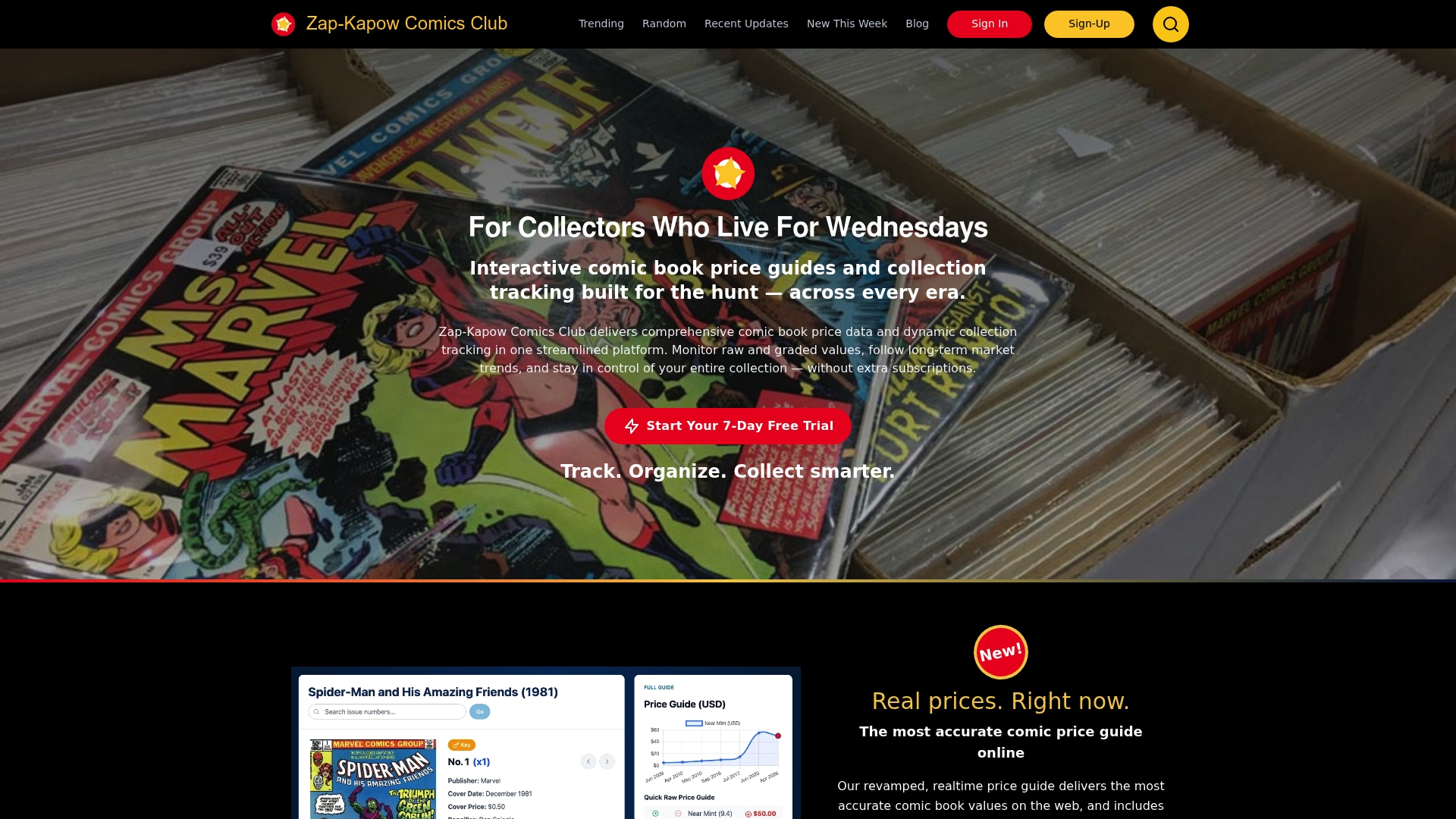
If you’re serious about collecting key issues, you need more than a price memory and a spreadsheet. Zap-Kapow Comics Club gives you real-time price data for raw and graded copies, long-term market trend tracking, and a collection management system built specifically for comic collectors. Whether you’re hunting most valuable key issues or monitoring a collection you’ve already built, the Zap-Kapow Comics Club price guide puts everything in one place. Check the trending comics list to see which keys are moving right now, and browse recent price updates to stay sharp on market shifts. No extra subscriptions, no guesswork.
FAQ
What are key issue comics?
Key issue comics are specific issues that contain major narrative or collectible milestones, such as a character’s first appearance, origin story, or significant plot event. They are considered more significant than regular issues in the same run.
What is the difference between a cameo and a full first appearance?
A cameo appearance is a brief, often unnamed glimpse of a character, while the first full appearance is the canonical debut where the character is fully introduced. The full appearance is generally the more valued key issue.
How do I identify a key issue comic?
Cross-reference dedicated comic price guides, check the issue’s publication history for firsts or major events, and use tools like Zap-Kapow Comics Club to verify value and confirm key status before buying.
Does grading affect key issue comic book value?
Absolutely. Third-party grading by organizations like CGC can increase a key issue’s market value by 300% or more compared to an ungraded raw copy, making condition authentication a major factor in pricing.
Why do social themes matter in key issues?
Key issues often encode the social and cultural concerns of their era, making them cultural artifacts as much as collectibles. Understanding the themes inside a key issue deepens appreciation of its historical significance and often explains why it became iconic in the first place.
Recommended
- How Comic Values Are Calculated: Rarity, Demand and Trends Explained - Zap-Kapow Comics Blog
- Raw vs. Graded: How Different Values Affect Your Collection - Zap-Kapow Comics Blog
- 10 Comic Book Collecting & Pricing Trends to Watch in 2026 - Zap-Kapow Comics Blog
- Top 10 Most Valuable Key Batman Issues Of All Time - Zap-Kapow Comics Blog