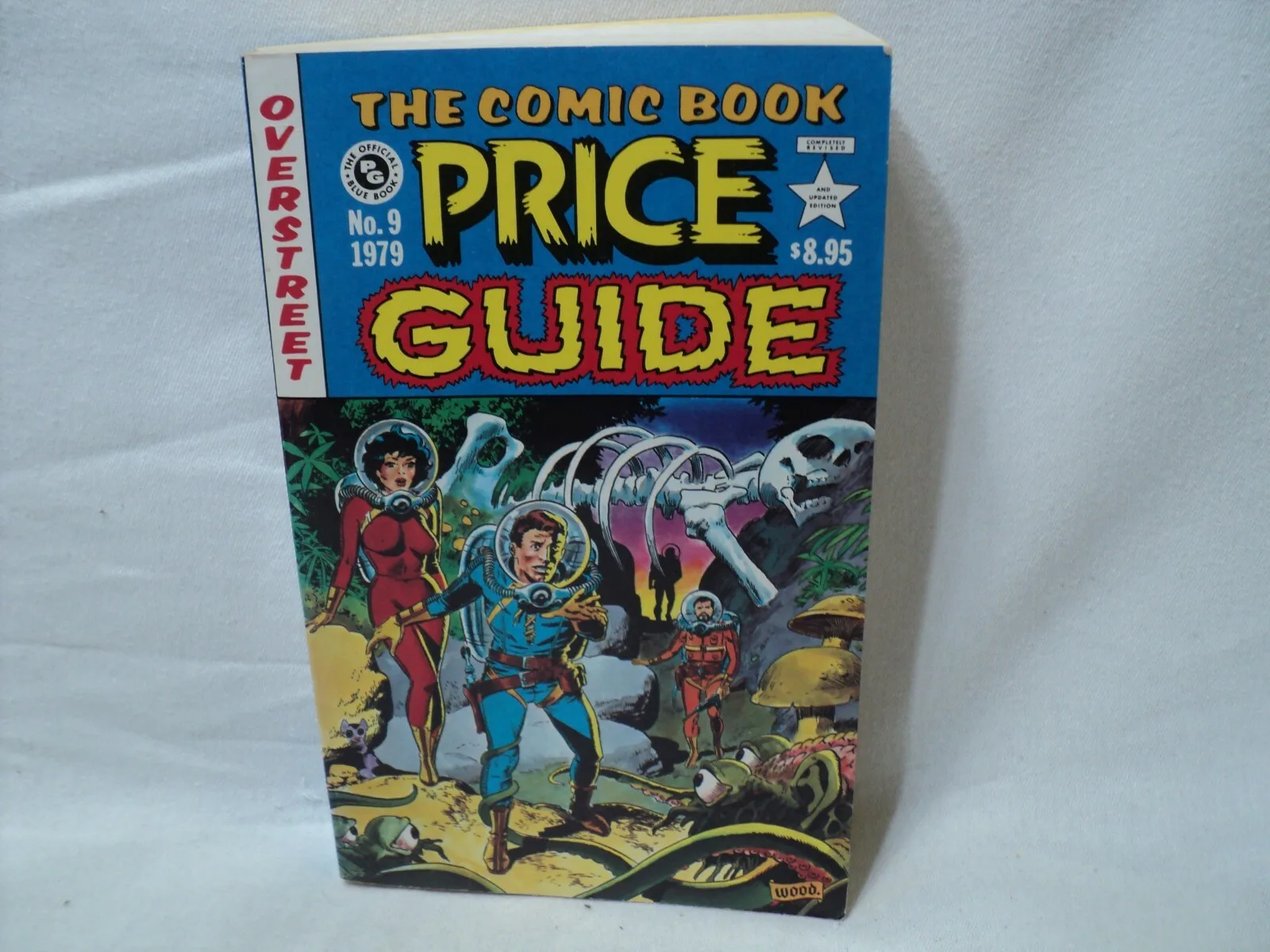
Comic book price guides are valuation tools that translate raw market activity, condition grading, and rarity data into estimated dollar values for individual issues. They exist to answer the question every collector eventually asks: “What is this actually worth?” Whether you’re evaluating a long box of Silver Age finds or tracking a single CGC-slabbed key issue, understanding how comic book price guides work gives you a serious edge. We’re talking about the difference between selling a comic for $40 and realizing it was worth $400.
How comic book price guides work: the data behind the numbers
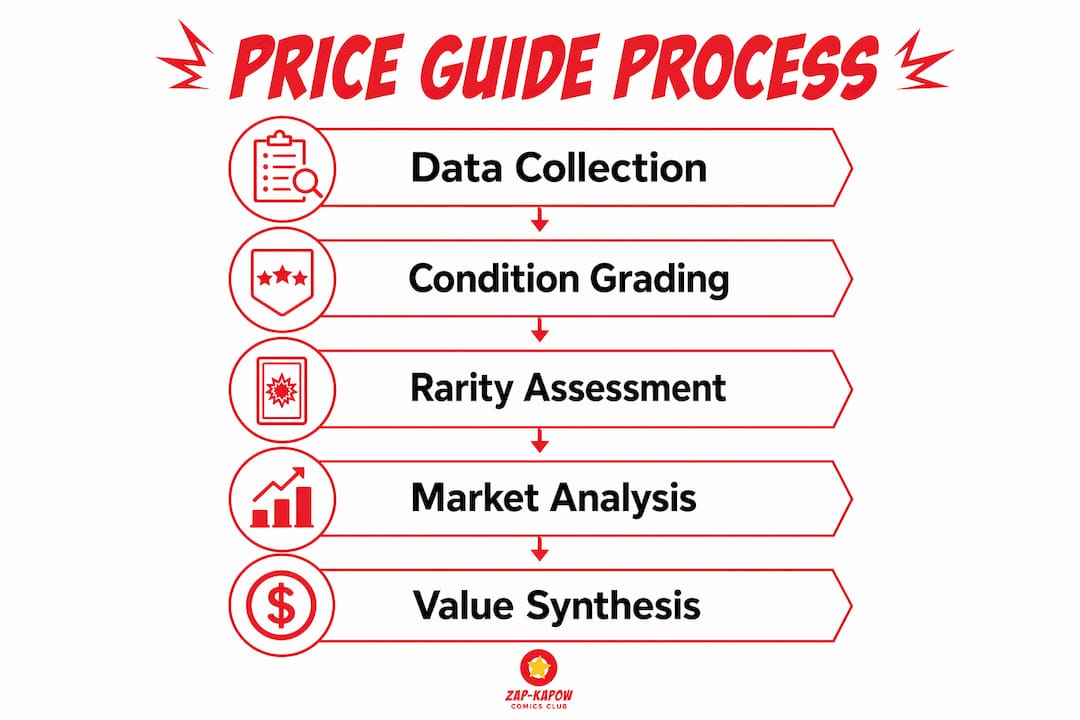
Price guides don’t pull values out of thin air. They aggregate real market data from multiple sources, then synthesize it into a single estimated value. The quality of that data determines how accurate the guide actually is.
The most critical distinction in the comic book valuation process is the difference between asking prices and sold prices. Asking prices mislead collectors because a seller can list a comic at any price they want. Sold prices reflect what a real buyer actually paid. Professional buyers use only sold price data, because that’s where true market value lives.
The best data sources for understanding comic book market analysis include:
- eBay Sold Listings: The most accessible real-time sold price database. Filter by “Sold” to see actual transactions, not wishful asking prices.
- Heritage Auctions: The gold standard for high-grade and key issue sales. Heritage archives provide years of auction history for serious valuation research.
- ComicLink: Focused on CGC-graded comics, making it especially useful for slabbed key issues.
- CGC Census Data: The CGC population report shows how many copies of a given issue exist at each grade. Scarcity at high grades drives premiums dramatically.
Speculation also feeds into price guide data in ways that can distort values. Price spikes from film or TV announcements create inflated asking prices that often never materialize in actual sales. A guide updated during a hype cycle may reflect that bubble rather than the comic’s stable long-term value.
Pro Tip: When assessing comic book prices, always cross-reference at least two sold price sources before trusting any single guide value. One data point is a guess. Two or three is a pattern.
How condition and grading affect values in price guides
Condition is the single biggest variable in comic book pricing, and grading scales make that variable measurable. The standard grading scale runs from 0.5 (Poor) to 10.0 (Gem Mint), with CGC being the most widely recognized third-party grading service in the hobby.

The price multiplier effect of grading is staggering. A CGC 9.8 can be worth 50 to 100 times more than the same comic graded 2.0. The real-world example that puts this in perspective: Amazing Spider-Man #129 (first appearance of the Punisher) ranges from around $75 in poor raw condition to over $50,000 in CGC 9.8. That’s not a typo. Same comic, wildly different value.
Here’s a quick look at how grade ranges translate to relative value for a key issue:
| CGC Grade | Condition Label | Relative Value vs. 2.0 |
|---|---|---|
| 9.8 | Near Mint / Mint | Up to 100x |
| 9.0 | Very Fine / Near Mint | 10x to 30x |
| 6.0 | Fine | 2x to 5x |
| 2.0 | Good | Baseline |
| 0.5 | Poor | Below baseline |
Raw (ungraded) comics typically sell for 40 to 70% of the value of CGC-graded examples, with premium status reserved for copies graded 9.0 or higher. This gap exists because CGC certification removes uncertainty about condition. Buyers pay for confidence.
One hidden trap: restoration. A comic that has been cleaned, pressed, or had tears filled will receive a CGC “Restored” label. Restored comics command dramatically lower prices than unrestored “Universal” blue label copies, even if they look nicer to the naked eye. Price guides treat restored copies as a separate, lower-value category.
Pro Tip: CGC grading costs range from $30 to $150 per book. Only submit comics worth at least $150 raw. Below that threshold, grading costs eat your margin before you’ve sold a single issue.
Check out our grading guide for collectors if you want to assess condition accurately before deciding whether to submit.
What factors beyond grading drive comic book prices?
Grading tells you the condition. It doesn’t tell you why one comic in 9.8 sells for $200 while another sells for $20,000. That gap comes down to the factors affecting comic book value that price guides weigh alongside condition.
Key issues are the biggest driver. A key issue is any comic containing a first appearance, origin story, major character death, or pivotal story event. Incredible Hulk #181 (first full Wolverine), Amazing Fantasy #15 (first Spider-Man), and New Mutants #98 (first Deadpool) are textbook examples. Price guides assign dramatically higher base values to key issues because collector demand is consistently high and supply of high-grade copies is limited.
Era and print run matter enormously. Pre-1970 comics (Golden Age and Silver Age) are genuinely scarce because most were read, discarded, or destroyed. 1990s mass print runs generally hold little value unless in extremely high grade, because publishers printed millions of copies specifically to capitalize on speculator demand. The market was flooded, and it still hasn’t fully recovered.
There are a few other factors worth knowing:
- Newsstand vs. direct editions: Newsstand copies from the 1980s and 1990s are rarer than direct editions and command higher premiums in high grade due to lower print runs and higher attrition rates.
- Media tie-ins: A character’s first appearance jumps in value the moment a film or TV adaptation is announced. This is real demand, but it’s also speculative. Values can drop just as fast after a bad review.
- Cultural significance: Some comics carry historical weight beyond their story content. First issues of landmark runs, controversial printings, and artist signature editions all carry premiums that pure market data can’t fully capture.
Price guides try to account for all of these factors, but guides are always slightly behind the market. A print guide updated once a year can’t reflect a price surge that happened last Tuesday. For factors affecting comic book value in real time, you need live data sources alongside any static guide.
Comparing the best comic book price guides in 2026
Not all price guides are built the same. The right guide depends on whether you prioritize historical depth, real-time accuracy, or ease of use for evaluating comic book collections.
| Guide | Format | Update Frequency | Best For |
|---|---|---|---|
| Overstreet Comic Book Price Guide | Print + Digital | Annual | Historical reference, Silver/Golden Age |
| ComicBookRealm | Online | Frequent | Raw value estimates, collection tracking |
| CovrPrice | Online | Regular | Graded and raw values, trend tracking |
| PriceCharting | Online | Frequent | Quick lookups, sold price integration |
| Zap-Kapow Comics Club | Online | Ongoing | Raw and graded values, collection management |
The Overstreet Comic Book Price Guide has been published annually for over 55 years and remains the industry standard for historical reference. It synthesizes decades of market data and expert analysis into a single volume. The limitation is obvious: it’s updated once a year, and the comic market moves faster than that.
Online guides like CovrPrice and PriceCharting pull from recent sold listings and update more frequently, making them better tools for current market analysis. The tradeoff is depth. They don’t carry the historical context or editorial curation that Overstreet provides.
For collectors who want to compare price guide apps side by side, the honest answer is that no single guide wins on every metric. The best approach is to use Overstreet for historical grounding and a live online source for current sold price verification.
Key Takeaways
Comic book price guides work by combining sold price data, CGC grading standards, and key issue significance to produce estimated values that reflect real market conditions, not wishful asking prices.
| Point | Details |
|---|---|
| Sold prices over asking prices | Only actual transactions reveal true market value; asking prices inflate perceived worth. |
| Grading multiplies value dramatically | A CGC 9.8 can be worth up to 100 times more than the same comic in a 2.0 grade. |
| Key issues drive base value | First appearances, origin stories, and major events set the price floor for any grade. |
| Guides lag the live market | Print and online guides update slowly; cross-reference with live sold data for accuracy. |
| Use multiple sources | Combining Overstreet with live platforms like CovrPrice gives the most accurate picture. |
Our take on using price guides without getting burned
We’ve seen collectors get stung by the same mistake over and over: trusting a single guide value as gospel. Price guides are starting points, not final answers. The Overstreet number tells you where a comic has been. A recent eBay sold listing tells you where it is right now. You need both.
The grading premium is real, but it’s also easy to misread. CGC slabbed comics command 30% to 200% more than raw copies, which sounds great until you realize that premium evaporates if you overpay for the slab in the first place. Always calculate backward from the raw value before deciding what a graded copy is worth to you.
Speculation is the other trap. When a character gets announced for a Marvel or DC film, first appearance prices spike within hours. Some of those spikes hold. Most don’t. Professional buyers rely on sold price data precisely because speculation creates noise that obscures real value. If you’re buying into hype, go in with eyes open and a clear exit plan.
The collectors who manage their collections most effectively treat price guides as one input among several. They track trends over time, monitor raw vs. graded value gaps, and stay current on market shifts. That’s not obsessive. That’s just smart collecting.
Track your collection with Zap-Kapow Comics Club
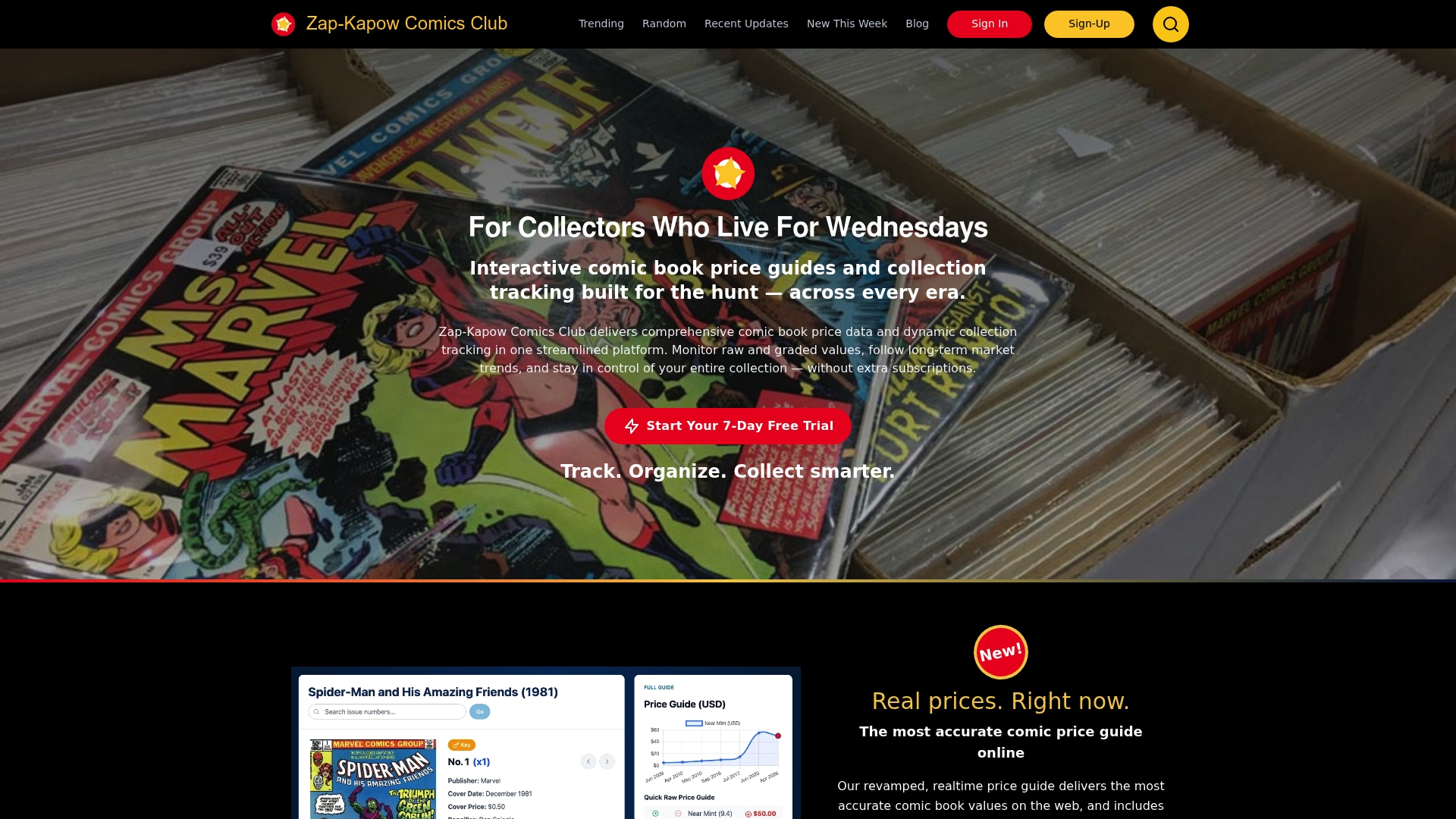
If you’re serious about understanding comic book pricing and managing your collection without juggling five different tabs, Zap-Kapow Comics Club has you covered. The platform delivers up-to-date price data for both raw and CGC-graded comics, so you always know what your books are worth at any given moment. You can monitor recent price updates as the market moves, track long-term trends, and keep your entire collection organized in one place. No extra subscriptions. No guesswork. Just clean, reliable data that makes evaluating comic book collections genuinely fun. Head over to Zap-Kapow Comics Club and see what your collection is really worth.
FAQ
How are comic book price guide values determined?
Price guides aggregate sold price data from auction platforms like Heritage Auctions, eBay, and ComicLink, then factor in condition grades and key issue significance to produce estimated values. The most accurate guides prioritize actual sold transactions over asking prices.
What is the difference between raw and graded comic values?
Raw (ungraded) comics typically sell for 40 to 70% of the value of a CGC-graded copy in equivalent condition. The premium for a graded copy reflects the certainty of condition certification, which reduces buyer risk.
Why do price guides sometimes feel inaccurate?
Price guides are always slightly behind the live market because they update on fixed schedules. A print guide updated annually cannot reflect rapid price changes driven by media announcements or speculative buying.
What makes a comic book a key issue?
A key issue contains a first appearance, origin story, major character death, or significant story event. Key issues command the highest base values in price guides because collector demand is consistently strong regardless of market conditions.
Is the Overstreet Comic Book Price Guide still relevant in 2026?
Yes. The Overstreet Comic Book Price Guide remains the industry standard for historical reference, especially for Golden Age and Silver Age comics. For current market values, pair it with a live online source that tracks recent sold prices.
Recommended
- Comparing Comic Book Price Guide and Collecting Apps - Zap-Kapow Comics Blog
- Factors Affecting Comic Book Value: A Collector’s Guide - Zap-Kapow Comics Blog
- How Comic Book Auctions Work: A Bidder’s Guide - Zap-Kapow Comics Blog
- Why Graded Comics Are Worth More: A Collector’s Guide - Zap-Kapow Comics Blog