So you’ve got a long box full of comics and you’re wondering what’s actually worth something. Good question! Understanding the factors affecting comic book value is way more nuanced than most people expect. It’s not just “old equals expensive.” Condition, rarity, character significance, print variants, and market trends all play a role, and they interact in ways that can surprise even seasoned collectors. Get a handle on all of them and you’ll make smarter buys, better sales, and fewer facepalm moments at the show.
Table of Contents
- Key takeaways
- 1. The main factors affecting comic book value
- 2. Age and era: why Golden Age and Silver Age lead the pack
- 3. Condition and grading criteria: the factor that multiplies everything
- 4. Key issues: first appearances and origin stories drive demand
- 5. Media tie-ins and pop culture hype cycles
- 6. Publisher reputation and print run differences
- 7. Provenance, authenticity, and the AI question
- Our take on navigating comic valuation
- Track your collection’s value with Zap-Kapow Comics Club
- FAQ
Key takeaways
| Point | Details |
|---|---|
| Condition is king | A single grade difference can multiply a comic’s value by 50 to 100 times at the high end. |
| Age alone isn’t enough | Golden and Silver Age books carry a head start, but print run size and survival rate matter just as much. |
| Key issues command premiums | First appearances and origin stories consistently outperform comparable non-key issues in the same condition. |
| Print variants can surprise you | Newsstand editions, Canadian price variants, and limited runs can be worth significantly more than standard copies. |
| Market trends shift fast | Movie announcements and cultural hype create short-term spikes that can reverse quickly. |
1. The main factors affecting comic book value
Before we dig into each factor individually, it helps to understand how they work together. Think of comic valuation as a Venn diagram where condition, rarity, significance, and demand all overlap. A book can be rare but worthless if nobody cares about the character. It can feature a major first appearance but tank in value if the only copies left are in rough shape. Knowing how these forces interact is what separates a savvy collector from someone who overpaid for a reading copy. The rarity, demand, and trends formula is the real engine behind any comic’s price tag.
2. Age and era: why Golden Age and Silver Age lead the pack
Not all old comics are equal. The era a comic comes from sets a baseline expectation for how rare it might be, and how many copies survived in collectible shape.
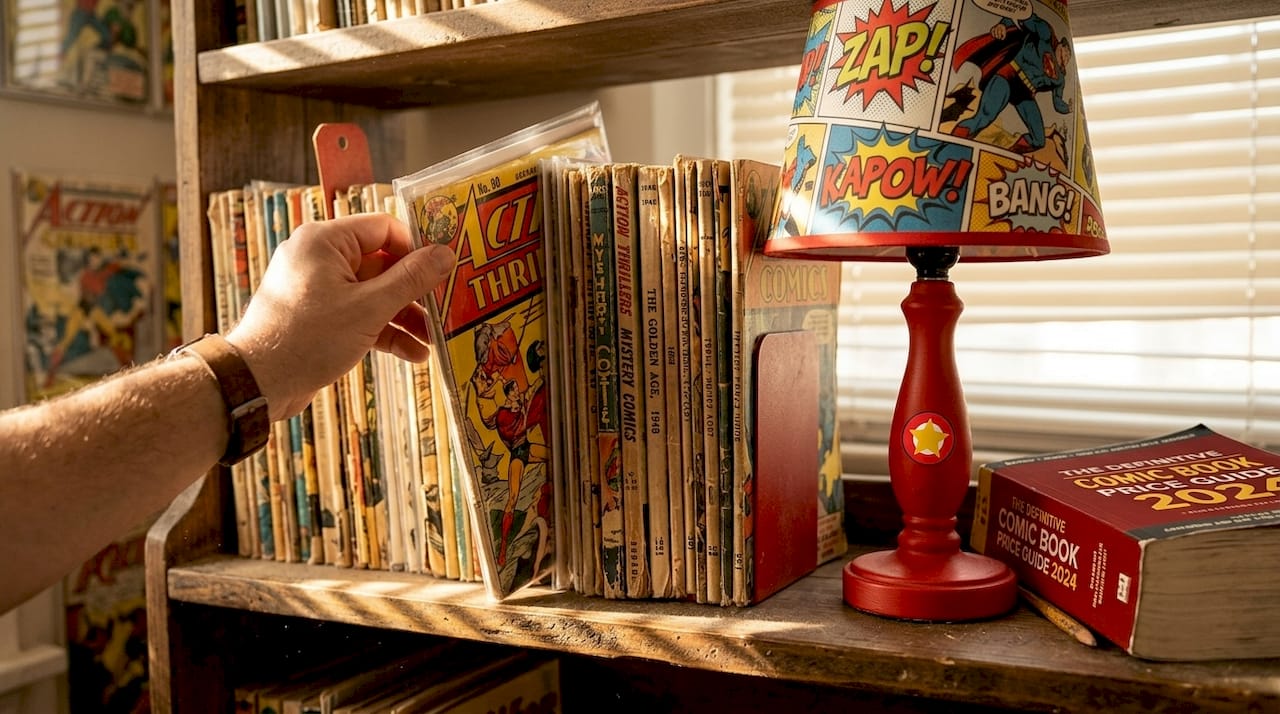
Golden Age comics (1938 to 1956) and Silver Age books (1956 to 1970) are generally the most valuable because so few copies made it to today in decent condition. Wartime paper drives literally destroyed millions of comics. Kids read them, swapped them, and tossed them. Preservation culture didn’t exist yet. So finding a Golden Age book in even a 4.0 grade is legitimately exciting.
The Modern Age (post-1985) is a whole different story. Superman #75 had a print run exceeding 6 million copies. When that many exist, supply crushes value unless the issue is a genuine landmark. Most 90s books that collectors bagged and boarded expecting them to skyrocket are still worth cover price at best (sorry, not sorry, 90s nostalgia friends).
There are exceptions that spike comic book age significance beyond the era average:
- Misprints and recalled editions with limited distribution
- Issues pulled from shelves due to content controversies
- Regional or foreign editions with lower print runs
- Promotional giveaways with tiny distribution numbers
Pro Tip: Don’t assume a 1940s book is automatically valuable. A water-damaged Golden Age book in 1.0 condition may sell for less than a high-grade Silver Age key. Era matters, but condition always shows up to the fight too.
3. Condition and grading criteria: the factor that multiplies everything
Here’s where it gets really wild. Near Mint copies can be worth 50 to 100 times more than Good copies of the same issue. That’s not a typo. Amazing Spider-Man #129, the first appearance of the Punisher, sells for $300 to $600 in a 2.0 grade. The same book in a 9.6 or 9.8? We’re talking $25,000 to $50,000 or more. That’s why understanding comic book grading criteria is non-negotiable for serious collectors.
Professional grading services like CGC and CBCS provide standardized, consistent validation. CGC grades mean the same worldwide, so a 9.4 in Tokyo and a 9.4 in Tampa represent the same physical condition. That universal language enables higher premiums, especially at the top of the scale.
Here’s what graders actually examine:
- Cover quality: Color vibrancy, tears, creases, and staining
- Spine integrity: Splitting, rolling, and stress marks along the spine
- Corner sharpness: Blunting or “corner wear” from handling
- Page color: Cream to white is desirable; tanning and brittleness drop grades fast
- Defects: Writing, stamps, tape repairs, missing pages
The exponential value curve at the near-mint end is something collectors underestimate constantly. The jump from a 9.4 to a 9.8 can double or triple the price on a hot key issue. Small grade differences at the top translate into massive price gaps.
| Grade | Label | Typical Condition |
|---|---|---|
| 9.8 | Near Mint/Mint | Nearly flawless, tiny imperfections only |
| 9.4 | Near Mint | Minor wear, still very sharp |
| 8.0 | Very Fine | Light wear, bright colors |
| 6.0 | Fine | Noticeable wear, still flat and clean |
| 2.0 | Good | Heavy wear, readable but rough |
Is professional grading always worth it? Not automatically. Minimum raw value of $150 to $500 is the general threshold before grading fees make financial sense. Sending a $30 book to get graded is just burning money.
Pro Tip: Grading preservation starts before you submit. How you store, bag, and board your books affects whether that 9.4 stays a 9.4 five years from now. Mylar bags and acid-free boards are not optional for key books.
You can explore the full breakdown of your options in our grading service comparison guide.
4. Key issues: first appearances and origin stories drive demand
This is the stuff that gets collectors truly fired up. First appearances of popular characters dramatically increase demand and sustain long-term value in a way that non-key issues simply cannot match. This is one of the biggest collectible comic price influencers in the hobby.
Think about what makes a key issue:
- First appearance of a character (Amazing Fantasy #15, Incredible Hulk #181)
- Origin story issues that define a character’s backstory
- Major deaths of significant characters
- First meeting of iconic characters
- Dramatic costume changes or power upgrades that stuck
The reason key issues hold value long-term is that demand isn’t just from collectors. It’s from fans of the character, speculators, and people who want a physical piece of comic history. That multi-layer demand creates a floor under prices that non-key books don’t have.
Cultural longevity matters too. Characters with deep, multi-decade fanbases (Spider-Man, Batman, Wolverine) generate what you could call “blue chip” demand. Trendy characters whose popularity spikes around a single movie run hot for a while and then correct. Buying a first appearance of a legacy character in high grade is a fundamentally different investment than buying the first appearance of someone introduced last year.
5. Media tie-ins and pop culture hype cycles
Movie tie-ins and trending characters create hype cycles that can spike prices dramatically in the short term. When a character gets announced for a major film or streaming series, their first appearance can jump 200% overnight. Sometimes that holds. Often it doesn’t.
The collector who understood what impacts comic value before the announcement profits. The one who buys at the peak of hype often watches value correct downward once the movie releases or underperforms. Watching market trends for comic books ahead of major announcements is one of the most practical skills you can develop.
Short-term spikes are real and exploitable if you’re paying attention. But sustainable value comes from the intersection of key issue status, high condition, and enduring character popularity.
6. Publisher reputation and print run differences
Not all publishers carry equal weight in the collectibles market. Marvel and DC dominate collector demand simply because of their depth of iconic characters and decades of cultural penetration. That said, niche publishers have produced some genuinely valuable books. Early Image Comics and EC Comics from the Golden Age have dedicated, passionate collector bases.
Print run specifics matter a lot once you get past the publisher name. Facsimile editions and reprints can confuse newer collectors into thinking they have an original. Always check the indica (that small print block inside the front cover) for printing dates and edition details.
| Edition Type | Value Impact |
|---|---|
| First print, original series | Highest value, especially in key issues |
| Later printings | Significantly lower, labeled on cover |
| Newsstand edition | Sometimes higher due to lower survival rates |
| Facsimile/reprint | Minimal collectible value |
| Canadian price variant | Can exceed standard US copy value |
The newsstand versus direct market distinction is genuinely underappreciated. Newsstand copies were sold at corner stores and newsstands, handled more roughly, and returned or destroyed at higher rates. Fewer survived in high grade. Canadian Price Variants sometimes worth more than their American counterparts because of even smaller distribution and survival numbers.
7. Provenance, authenticity, and the AI question
This one is newer but increasingly relevant. Collectors are placing more value on provenance: knowing where a book came from, who owned it, and verifying its authenticity. Signed books by creators carry premiums, but authenticity concerns around autographs are real. A signature without a witness certificate from a reputable service is essentially unverifiable.
There’s also a genuinely interesting 2026 development worth knowing. Collector sensitivity to AI-created content is influencing how the community values artistic originality in comics. Whether that translates directly to price premiums for human-created original art books remains to be seen, but provenance and authenticity are clearly moving up the value ladder.
Our take on navigating comic valuation
We’ve seen collectors make the same mistakes over and over, and we say this with nothing but love for the hobby. The biggest one is treating grading like a value guarantee. Getting a book slabbed in a 9.8 does not automatically make it worth thousands. If nobody wants the book, the grade is irrelevant. Market demand is the boss. Grading is just the standardized language we use to communicate condition.
We’re also skeptical of buying into hype cycles at the peak. Watching a first appearance triple in price after a casting announcement feels thrilling, but seasoned collectors know that patience before the hype pays far better than chasing it. The books worth holding for a decade are the ones with genuine key issue status, high grades, and characters with real cultural staying power.
What actually works long-term is pretty unsexy: understand editions and print runs better than the average buyer, store your books properly, get the right issues graded through a trusted service, and stay informed on market data so you’re never flying blind on a purchase or sale.
Track your collection’s value with Zap-Kapow Comics Club
Knowing the theory is great. Having real-time data behind every decision is better.
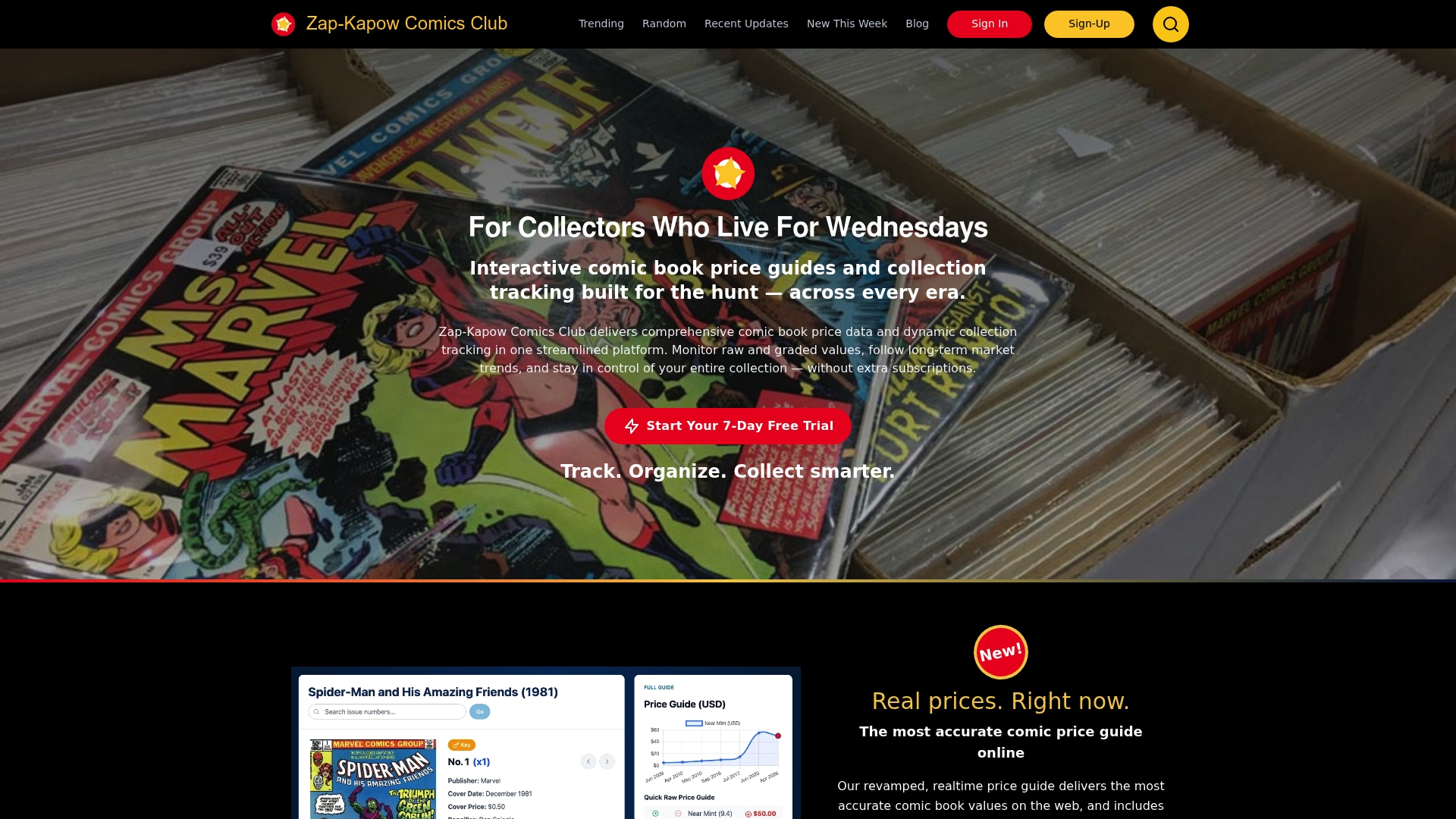
Zap-Kapow Comics Club is built for exactly this. Whether you want to check current prices on raw and graded copies, follow which issues are trending right now, or monitor your collection’s total value over time, the platform puts it all in one place. No extra subscriptions. No spreadsheet juggling. You can track recent price updates to catch market movements before they pass you by, and the trending titles tracker shows you which books are heating up in real time. If you’re serious about your collection, you need serious data behind it. Zap-Kapow Comics Club delivers exactly that.
FAQ
What has the biggest impact on comic book value?
Condition is the single biggest variable. A Near Mint copy of a key issue can be worth 50 to 100 times more than the same issue in Good condition.
Does age alone make a comic valuable?
Not on its own. Age contributes to rarity, but condition, character significance, and market demand all determine whether an old comic actually sells for big money.
Are Modern Age comics ever worth grading?
Yes, but selectively. Only submit books where the estimated increase in value exceeds grading costs, typically books worth at least $150 to $500 raw before submission.
What is a newsstand edition and why does it matter?
Newsstand editions were sold at retail locations rather than comic shops and were often discarded or heavily handled. Fewer survived in high grade, making high-grade newsstand copies rarer and sometimes more valuable than direct market versions.
How do movie announcements affect comic prices?
Movie and streaming announcements create short-term price spikes on related first appearances and key issues. These spikes can correct sharply after release, so understanding market trends before buying into hype is critical for collectors.
Recommended
- How Comic Values Are Calculated: Rarity, Demand and Trends Explained - Zap-Kapow Comics Blog
- Comic Collection Insurance Appraisal: A Collector’s Guide - Zap-Kapow Comics Blog
- What Makes a Comic Book Rare: A Collector’s Guide - Zap-Kapow Comics Blog
- 10 Comic Book Collecting & Pricing Trends to Watch in 2026 - Zap-Kapow Comics Blog