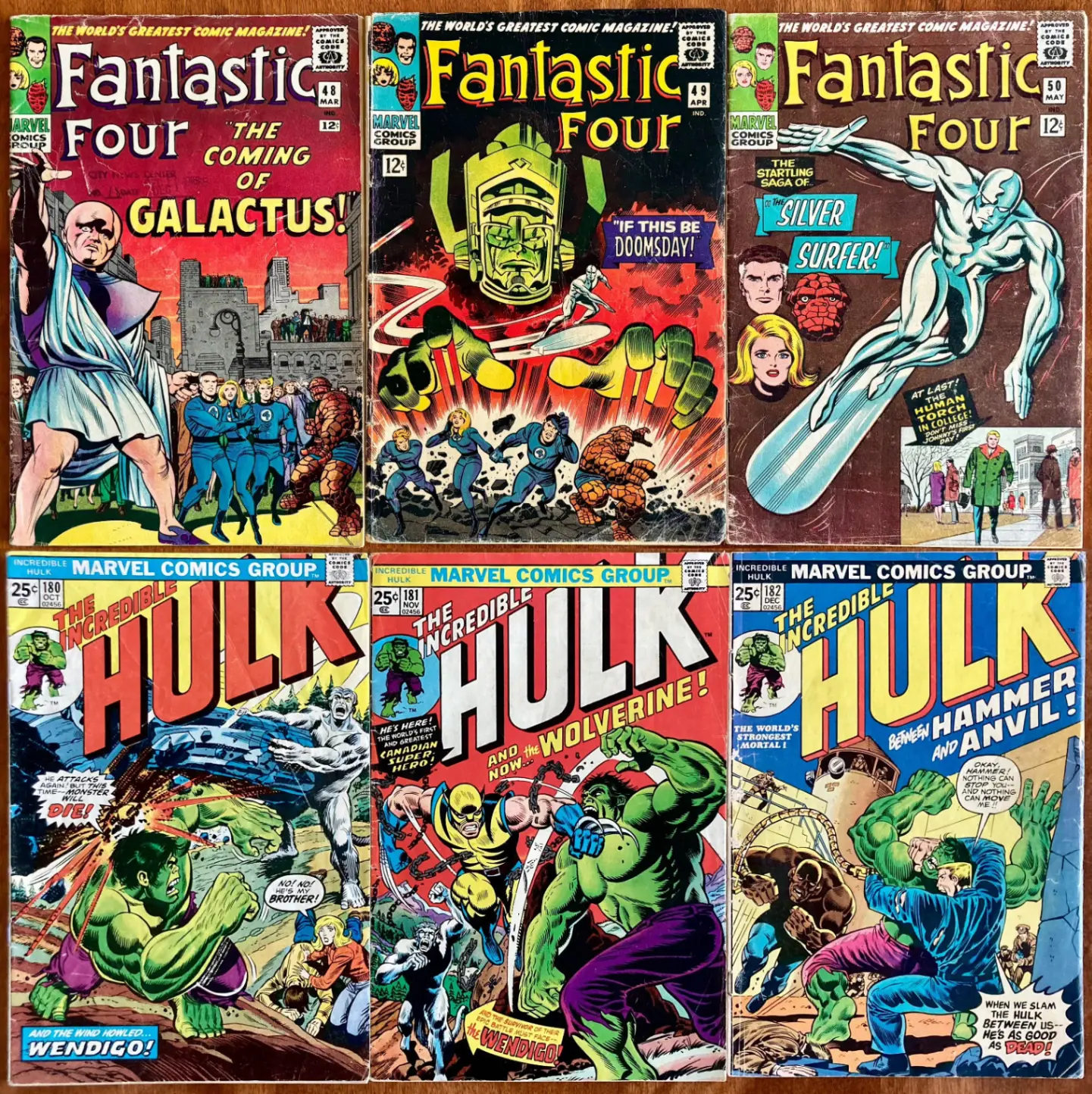
A cameo is a quick tease, usually a single panel or a last-page reveal, while a first full appearance is the character’s real, story-driving debut. Both technically count as “firsts,” but the market usually pays a premium for the full appearance. There are real exceptions, though, and they trip up even seasoned collectors.
TL;DR:
- Cameos are typically brief appearances confined to a single panel or last-page tease, while full appearances show the character clearly and actively participate in the story.
- Price differences usually favor full appearances, but scarcity, high-grade availability, or narrative significance can sometimes make cameos more valuable in specific cases.
- Grading labels from services like CGC are key to verifying whether a comic is a cameo or a full appearance, with slab notes often resolving disputes.
- To identify a cameo versus a full appearance, check the indicia, interior pages for the character’s involvement, slab notes, and recent sales data for context.
- Collectors should buy both when possible, but if choosing one, the full appearance generally offers a safer investment, especially when market data supports it.
Table of Contents
- First Appearance vs Cameo: The Core Distinction
- Why the Cameo vs Full Distinction Actually Moves Prices
- How Grading and Price Guides Handle the Cameo/Full Split
- How to Verify Whether You’ve Got a Cameo or a Full Appearance
- Famous Cameo vs Full Appearance Splits Every Collector Knows
- Our Take on Cameo vs Full Appearance Collecting
- Verify Cameo vs Full Status Before You Buy or Sell
- Sources
- FAQ
First Appearance vs Cameo: The Core Distinction
Every heated forum debate about “which issue is the real first” boils down to one taxonomy problem. Comic collecting has developed its own vocabulary for this, and once you know it, half the arguments online just evaporate.
Here’s the breakdown, plain and simple:
- Cameo: A brief, often unnamed or unclear appearance, typically confined to a single panel, a shadow, a silhouette, or a last-page cliffhanger. The character shows up, but doesn’t do much of anything.
- First full appearance: The character is clearly shown, identified, and actively participates in the story. This is the version most fans picture when they think “first appearance.”
- First cover: The issue where the character first shows up on the cover art, which can happen before, after, or simultaneously with either the cameo or the full appearance.
- Origin issue: The comic that tells how the character got their powers, identity, or motivation. Sometimes this lines up with the first full appearance, sometimes it’s a completely separate book.
- First continuity appearance: Occasionally a character debuts in one continuity (an alternate universe, an ad, a promotional one-shot) before settling into their mainstream comic history. Guides typically flag these separately.
Price guides often use shorthand like “first appearance (cameo)” to flag that the issue is technically the earliest print appearance but not the full reveal. This labeling convention exists specifically because a cameo is a publishing first when it precedes a full appearance, even though the market treats the two very differently. Once you can spot which category an issue falls into, you can read any listing or slab label with a lot more confidence.
Why the Cameo vs Full Distinction Actually Moves Prices
Demand concentrates around the issue that gives collectors the most bang for their buck: a cover appearance plus a meaty story role. That combination is why first full appearances usually dominate price guides, while cameo issues trail behind, sometimes by a wide margin.
But “usually” isn’t “always,” and this is where things get interesting. Relative scarcity can flip the script entirely. If the cameo issue had a smaller print run, or high grade copies are rarer for the cameo book than the full-appearance book, the cameo can command a stronger price in top condition. Narrative significance matters too. Some cameos become collector favorites purely because they’re the very first physical print appearance, full stop, regardless of story weight.
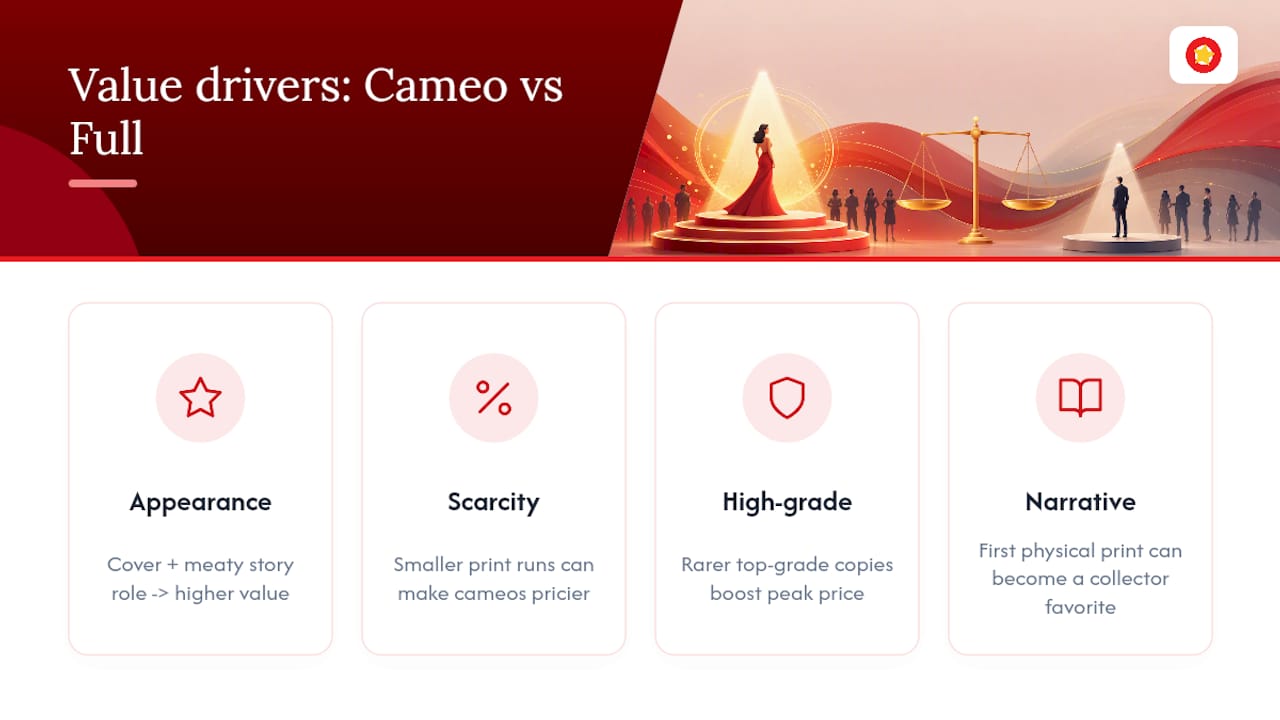
Cameo issues frequently sell for a fraction of what their corresponding first full appearance commands, though the exact gap varies wildly by character and era. If you’re investing for long-term value, the first full appearance is generally the safer anchor. If you’re a completionist chasing every “technically first” printing, the cameo issue becomes essential precisely because it’s rarer in conversation, even when it’s not rarer in the box.
How Grading and Price Guides Handle the Cameo/Full Split
CGC and other third-party grading services put real weight behind how they label a slab. When you see a yellow label that reads “1st app. Wolverine (cameo)” versus one that reads “1st full app. Wolverine,” that distinction isn’t decorative. It’s often the single biggest driver of the price gap between two otherwise similar comics.
A few things worth knowing about how this plays out in practice:
- Slab notes are considered close to the final word for most buyers and sellers, since the label from a grading service often resolves cameo vs full disputes that would otherwise drag on in seller listings and forums.
- Overstreet, Key Collector, and similar price guides periodically revisit and update how they classify an issue, especially after a major sale or a publisher confirmation shifts consensus.
- Key issue status itself isn’t stamped on the book. It’s a market consensus that price guides and graders converge on over time, which means labels can and do change as new information surfaces.
Pro Tip: Before you buy a “first appearance” comic, pull up recent CGC census data and cross-check the slab notes against at least one price guide. If the wording between the two doesn’t match, treat that as a signal to dig deeper before you pay a premium.
How to Verify Whether You’ve Got a Cameo or a Full Appearance
Nobody wants to overpay for a book because a seller’s description was sloppy or, worse, deliberately vague. A quick four-step check handles most cases:
- Confirm the issue and printing. Check the indicia for the cover date and printing order. Some “firsts” get muddied by later reprints that look identical at a glance.
- Read the actual pages. Is the character shown in one panel and gone, or are they active across multiple pages with dialogue and story relevance? That’s your cameo-versus-full answer right there.
- Check slab notes if it’s graded. CGC and similar labels typically spell out cameo or full explicitly, and clear seller labeling around cameo versus full status is exactly what protects buyers from misleading listings.
- Cross-check price guides and recent sales. If a raw copy’s price seems out of step with what graded examples are fetching, that mismatch usually traces back to a cameo/full mix-up.
| Verification step | What you’re checking | Red flag |
|---|---|---|
| Indicia and printing | Cover date, print run | Reprint disguised as first print |
| Interior pages | Panel count, dialogue, story role | Seller calling a cameo a “full appearance” |
| Slab notes | Grader’s exact wording | Slab label contradicts listing description |
| Price guide cross-check | Recent comparable sales | Price wildly out of line with graded comps |
When a seller’s description and the slab label disagree, trust the slab. Marketing copy doesn’t get audited. Grading labels do.
Famous Cameo vs Full Appearance Splits Every Collector Knows
Some pairs of issues have become the textbook examples for this whole debate, mostly because the price gap between them is so dramatic it forces the conversation.
- Wolverine: Incredible Hulk #180 features a brief cameo appearance at the very end of the issue, while #181 delivers his first full, active role. #181 has historically commanded significantly higher prices across most grades, even though #180 technically got there first.
- Venom: Amazing Spider-Man #299 carries the cameo, a shadowy tease of the symbiote in costume, while ASM #300 delivers the full reveal, name, and story arc. Collectors have argued for years about which one deserves more shelf space, but #300 generally wins the price race.
- Galactus and the Silver Surfer: Fantastic Four #48 introduces both characters, but #49 is where their roles expand into the full confrontation collectors remember. Cover-first complexity adds a wrinkle here, since cover appearances and story appearances didn’t line up cleanly across the two issues.
- Amazing Fantasy #15: Spider-Man’s origin and first full appearance happen in the same issue, a rare case where there’s no cameo/full split to argue about at all.
One quiet exception worth flagging: collectors sometimes disagree about which issue truly “counts,” and in tight high-grade populations, a scarce cameo can occasionally outprice a more common full appearance. It doesn’t happen often, but it happens.
Our Take on Cameo vs Full Appearance Collecting
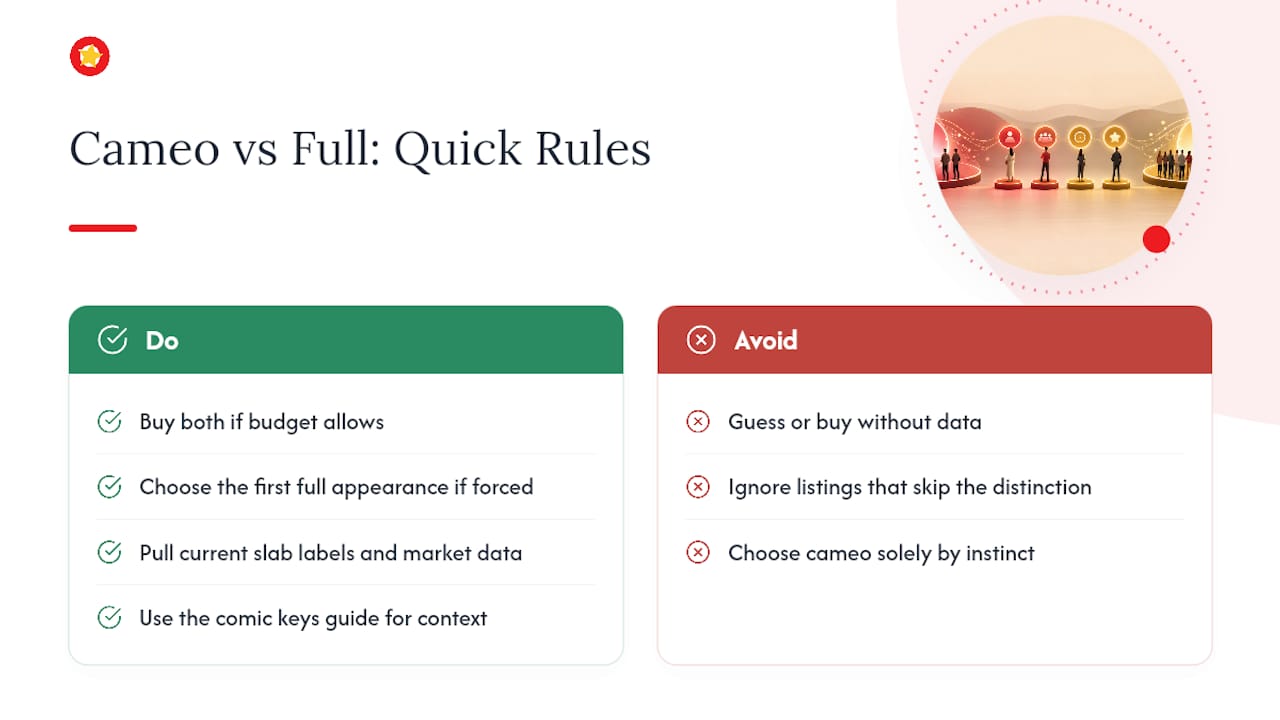
If your budget allows it, buy both. The cameo and the full appearance tell two halves of the same origin story, and owning both gives you a complete shelf, not just a complete argument. When budget forces a choice, we generally favor the first full appearance, since most collecting guides recommend it as the safer single buy unless the cameo shows real scarcity or a grade advantage that changes the math.
Either way, don’t guess. Pull current slab labels and market data before you commit real money, and treat any listing that skips the cameo/full distinction as a listing that needs more homework. Our comic keys guide walks through the broader key-issue landscape if you want more context before you buy.
— Steve
Verify Cameo vs Full Status Before You Buy or Sell
You can check slab-aware pricing and appearance data in one place instead of piecing it together across several sources. That matters most exactly where this article lives: telling a cameo from a full appearance fast, with real numbers backing the call.

Our comic book price guide tracks raw and graded values side by side, so you can see how a cameo issue’s price stacks up against its full-appearance counterpart in real time. Pair that with our trending titles page to spot which “firsts” are heating up before the rest of the market catches on, and check title-level pages like Marvel Spotlight (1971) to see how appearance data gets organized in practice. Consider starting a trial to run your next cameo-versus-full check against live market data instead of guesswork.
Sources
For deeper reading on how the collecting world sorts out these classifications, a few sources stand out:
- What Is a Key Issue Comic? How Collectors Decide - Comic Book Co
- Beginner’s Guide To 1st Appearance Comics (Detailed)
- True First Appearance: Cameo, Cover, or Full? — First Appearance Of
FAQ
Is a Cameo Considered a First Appearance?
Yes, technically. A cameo is the character’s earliest print appearance, but collectors and price guides usually distinguish it from the first full appearance for valuation purposes.
Why Is the First Full Appearance Usually Worth More Than the Cameo?
Demand concentrates on the issue where a character is clearly shown, named, and actively part of the story, which typically drives higher prices than a brief teaser panel.
Can a Cameo Ever Be Worth More Than a Full Appearance?
Yes, in cases of relative scarcity, particularly limited high-grade populations, a cameo issue can outprice its full-appearance counterpart, though this is the exception rather than the rule.
How Do I Know if My Comic Is a Cameo or a Full Appearance?
Check the interior pages for panel count and story involvement, then confirm against CGC slab notes if the book is graded, since slab labels are typically the most reliable designation.
Does Zap-Kapow Comics Club Track Cameo vs Full Appearance Pricing?
Yes, our price guide tracks raw and graded values so you can compare a cameo issue’s market performance directly against its first full appearance counterpart.