
Modern age comics worth buying are defined by a specific set of criteria: key issue status, first appearances, condition grade, and cultural staying power. The modern age spans 1985 to the present, and while most issues sell for cover price or less, the right key issues can command anywhere from $25 to $5,000 or more depending on grade. Titles like Amazing Spider-Man #300 (first Venom) and New Mutants #98 (first Deadpool) prove that the modern era produces genuinely valuable comics. Knowing which ones to chase, and why, is the difference between a smart collection and a box of expensive paper.
1. Amazing Spider-Man #300 (1988)
Amazing Spider-Man #300 is the first full appearance of Venom, making it one of the most sought-after modern age comics on the market. Todd McFarlane’s art alone gives this issue iconic status, but the Venom character’s sustained popularity across films, animated series, and merchandise keeps demand sky-high. Raw copies in decent shape regularly fetch $200 to $500, while CGC-graded copies in 9.8 condition have sold for well over $2,000. This is the kind of key issue that belongs in any serious modern age collection.

2. New Mutants #98 (1991)
New Mutants #98 introduced Deadpool and Domino in the same issue, which is a two-for-one key issue punch that collectors love. The Deadpool film franchise turned this comic from a cult favorite into a mainstream must-have. First appearances with media tie-ins like this one consistently rank among the most profitable modern investments. High-grade copies are increasingly scarce because so many were read and handled during the early 1990s speculation boom.
3. Batman: The Killing Joke (1988)
Alan Moore and Brian Bolland’s Batman: The Killing Joke is one of the most critically acclaimed and commercially successful graphic novels of the modern age. It redefined the Joker’s origin story and influenced every major Batman adaptation since. First printings in fine or better condition are genuinely collectible, and the story’s cultural footprint keeps new readers seeking it out every year. This is a title that works equally well as a reading experience and as a long-term collection anchor.
4. Harley Quinn #1 (2000)
Harley Quinn #1 from the 2000 Karl Kesel and Terry Dodson series marks Harley’s first ongoing solo title, a milestone that collectors increasingly recognize. Harley’s trajectory from Batman: The Animated Series supporting character to global pop culture icon has driven serious demand for her key issues. The 2000 series #1 sits in a sweet spot: not yet priced out of reach, but clearly on an upward trend. Condition matters a lot here, so prioritize copies graded 9.0 or better.
5. Invincible #1 (2003)
Robert Kirkman's Invincible franchise is a modern age powerhouse, and it all starts here. Invincible #1 features the first full appearances of both Invincible and Omni-Man, with an estimated print run of only around 9,000 copies — tiny by today's standards, which is exactly why this book has become one of the most sought-after modern keys on the market. It currently sits tied for #4 on Overstreet's list of Top 20 Modern Age Comics, and with the Amazon Prime animated series pulling in new fans every season, demand for Mark Grayson's first outing isn't slowing down anytime soon.
Pro Tip: Invincible's true first appearance is actually a preview that ran in Savage Dragon #102, Tech Jacket #1, and Masters of the Universe #1. Savvy collectors hunt those books too — they're often still found at a fraction of what Invincible #1 commands.
6. Absolute Batman #1 (2025)
DC's Absolute line has become a collector category all its own, and Absolute Batman #1 is its crown jewel. Scott Snyder and Nick Dragotta's reimagined Dark Knight was the best-selling comic of 2024, moving just under 400,000 copies across multiple printings — numbers most modern first issues never come close to touching. Despite that massive print run, collector demand keeps climbing as the series rolls on, with raw first prints now changing hands well above cover price and high-grade slabbed copies fetching serious money. When a book sells that big and still appreciates, you're looking at genuine staying power.
Pro Tip: With so many printings and retailer exclusives in circulation, the first printing with Dragotta's main cover is the copy to target. Check the indicia and cover trade dress carefully — later printings look similar at a glance but trade for far less.
7. Moon Knight #1 (1980) and Key Modern Issues
Moon Knight’s first appearance value jumped from $800 raw to over $2,000 graded following the Disney+ series announcement. That kind of price movement illustrates exactly why Moon Knight’s modern age appearances (including Vengeance of the Moon Knight #1 from 2024) are worth tracking now. Characters with confirmed or rumored media adaptations represent the highest-upside plays in modern collecting. The trick is getting in before the announcement, not after.
8. Saga #1 (2012)
Brian K. Vaughan and Fiona Staples’ Saga #1 is the defining creator-owned modern age comic of the 2010s. First prints are already trading at multiples of cover price, and the series’ critical reputation keeps new collectors seeking out early issues. Saga has no major film or TV adaptation yet, which actually makes it interesting. If and when that changes, first print copies of issue #1 will spike hard. This is a key issue that rewards patient collectors.
9. Spawn #1 (1992)
Todd McFarlane’s Spawn #1 launched Image Comics and changed the industry. The newsstand edition and direct edition both exist, with newsstand copies carrying a premium due to lower surviving quantities. Spawn has a new film adaptation in development, which keeps this issue on collectors’ radar. High-grade copies are harder to find than you might expect given the initial print run, because many were bagged and boarded immediately and still show handling wear from the era’s polybagged variants.
10. Of the Earth #1 (2025)
Charlie Adlard’s return to single-issue storytelling with Of the Earth #1 generated immediate buzz. The issue sold out at distributor level and was rushed to a second printing, driven by Adlard’s reputation from The Walking Dead and the eco-horror genre’s growing appeal. First prints of debut issues by creators with proven track records are exactly the kind of undervalued entry point that smart collectors target. This one checks every box: creator pedigree, strong concept, and immediate market validation.
How to spot and evaluate valuable modern age comics
The single most important factor in modern age comic value is key issue status. First appearances, origin stories, and milestone events drive the overwhelming majority of collector demand. Everything else is secondary.
Here is a practical framework for evaluating any modern age comic:
- Identify the key issue attribute. Is this a first appearance, first cover appearance, or major story event? If none of the above, the comic is likely worth cover price or less.
- Check the print run. Superman #75 (Death of Superman) had over 6 million copies printed, which is why it holds almost no value despite its dramatic story. High supply kills collector premiums.
- Assess condition honestly. A 9.8 graded copy of a key issue can be worth 10 to 20 times a mid-grade raw copy. Professional grading from CGC or CBCS is worth the cost for any issue valued above $100.
- Watch for media announcements. Submitting a comic for grading before an official MCU or streaming announcement and listing graded copies as prices spike is a proven strategy for capturing maximum value.
- Avoid the foil cover trap. 1990s foil, hologram, and die-cut covers were printed by the millions and hold almost no value today despite their flashy appearance. Collectible-looking does not mean collectible.
Pro Tip: Track reprint activity on new releases. When a debut issue goes to a second or third printing within weeks, that is a market signal that demand outpaced supply. First prints of those issues become the ones worth holding.
Collected editions vs. single issues: which format wins?
Both formats have a place in a smart modern age collection, but they serve different purposes.
| Format | Investment Potential | Best For | Price Range | Rarity Factor |
|---|---|---|---|---|
| Single key issues (raw) | High, especially for first appearances | Active trading and grading | $25 to $5,000+ | Moderate to high |
| CGC/CBCS graded singles | Highest ceiling | Long-term holding | $100 to $10,000+ | High in top grades |
| Collected editions (standard) | Low to moderate | Reading and casual collecting | $15 to $50 | Low |
| Absolute/Prestige editions | Moderate and growing | Display and long-term collecting | $50 to $150 | Moderate |
| Compendiums (early printings) | Moderate | Mixed reading and investment | $30 to $200 | Moderate |
The Absolute Batman Vol. 1 result from 2025 shows that prestige collected editions can develop genuine secondary market value when they combine high production quality with strong underlying content. High unit sales of collected editions combined with collector demand create a stable secondary market that supports long-term value growth for select modern age collections. Single key issues still offer the highest ceiling, but collected editions from DC’s Absolute line and Image’s compendium format are increasingly worth holding rather than reading to pieces.
Emerging modern age comics and underrated gems to watch
The modern age comic market rewards collectors who look slightly ahead of the mainstream. Here are the signals worth tracking right now:
- Creator pedigree on debut issues. When a proven creator launches a new series, the debut issue almost always appreciates. Of the Earth #1 is the recent model. Watch for new launches from creators like Jonathan Hickman, Donny Cates, and Kelly Thompson.
- Reprint velocity. A first issue going to second printing within 30 days is a strong buy signal for the first print. Check hidden gems gaining value for current examples.
- Indie and genre-bending series. Eco-horror, sci-fi horror, and literary comics are gaining serious critical traction. Image Comics and BOOM! Studios consistently produce the breakout titles in these categories.
- Characters rumored for MCU or DCU adaptation. Rumors alone can move prices. Confirmed announcements move them dramatically. Tracking 2026 collecting trends helps you stay ahead of the curve.
- Variant covers with low print runs. Not all variants are equal. A 1:25 or 1:50 retailer incentive variant on a key issue has genuine scarcity. A standard cover variant on a non-key issue does not.
The modern age comic market favors strategic timing and selection, rewarding collectors who combine knowledge of media cycles with condition and rarity insights.
Key takeaways
The most valuable modern age comics combine key issue status, high condition grades, and cultural relevance tied to media adaptations or creator reputation.
| Point | Details |
|---|---|
| Key issues drive value | First appearances and milestone events separate valuable comics from cover-price filler. |
| Condition multiplies returns | A CGC 9.8 copy of a key issue can be worth 10 to 20 times a mid-grade raw copy. |
| Media timing is a strategy | Grading and listing before MCU or streaming announcements captures peak price spikes. |
| Print run size matters | High-print-run issues like Superman #75 hold almost no value despite their story significance. |
| Collected editions are rising | Absolute and compendium formats are developing genuine secondary market value beyond retail. |
Our take on building a modern age collection that actually pays off
We have seen collectors make the same mistake over and over: chasing every variant cover and every “hot” new issue without a clear strategy. The modern age is littered with shiny foil covers and polybagged “collector’s editions” that are worth exactly nothing today. The market has spoken loudly on that front.
What actually works is a focused approach. Concentrate on proven key issues with first appearances, especially characters with active or rumored media adaptations. New Mutants #98 and Amazing Spider-Man #300 are not going anywhere. They have decades of demand behind them and no sign of slowing down.
We also think collectors underestimate the value of patience with emerging titles. Of the Earth #1 is a perfect example. A first print picked up at cover price from a local comic shop could be worth multiples of that within a year if the series gains traction. You do not need to spend thousands to build a collection with real upside.
One more thing worth saying: condition is not optional. A mid-grade copy of a key issue is fine for reading. For investment purposes, only high-grade copies move the needle. Get comfortable with CGC and CBCS grading, and be selective about which issues are worth the submission cost.
Mix your collection intentionally. Hold a few graded key issues for the long term, add some quality collected editions like the Absolute line for display and reading value, and keep a watchlist of emerging titles. That balance is where the real fun (and the real returns) live.
Track your modern age collection with Zap-Kapow Comics Club
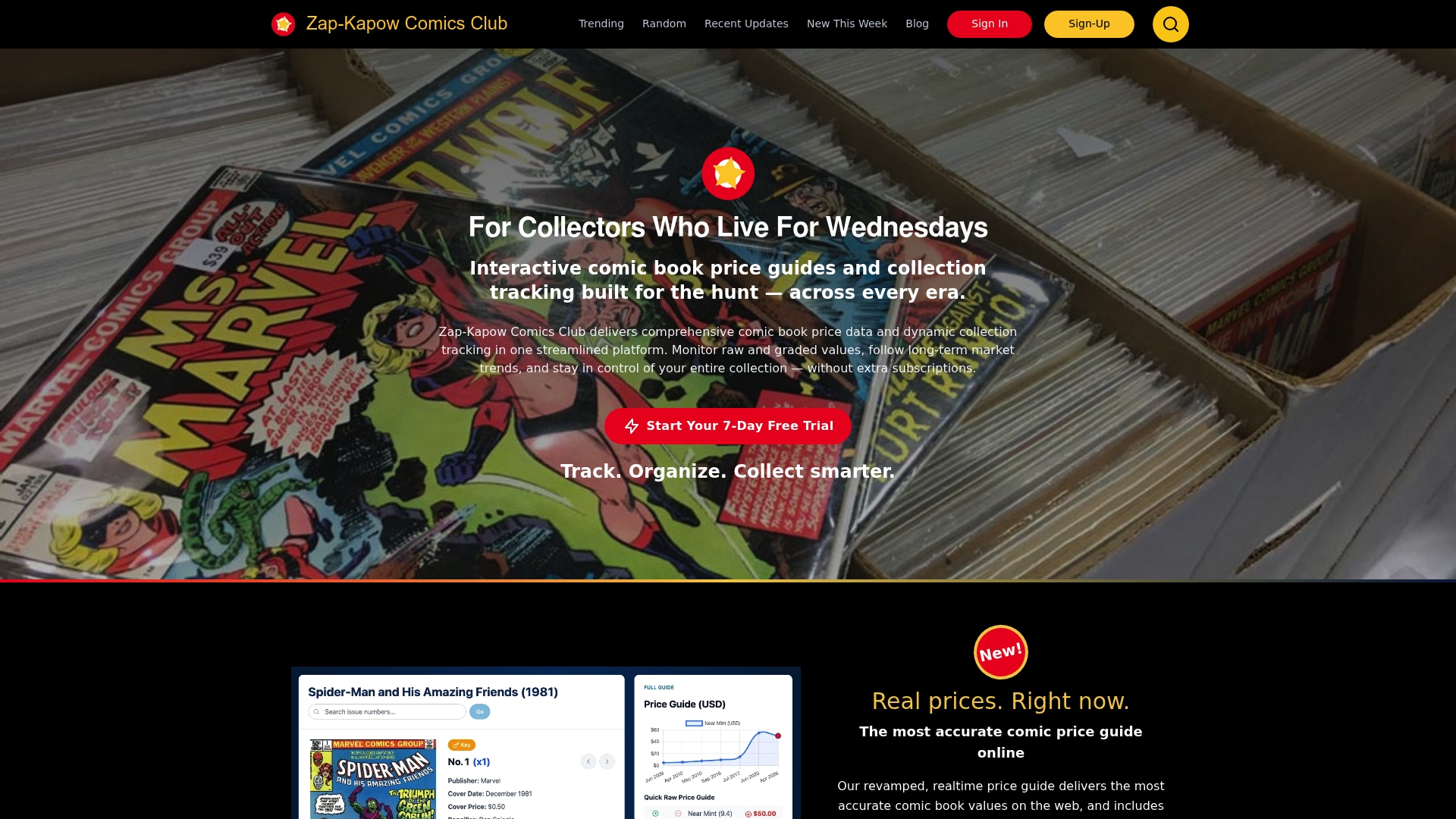
Building a collection of top comics of the modern age is exciting. Keeping track of what everything is worth? That is where Zap-Kapow Comics Club comes in. The platform delivers comprehensive price data for both raw and CGC-graded copies, so you always know where your collection stands. Monitor long-term market trends, track individual issue values, and spot rising titles before they peak. Whether you are holding Amazing Spider-Man #300 or watching Of the Earth #1 climb, the Zap-Kapow Comics Club price guide gives you the data to make smart decisions. Check out the trending comics tracker to see what the market is moving on right now.
FAQ
What counts as a modern age comic?
Modern age comics are generally defined as issues published from 1985 to the present. This era follows the Bronze Age and is characterized by darker storytelling, creator-owned titles, and the rise of direct market distribution.
Are most modern age comics worth anything?
Most modern age comics are worth cover price or less due to large print runs and low demand. Value is concentrated in key issues with first appearances, major story events, or confirmed media adaptations.
Does grading really make that big a difference?
Yes. A CGC 9.8 copy of a key issue routinely sells for 10 to 20 times the price of a mid-grade raw copy. Professional grading from CGC or CBCS is worth the investment for any issue valued above $100.
Which modern age comics are best for new collectors?
New Mutants #98, Amazing Spider-Man #300, and Saga #1 are strong starting points. They combine proven demand, cultural relevance, and a range of price points that suit different budgets.
How do media announcements affect comic values?
A confirmed film or TV adaptation can double or triple the value of a character’s key issues within days. The Moon Knight first appearance jumped from $800 raw to over $2,000 graded after the Disney+ series announcement, which is a clear example of how fast prices can move.
Recommended
- Hidden Gems: 5 Comics Quietly Gaining Value — May 2026 - Zap-Kapow Comics Blog
- 10 Comic Book Collecting & Pricing Trends to Watch in 2026 - Zap-Kapow Comics Blog
- Top 10 Most Valuable Comic Books From The 2000’s - Zap-Kapow Comics Blog
- The Most Valuable Comic Books From Every Decade - Zap-Kapow Comics Blog