
The fastest way to produce a comic collection report that actually holds up is to export a documented inventory (CSV or PDF) from a collection tracking system, then attach receipts, photos, and grading data as backup evidence. That covers most insurance and sale scenarios. Reserve a qualified appraisal for high value keys, donations, or anything a tax preparer or insurer flags by name.
TL;DR:
- Using full inventory exports combined with qualified appraisals offers a balance between speed and legal defensibility for high-value or unique comics.
- Proper recordkeeping requires digitized receipts, detailed photos, grading numbers, and backups in multiple locations to satisfy insurer and tax authority scrutiny.
- Fair Market Value, based on completed sales rather than listed prices, is the standard for reporting, making documented grades and certification numbers essential.
- Attach supporting evidence such as receipts, photos, and appraisals separately when exporting reports to ensure clarity for insurance or tax purposes.
- A collection report is only as strong as its supporting documentation, which can directly influence insurability, tax deductions, and resale value.
Table of Contents
- What Counts as Comic Collection Reporting?
- Building a Recordkeeping Checklist That Survives Scrutiny
- What Actually Counts as Value in a Collection Report?
- How to Assemble and Export a Report Step by Step
- When You Actually Need a Qualified Appraisal
- Our Take on Fitting This Into Your Workflow
- Perspective: Why Disciplined Reporting Separates Hobbyists From Serious Collectors
- Start Tracking Your Collection With Real Pricing Data
- Sources
- FAQ
What Counts as Comic Collection Reporting?
“Comic collection reporting” simply means producing a document, digital or printed, that lists what you own, what it’s worth, and proof that backs both claims. Insurers call it a scheduled inventory. Tax preparers call it supporting documentation. Buyers just call it “the paperwork that makes me trust your asking price.” Same job, different names.
You’ve got four real options, and picking the wrong one for the situation is where collectors get burned:
- Mobile scanning apps with export: Fast comic book tracking through barcode or cover scans, with CSV or PDF output. Great for routine inventory, weak on their own for high dollar claims.
- Spreadsheets: Total control over fields, zero automation. Fine for a 200 book collection, brutal for a 5,000 book collection.
- Price guide platform reports: Pulls live and historical pricing alongside your holdings, which strengthens the valuation side of comic collection analysis.
- Professional appraisals with auction comps: The only option that carries real weight with the IRS or a skeptical insurance adjuster.
Speed and cost run in one direction, defensibility runs in the other. An app export takes minutes and costs nothing beyond a subscription. A qualified appraisal takes days or weeks and costs real money. The smart move, especially once your collection includes a few certified keys, is merging methods: export the full inventory for volume, then attach a formal appraisal as an appendix for the handful of books that actually move the needle on value.
Building a Recordkeeping Checklist That Survives Scrutiny
A report is only as strong as the paper trail behind it. Establishing that trail with receipts, invoices, photos, and grading numbers is what separates a document an insurer accepts from one they question, according to guidance from CPA Practice Advisor. Here’s the order to build it in:
- Collect receipts and invoices. Seller contact info, purchase date, and price paid on every item, especially anything bought online where the listing might vanish.
- Digitize everything. Scan or photograph paper receipts the day you get them. Cloud storage beats a shoebox every time.
- Photograph the comics themselves. Cover, spine, and any defects, shot the same way each time for consistency.
- Log slab numbers and grade reports. CGC and PSA certification numbers are searchable and instantly verifiable.
- Standardize your export fields. Title, issue, edition, grade, cert number, purchase price, purchase date, current value, and notes, for every single entry.
- Back up in two places minimum. Local drive plus cloud, and keep a version history so you can prove when a value was updated.
Pro Tip: Name your photo files with the issue and cert number (e.g., ASM129_CGC96_1234567890.jpg) so they match your export rows automatically. Six months from now you won’t remember which file goes with which book.
What Actually Counts as Value in a Collection Report?
Fair Market Value, not replacement cost, is what the IRS wants to see, and that distinction trips up more collectors than any other part of comic collection reporting. Replacement cost asks “what would it cost to buy this again today at retail?” FMV asks “what would a willing buyer actually pay a willing seller?” Those numbers can differ by a wide margin, especially on keys where retail asking prices run far ahead of what books actually close for.
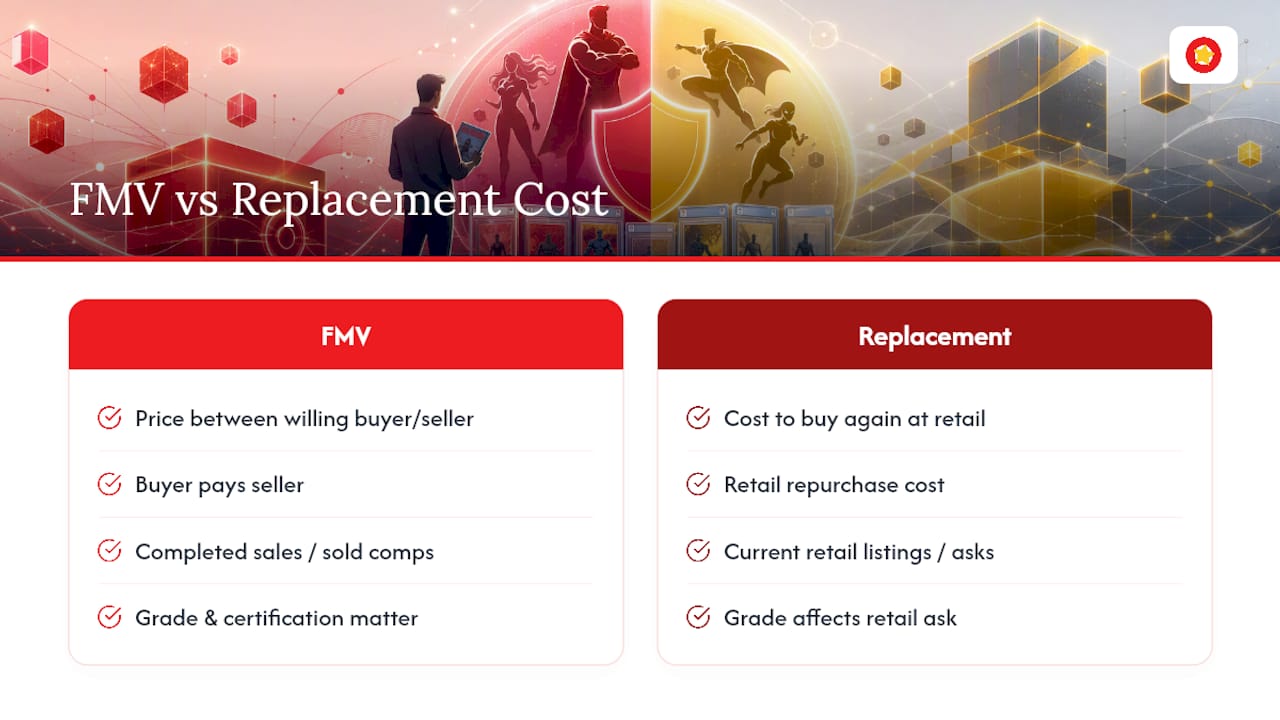
Grading is the other lever. A CGC 9.6 and a raw copy of the same issue can be worth multiples apart, so your report needs to document the grade, the certification number, and ideally a photo of the slab label itself.
For proof of FMV, lean on completed sales rather than listed prices. Auction houses and platforms tracking sold comics give you real transaction data, and matching comps by grade and era, rather than grabbing the nearest listing, produces a far more defensible number.
The IRS treats collectibles held over a year and sold at a profit as collectible capital gains, subject to a maximum federal collectibles rate that’s higher than standard long-term capital gains, plus whatever your state adds on top.
That’s why cost basis matters so much. Without a documented purchase price, you’re taxed as if your basis were zero, which turns a modest profit into a much bigger tax bill than it should be. It also matters whether you’re a collector holding a capital asset or effectively running a dealer business, since the IRS treats those very differently.
How to Assemble and Export a Report Step by Step
Building the actual package is where all that recordkeeping pays off. Work through it in this order:
- Pick your export formats. A clean PDF summary for a human reader (insurer, buyer, family member) and a CSV or Excel file for anyone doing math on it, like an accountant or auditor.
- Attach the evidence. Photos, receipts, slab reports, and any provenance notes go in as supporting files, not just line items in a spreadsheet.
- Split off your high-value items. Anything above your comfort threshold gets its own appendix with comps or a signed appraisal attached, separate from the general inventory.
- Run a final check before you send it. Backups current, appraisal signed if one’s included, files clearly labeled by issue and cert number.
| Deliverable | Best For | Must Include |
|---|---|---|
| PDF summary | Insurer, buyer, family | Titles, values, condition photos |
| CSV/Excel export | Tax preparer, auditor | Full field set, cost basis, dates |
| Appraisal appendix | High-value keys, donations | Comps, methodology, signed credentials |
When You Actually Need a Qualified Appraisal
Not every book needs one, but certain situations make it non-optional. Watch for these triggers:
- A single issue crosses a value threshold that makes your insurer or tax preparer ask for formal documentation.
- You’re claiming a donation deduction, where the IRS specifically requires a qualified appraisal rather than a casual estimate.
- Your insurer requests one directly, usually tied to a scheduled personal property rider.
A qualified appraisal isn’t the same document as a standard replacement-cost insurance appraisal. It needs comparable sales data, detailed condition notes, a clear explanation of methodology, and a signature from a credentialed appraiser, since a qualified appraisal is what the IRS actually requires for deductions and disputes. Cost and turnaround vary by collection size and appraiser, so budget for both when a single key or a donation puts you in this territory. Services like Pressing Issues build these methodology-backed valuation reports specifically for situations like this.
Our Take on Fitting This Into Your Workflow
Running current price data alongside a live inventory is exactly what makes comic collection reporting fast instead of a weekend-long scramble. Zap-Kapow Comics Club pairs historical and real-time pricing with collection tracking, so your export already reflects up-to-date values instead of numbers you eyeballed six months ago.
For the tax and insurance side, our posts on appraisal differences and tax implications go deeper than we can here. If you’re tracking a growing collection, our piece on tracking benefits is worth a read before your next export.
Perspective: Why Disciplined Reporting Separates Hobbyists From Serious Collectors
Anyone can stack longboxes. What separates a hobbyist from a serious collector is whether they can prove what’s in them. Reporting habits protect value when a claim gets filed, simplify life when a tax preparer starts asking questions, and cut down the friction of an insurer poking holes in your numbers.
Documented provenance and clean grading records also open doors that undocumented collections can’t reach: better consignment terms, smoother auction house intake, buyers willing to pay closer to true FMV instead of lowballing out of uncertainty. The paperwork isn’t the boring part of collecting. It’s what makes the fun part sustainable.
— Steve
Start Tracking Your Collection With Real Pricing Data
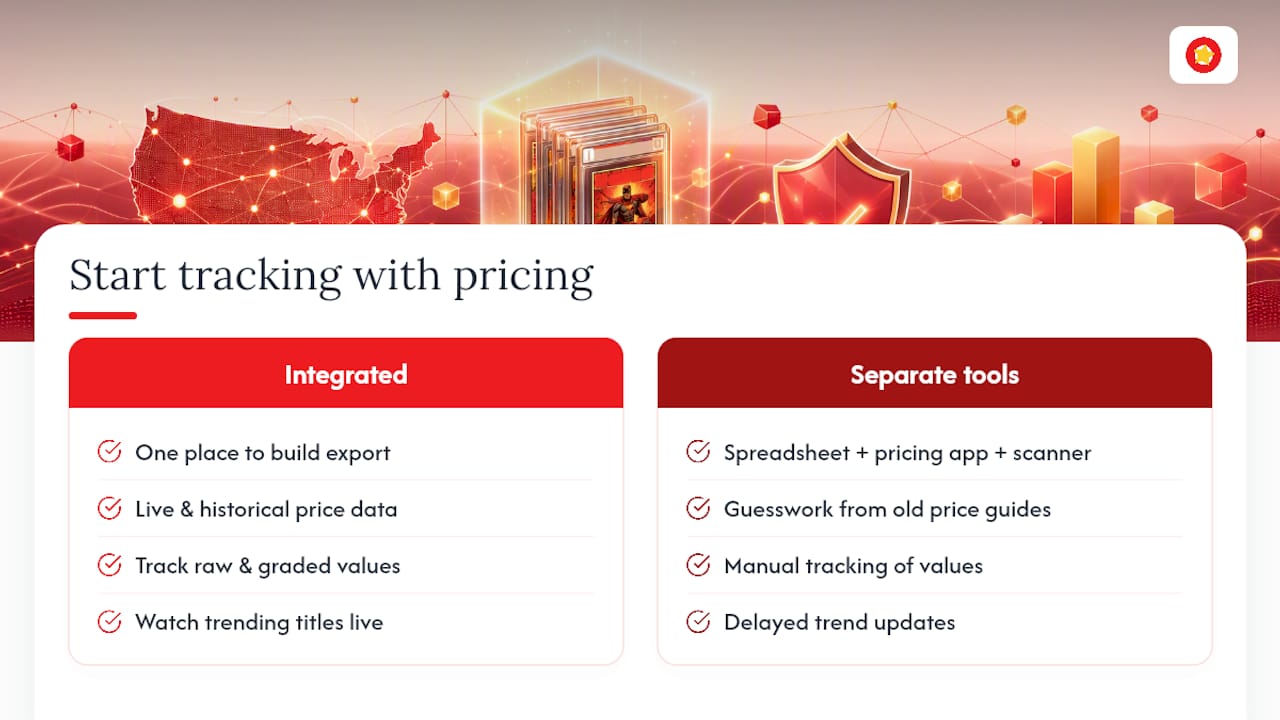
An integrated platform provides one place to build the inventory export on which this whole workflow depends, backed by live and historical price data instead of guesswork pulled from old price guides.

Rather than juggling a spreadsheet, a separate pricing app, and a third tool for scanning, you track raw and graded values, watch trending titles move in real time, and export the whole thing when it’s time to file a claim, talk to a tax preparer, or hand a report to a buyer. No extra subscriptions stacked on top to get there.
Curious what your key issues are actually worth against current market data? Check comic book values and start building a collection report that’s ready the moment you need it.
Sources
IRS guidance on collectibles, appraisal standards, and Zap-Kapow’s own posts on appraisal and tax reporting back the guidance above.
This article is general information, not a substitute for advice from a qualified financial advisor. Consult a qualified financial professional about your own circumstances before acting on anything here.
- IRS Tax Topic: Collectibles (Topic No. 409)
- Comic Books in the Attic? Old Collections Could Be a Treasure, But Prepare for the Taxes - CPA Practice Advisor
- 5 Reasons an IRS Qualified Appraisal Is Important | Appraisily
FAQ
What Is the 180 Rule in Comics?
The “180 day rule” isn’t an official grading or tax standard. It refers informally to certain collector heuristics around holding periods or price movement, so treat any specific version you hear with caution and rely on documented FMV and IRS guidance instead.
How Much Does It Cost to Get Comics Appraised?
Appraisal cost varies by collection size, item value, and appraiser, so get quotes directly from a qualified appraiser rather than assuming a flat rate. Reserve the expense for high-value keys or situations where a qualified appraisal is specifically required.
What Do You Call a Collection of Comics?
Most collectors simply call it a “comic collection” or “run,” while a formal record of it, for insurance or tax purposes, is called a collection inventory or collection report.
Where Can I Sell Comics for the Best Value?
The best channel depends on the book: high-grade keys usually do best through auction houses or specialist dealers who can point to comps, while routine back issues move well through general marketplaces once you’ve documented condition and provenance.
Do I Owe Taxes When I Sell My Comic Collection?
Profit on comics held over a year is taxed under the IRS collectibles capital gains rules, which carry a different maximum rate than standard capital gains, so documenting your original cost basis matters for the final tax bill.