
A comic book club checklist is a step-by-step organizer that covers every task from recruiting members to running discussion-rich meetings that keep people coming back. Without one, even the most enthusiastic group drifts into chaos by the third session. The best clubs treat this checklist as a living document, updating it as their reading tastes and membership evolve. Whether you’re launching your first club or rescuing one that’s lost its spark, this guide covers every item you need.
1. Essential pre-meeting steps on your comic book club checklist

Before anyone cracks open a single issue, the logistics have to be locked in. Structured clubs set registration requirements, loan dates, and accessibility options well ahead of meetings. That kind of advance planning is what separates a club that runs three sessions from one that runs three years.
Here’s what to nail down before your first meeting:
- Recruit 4 to 8 members. Smaller groups generate more focused conversation. Send specific invitations that mention the genre focus (superhero, indie, manga) so people self-select based on genuine interest.
- Pick a recurring weekday, not a fixed date. Stable weekday scheduling prevents the constant rescheduling that kills clubs. “Last Wednesday of the month” beats “the 15th” every time because it plays nicely with library hold schedules.
- Choose your format. In-person, virtual via Discord or Zoom, or a hybrid. Each has tradeoffs. Virtual clubs can pull in members from across the country. In-person clubs build tighter community bonds.
- Plan accessibility early. The NYPL Tremont Comic Book Club requires ASL and CART requests at least two weeks before meetings. That’s the standard to aim for.
- Assign initial roles. Discussion leader, panel analyzer, theme tracker. More on these below.
Pro Tip: Send a one-page “club charter” to new members before the first meeting. It sets expectations for reading deadlines, spoiler etiquette, and how book picks rotate. Clubs that do this report far fewer awkward first-meeting misunderstandings.
2. How to select and distribute reading materials
Curating your comic club reading list is genuinely one of the most fun parts of organizing. It’s also where clubs most often go sideways if there’s no system.
- Curate 4 to 6 options per reading cycle. Give members a shortlist to vote on rather than a single mandate. Mix genres: a Marvel or DC arc alongside an indie title like Saga by Brian K. Vaughan or a manga like Berserk keeps things fresh.
- Use library loans first. Most public libraries carry graphic novels and will place holds for club members. This keeps costs at zero and supports your local library system. Win-win.
- Set a clear reading deadline. Two weeks before the meeting is the sweet spot. It gives members time to read without the book sitting on their nightstand for a month.
- Organize by theme or genre. A “cosmic horror” month or a “female-led titles” cycle gives the reading list a narrative arc that makes selection feel intentional rather than random.
- Track what members own. A shared spreadsheet or a collection management tool prevents duplicate purchases and helps you identify who can lend copies to members who can’t find a title.
- Check the top must-read graphic novels for inspiration. Established classics like Watchmen, Maus, and Persepolis are perennial crowd-pleasers for newer members.
Pro Tip: Rotate who picks the book each month. When members have ownership over a selection, they show up more prepared and more invested in the discussion.
3. Roles and discussion frameworks that make meetings actually work
Role assignment in comic clubs distributes discussion focus and is the single biggest factor in keeping quieter members engaged. Without roles, one or two people dominate every conversation. With them, everyone has a lens to contribute through.
The four core roles to assign are:
- Discussion leader. Prepares and asks the main questions. Keeps the conversation on track without steamrolling it.
- Panel analyzer. Focuses on the visual storytelling. How does the artist use color, panel layout, and negative space to convey emotion? This role is unique to comics and graphic novels and produces some of the most surprising insights.
- Theme tracker. Identifies recurring motifs, symbols, and thematic threads across the issue or arc.
- Vocabulary and context detective. Researches historical, cultural, or creator context. Who wrote this? What was happening in comics publishing at the time? What did the creator say in interviews?
For discussion frameworks, the Cleveland Public Library’s Comics Discussion Guides are the gold standard. Their toolkits layer general questions with supplemental prompts drawn from creator interviews and scholarly writing, plus suggested next reads. That layered approach maintains interest for both first-time readers and seasoned fans.
Pro Tip: Pull one or two questions directly from creator interviews. When members realize the author intended something specific with a visual choice, it reframes the entire conversation. The CPL guides include these regularly.
4. What an effective meeting agenda looks like
A 60 to 90 minute meeting agenda that balances structure and socializing is the backbone of any good comic book club session. Here’s a run-of-show that works:
- Arrivals and settling in (0 to 10 minutes). Snacks, casual chat, no spoilers yet. This is social glue time.
- Spoiler-free first impressions (10 to 20 minutes). Each member gives a one-sentence reaction. No plot discussion yet. This surfaces emotional responses before analysis kicks in.
- Guided discussion (20 to 60 minutes). Work through 3 to 5 focused questions. Fewer focused questions beat a long list every time. Three great questions produce richer conversation than ten mediocre ones.
- Panel analysis spotlight (60 to 70 minutes). The panel analyzer shares their observations. This is where comic clubs differentiate themselves from regular book clubs.
- Wrap-up and next session logistics (70 to 90 minutes). Pick the next book, confirm the date, and assign roles for next time.
| Session type | Key focus | Time allocation |
|---|---|---|
| First meeting | Introductions, club charter, light reading | 90 minutes |
| Ongoing session | Deep discussion, role presentations | 60 to 75 minutes |
| Special event | Guest speaker or themed activity | 90 to 120 minutes |
The first meeting deserves extra time. Members are still figuring out the vibe. Keep the reading light (a single issue or short arc) and spend more time on introductions and setting expectations.
5. How to maintain momentum and build club traditions
Consistent meetings with recaps and icebreakers reduce friction and keep members coming back. The clubs that survive past the first year are the ones that build rituals, not just meetings.
Practical ways to keep the energy alive:
- Send a meeting recap within 48 hours. A short email summarizing the key discussion points and the next book pick keeps absent members in the loop and reminds everyone why the club is worth their time.
- Build a snack tradition. Themed snacks tied to the reading (Gotham-inspired food for a Batman arc, anyone?) sound silly but create memorable moments that members actually look forward to.
- Rotate the book picker. Giving every member a turn prevents the club from becoming one person’s personal reading list.
- Plan one special event per year. A visit to a local comic shop, a convention outing, or a “creator spotlight” session where you deep-dive into one writer or artist’s full body of work adds variety without disrupting the regular rhythm.
- Protect a no-pressure reading culture. Life happens. Members who fall behind shouldn’t feel embarrassed. A spoiler-free impressions segment at the start of each meeting lets even partially-read members contribute.
Pro Tip: Create a shared playlist of comic-adjacent media: animated adaptations, creator documentaries, or podcast episodes about the titles you’re reading. Share it between meetings to keep the conversation warm.
Key takeaways
A comic book club checklist works best when it covers both the logistics of organizing and the frameworks for facilitating rich, visual-focused discussions.
| Point | Details |
|---|---|
| Schedule by weekday, not date | Use “last Wednesday of the month” to prevent rescheduling chaos and support library holds. |
| Assign four core roles | Discussion leader, panel analyzer, theme tracker, and context detective keep all members engaged. |
| Limit discussion questions | Three to five focused prompts produce deeper conversation than a long, unfocused list. |
| Plan accessibility in advance | Request accommodations like ASL at least two weeks before meetings, following the NYPL model. |
| Build traditions, not just meetings | Recaps, themed snacks, and rotating book picks sustain clubs long after the initial excitement fades. |
Our take on what actually makes a comic book club thrive
We’ve seen a lot of clubs launch with a bang and fizzle out by month four. The pattern is almost always the same: great enthusiasm, zero structure. The checklist fixes that. But here’s what we think most comic book club setup guides miss.
The panel analyzer role is the single most underrated item on any comic book discussion guide. Regular book clubs discuss plot and theme. Comic clubs have the unique ability to discuss how the story is told visually, and most groups never tap into that. When someone walks into a meeting having studied how Frank Miller uses shadow in Sin City or how Moebius structures a page in The Incal, the conversation hits a completely different level.
We also think accessibility planning gets treated as an afterthought when it should be a first-meeting agenda item. Clubs that build inclusion into their checklist from day one attract a wider, more interesting membership. That’s not just the right thing to do. It makes the discussions better.
Finally, treat your checklist as a living document. The best clubs we’ve seen revisit their setup every six months, drop what isn’t working, and add new traditions. The checklist isn’t a rulebook. It’s a starting point.
Level up your club with Zap-Kapow Comics Club
Running a great comic book club means knowing your collection inside and out. Zap-Kapow Comics Club gives you the tools to track every issue your club owns, monitor raw and graded values, and spot trending comic titles worth adding to your next reading cycle.
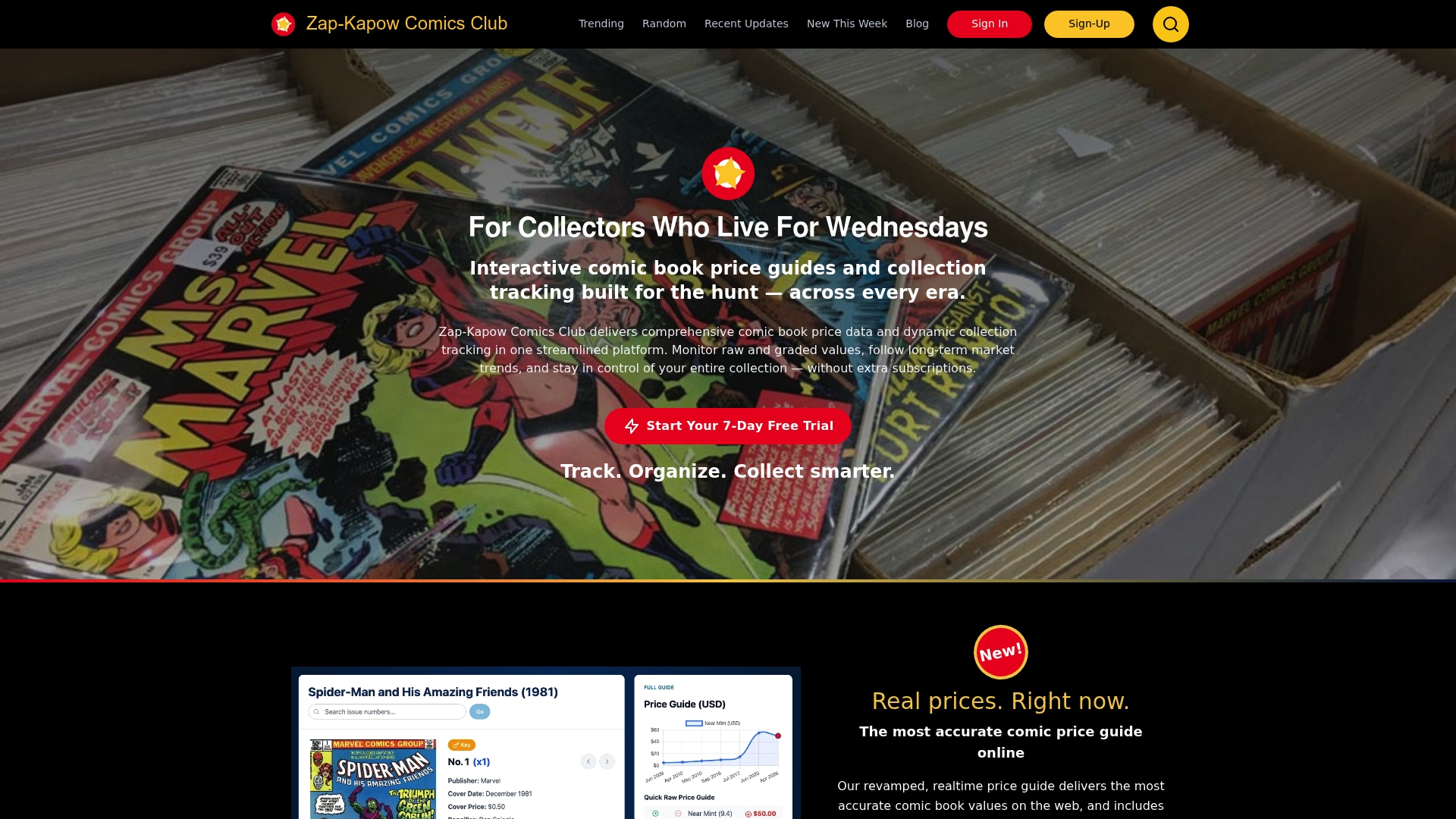
Whether you’re building a lending library for your members or scouting the next great arc for your reading list, the Zap-Kapow Comics Club platform has you covered. Check out the collection management tools, browse price data, and discover what’s hot right now. Your club deserves a kick-ass resource to back it up.
FAQ
What is a comic book club checklist?
A comic book club checklist is a structured list of tasks covering member recruitment, scheduling, book selection, role assignments, and meeting agendas. It keeps clubs organized and ensures every session is engaging and well-prepared.
How many members should a comic book club have?
Four to eight members is the ideal range for a comic book club. Smaller groups generate more focused discussion and make it easier to manage reading deadlines and book distribution.
What roles work best in a comic book club?
The four most effective roles are discussion leader, panel analyzer, theme tracker, and vocabulary or context detective. Assigning distinct roles prevents one-person lectures and keeps all members actively contributing.
How long should a comic book club meeting last?
A 60 to 90 minute session covers arrivals, spoiler-free impressions, guided discussion, and next-session logistics without burning out members.
What are the best comics for book clubs?
Titles with strong thematic depth and distinctive visual storytelling work best. Classics like Watchmen, Maus, and Saga are proven crowd-pleasers, while curated graphic novel lists can help clubs discover newer titles worth discussing.
Recommended
- Best Ways To Organize Your Comic Book Collection - Zap-Kapow Comics Blog
- Guide: How To Grade Your Comic Books - Zap-Kapow Comics Blog
- Comic Book Collecting 101: How to Start Your Collection (10 Essential Tips for New Collectors) - Zap-Kapow Comics Blog
- Comic Collection Insurance Appraisal: A Collector’s Guide - Zap-Kapow Comics Blog