
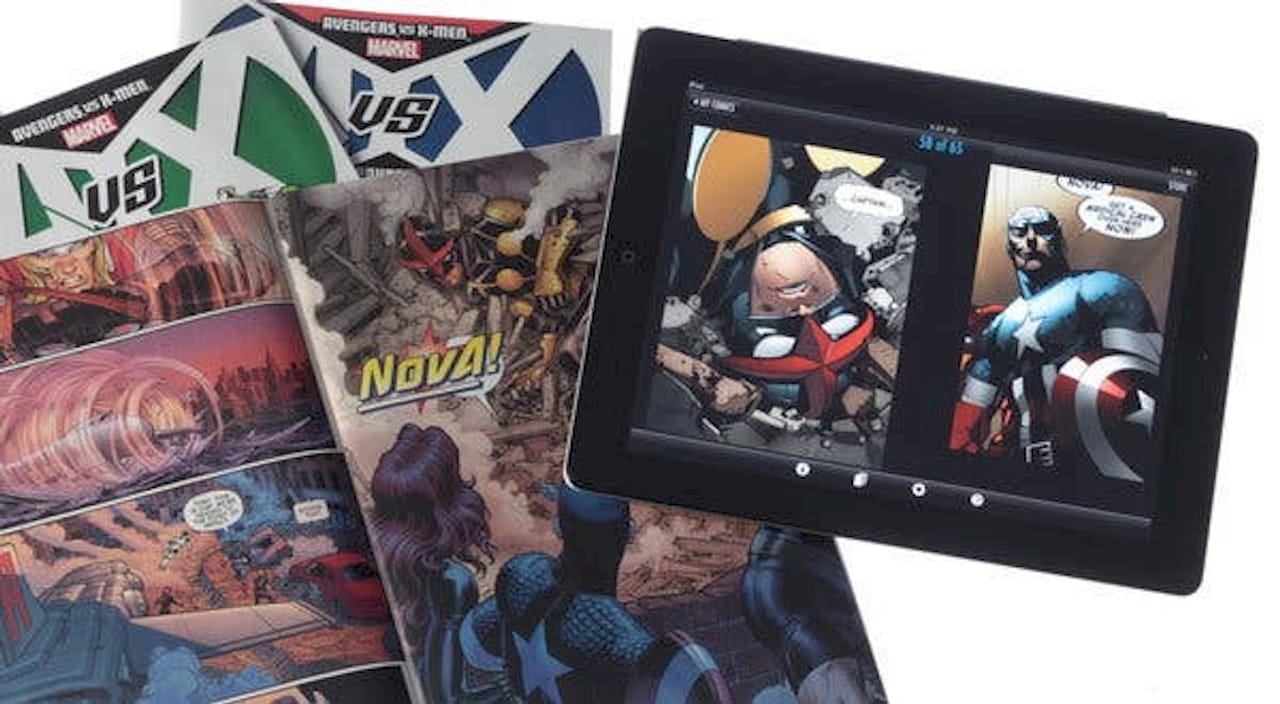
If you think a digital comic is just a scanned print issue slapped into a PDF, you’re in for a surprise. A digital comic is a whole category of sequential art created and distributed electronically, and it covers everything from Marvel Unlimited’s massive library to interactive stories with branching choices and sound effects. The format has exploded in the last decade, and understanding what it actually is, how it works, and how it differs from print and webcomics will completely change how you think about reading and collecting comics.
Table of Contents
Key takeaways
| Point | Details |
|---|---|
| Digital comic definition | A digital comic is sequential art published and read electronically, not just a scanned print copy. |
| Preferred file formats | CBR and CBZ are the archival standards for digital comics, preserving image quality better than PDFs. |
| Digital vs. print | Digital comics offer portability and interactivity that print physically cannot match. |
| Modern innovations | Platforms now offer AR features, limited edition collectibles, animations, and AI-assisted creation tools. |
| Access and ownership | DRM-free comics protect your library even if a platform shuts down or changes its licensing terms. |
What is a digital comic, exactly?
A digital comic is any comic book or sequential art story that is created, distributed, and read in electronic form. That sounds simple, but the digital comic definition covers a surprisingly wide range of formats and experiences. We’re talking about everything from classic superhero issues you read on a tablet to original webcomics published panel by panel on a creator’s website.
The key characteristics that define a digital comic are:
-
Sequential art structure. Pages or panels tell a story in order, just like print comics.
-
Electronic distribution. The content lives on a server, app, or device rather than a physical shelf.
-
Dedicated file formats. The most common are CBR and CBZ. CBR uses RAR archives; CBZ uses ZIP archives containing sequential image files, and both preserve page order and image quality far better than a generic PDF.
-
Platform or app consumption. You read digital comics through dedicated readers like Comixology, web browsers, or publisher apps.
PDFs are technically possible, but they are not the preferred format among serious readers or collectors. CBR and CBZ became the archival standard because they were purpose-built for comics, not repurposed from document workflows.
Pro Tip: If you are downloading digital comics to build a personal library, always look for CBZ files. They are easier to open, edit, and archive than CBR files because ZIP is a more universally supported compression format.
Digital comics also differ from simple scans. A properly produced digital comic is optimized for screen display, with colors calibrated for RGB screens rather than CMYK print inks. Modern OLED displays actually render color and contrast in ways that rival or exceed physical print sharpness. That is not a knock on print. It is just a genuinely different visual experience.
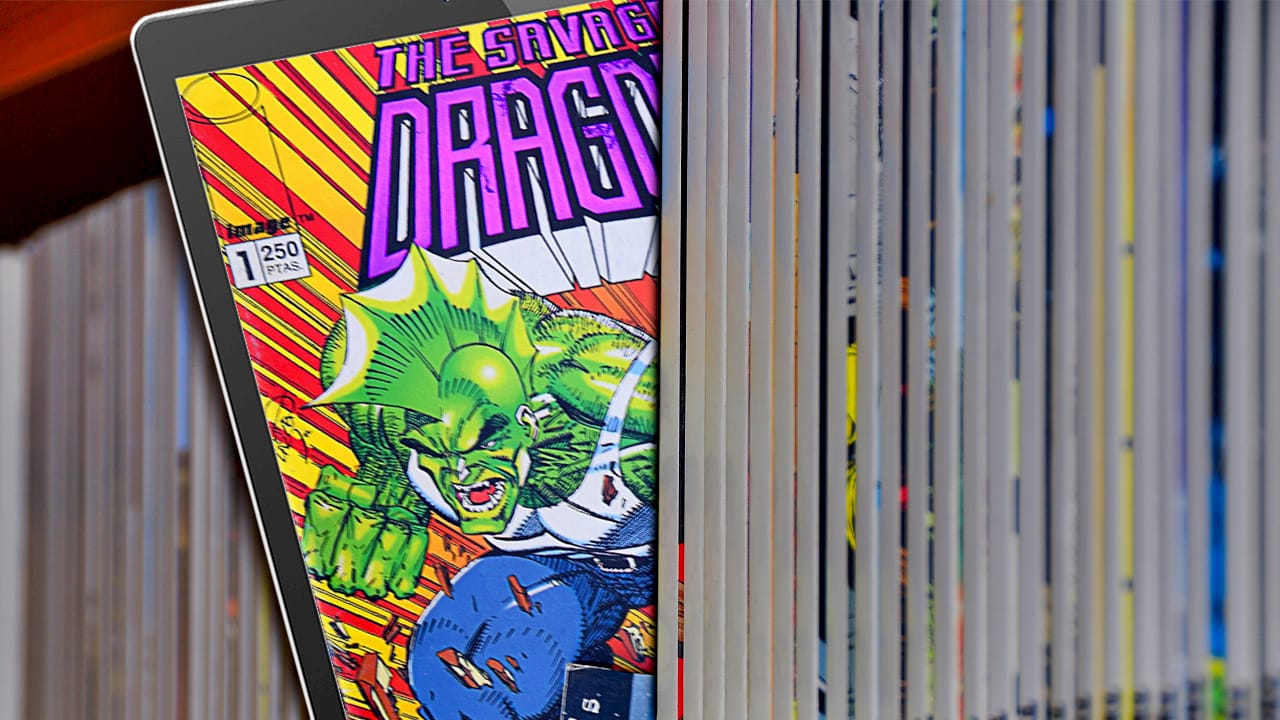
How digital comics evolved over time
The history of digital comics is shorter than you might expect, but it moved fast. Here is how the format grew from a niche experiment into a global medium:
-
Early readers and formats (late 1990s to early 2000s). The first real digital comic readers emerged from fan communities. CDisplay, released in 1998, was the original CBR reader and set the template for how sequential image files would be organized and displayed. Fans were scanning print comics and sharing them online, which was legally murky but technically foundational.
-
Publisher adoption (mid-2000s). Marvel and DC began experimenting with digital distribution. Marvel launched a digital comics subscription service in 2007, which eventually became Marvel Unlimited. This was a turning point because it brought legitimate, publisher-sanctioned digital comics to a mass audience.
-
The smartphone and tablet era (2010s). The iPad launch in 2010 was genuinely transformative for digital comics. Suddenly you had a large, high-resolution screen that felt natural for reading comics. Comixology launched that same year and became the dominant storefront. Digital comics platforms like Marvel Unlimited and Webtoons expanded the scope and accessibility of the medium dramatically.
-
Display technology improvements. High pixel density OLED screens made digital reading a primary experience rather than a compromise. Colors popped. Text was crisp. The “We prefer print” argument became harder to make on purely visual grounds.
-
Community and culture shift. Online communities reshaped comics culture beyond physical retail. Fans began sharing, debating, and promoting comics through social media and dedicated forums, creating a global conversation that no local comic shop could replicate.
-
The collectible era (2020s). Platforms like VeVe and Neon Ichiban introduced limited edition digital collectibles, AR features, and signed editions. Digital comics stopped being just a reading format and became a collecting category in their own right.
Digital comics vs. print comics vs. webcomics
This is where a lot of people get confused. Digital comics, print comics, and webcomics are related but genuinely distinct things. Here is how they break down:
| Feature | Print comics | Digital comics | Webcomics |
|---|---|---|---|
| Format | Physical pages | CBR, CBZ, app-based | Browser-based, infinite scroll |
| Distribution | Comic shops, subscriptions | Apps, platforms, downloads | Free websites, Patreon |
| Creator control | Publisher-dependent | Publisher or self-published | Full creator control |
| Portability | Limited | Carry thousands in your pocket | Accessible anywhere with internet |
| Interactivity | None | Optional (animations, sound) | Rare but possible |
| Collectibility | High (graded copies, variants) | Growing (limited editions, AR) | Generally low |
| Production cost | High | Lower | Very low |
The big distinction between digital comics and webcomics is format and intent. A webcomic is typically designed for infinite vertical scroll, released on a schedule, and published directly by the creator. Think Webtoons. A digital comic is usually formatted to match print page dimensions, published by a studio or publisher, and sold or subscribed to through a platform.
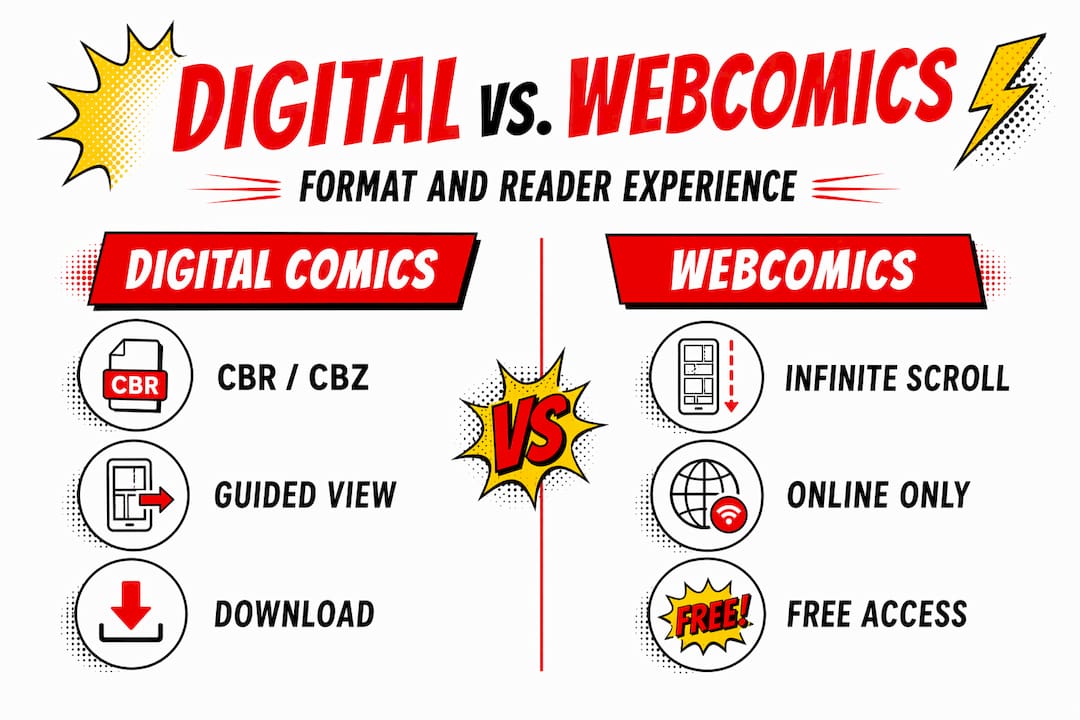
Digital comics complement rather than replace print, and the same is true for webcomics. Many readers use all three formats for different purposes. Print for the tactile experience and collectibility. Digital for convenience and back-issue access. Webcomics for discovering new independent creators.
Pro Tip: If you are new to digital comics and unsure where to start, try Marvel Unlimited for superhero deep dives or Webtoons for discovering independent creators. Both have free tiers that let you explore without committing.
Innovations changing digital comics right now
This is where things get genuinely exciting. Digital comics are not just catching up to print. They are doing things print physically cannot do.
-
Interactive storytelling. Interactive digital comics incorporate animation, sound, branching storylines, and user input to create active storytelling experiences. These are not just comics with a few GIFs. Creators have to learn UX design principles alongside traditional comic art skills to pull them off well.
-
Collectible digital editions. VeVe’s platform offers same-day digital releases, AR showrooms, and limited edition drops with official licensing. Neon Ichiban goes further, with over 30,000 titles and advanced collectible features including signed editions and print pre-order rewards. These platforms are creating a new model of digital comic collecting that has real scarcity and real community.
-
AI-assisted creation. Tools like Adobe Firefly now let people generate comic panels with AI prompts without traditional drawing skills. This has lowered the barrier to entry for new creators significantly.
-
DRM-free ownership. This one matters a lot for collectors. DRM-free comics mean you keep your library even if the platform shuts down or changes its terms. If you are building a serious digital collection, DRM-free files are the equivalent of owning a physical copy rather than renting access.
“The future of comics is not digital versus print. It is digital and print, each doing what it does best.” This framing captures exactly where the medium is heading in 2026.
The interactive comics space in particular is still young. Combining parallax scrolling, animations, sound design, and user choice with sequential art is genuinely hard to do well. But the creators who crack it are building something that has no print equivalent.
How to access, enjoy, and create digital comics
Ready to actually get into digital comics? Here is how to do it without overthinking it:
-
Pick a platform that fits your interest. Marvel Unlimited covers decades of superhero content for a flat monthly fee. Webtoons is free and great for independent and manga-style content. Comixology (now integrated with Amazon) offers single-issue purchases across publishers. For collectibles, VeVe and Neon Ichiban are worth exploring.
-
Get a good reading app. On desktop, apps like YACReader or CDisplayEx handle CBR and CBZ files well. On mobile, the publisher apps (Marvel, DC Universe Infinite) are optimized for their own content. Tablet reading is genuinely great on any modern iPad or Android tablet with a high-resolution screen.
-
Think about ownership from day one. If you want to build a library you actually own, prioritize DRM-free digital comics. Services like Humble Bundle occasionally offer DRM-free comic bundles at steep discounts.
-
Try creating your own. If you have ever wanted to make a comic, 2026 is the easiest time in history to start. Adobe Firefly, Pixton, and similar tools let you build panels and layouts with AI assistance. You do not need to draw. You need a story and a willingness to experiment.
-
Manage your collection properly. Whether you are tracking digital purchases or mixing digital with physical, using a dedicated tool beats a spreadsheet. Check out comic collecting apps to find the right fit for your setup.
Pro Tip: Carrying your entire library in your pocket without storage or damage worries is one of the underrated benefits of going digital. If you travel or commute, this alone makes digital worth it.
Our take on digital comics as a real artform
We’ve spent a lot of time with both print and digital comics, and here is what we actually think: the people who dismiss digital as a lesser format are usually the people who haven’t tried it seriously.
What changed our mind was interactive comics. When we first saw a comic with parallax scrolling and ambient sound, we realized this was not a substitute for print. It was a different thing entirely. Print comics are objects. Digital comics are experiences. Both are valid. Neither replaces the other.
We also think the collectible digital space is more interesting than most print collectors want to admit. Limited edition digital drops with AR features and genuine scarcity are creating collecting culture online in ways that feel familiar and new at the same time. The 10 collecting trends to watch in 2026 include digital collectibles prominently, and that is not a fad.
Our advice for anyone just getting into digital comics: start with what you already love in print. If you are a Marvel fan, Marvel Unlimited will blow your mind with its back-catalog depth. If you want to discover new voices, Webtoons is where independent creators are doing genuinely kick-ass work right now.
And if you collect, track everything. Digital or physical, knowing what you have and what it is worth is half the game.
Track your comics collection with Zap-Kapow Comics Club
Whether you are going all-in on digital, sticking with print, or mixing both, keeping track of your collection is where Zap-Kapow Comics Club comes in. Zap-Kapow Comics Club gives you real price data on raw and graded comics, long-term market trend tracking, and a collection management system that does not require a dozen different subscriptions to function.
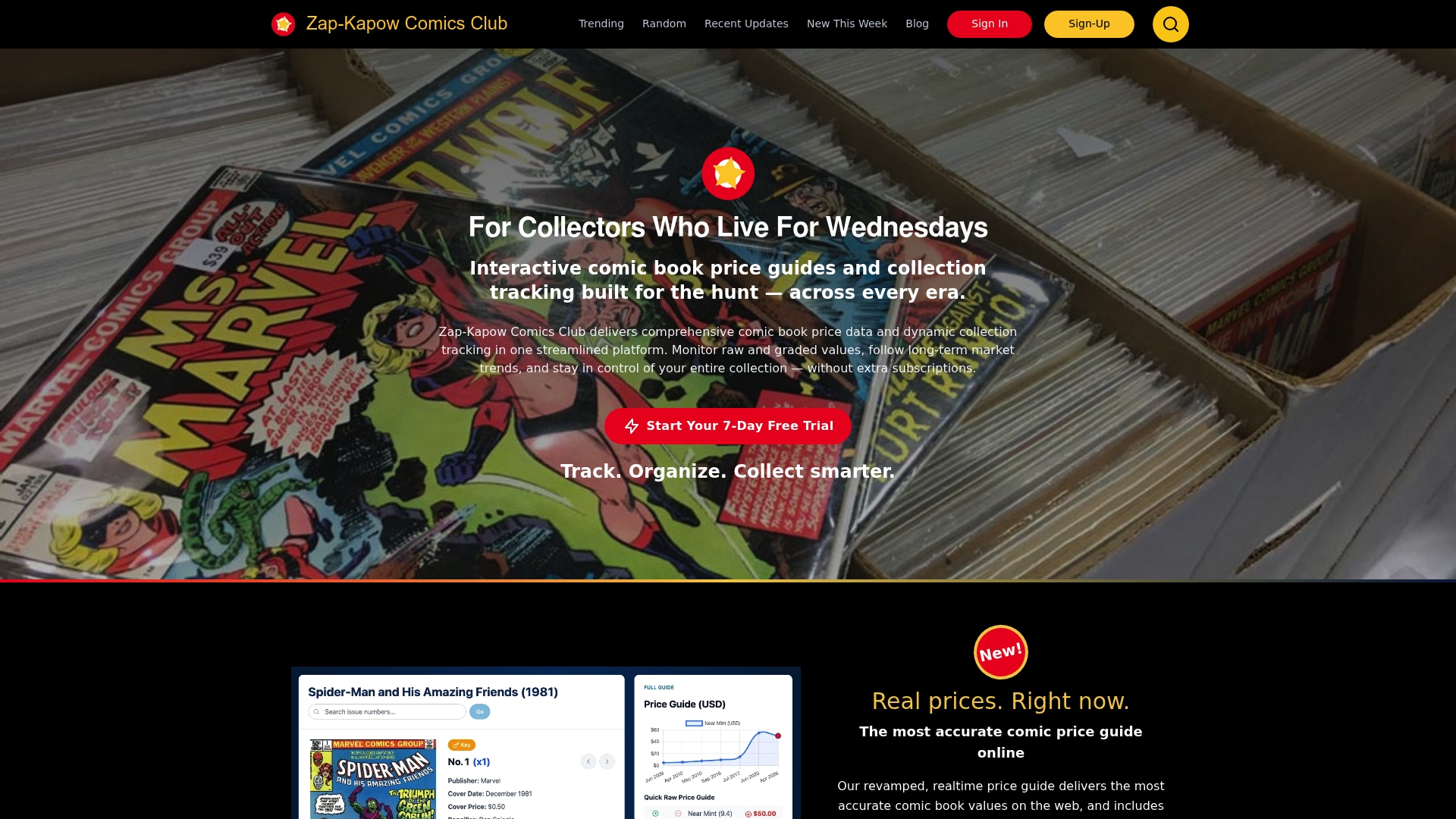
Curious what your favorite titles are worth right now? Start with the Zap-Kapow Comics Club price guide to see current market values across thousands of issues. If you want to see what is hot in the market right now, the trending comics tracker shows you exactly where collector interest is moving. Digital or print, Zap-Kapow Comics Club has the data to help you collect smarter.
FAQ
What is a digital comic in simple terms?
A digital comic is a comic book or sequential art story that you read on a screen instead of paper. It is distributed electronically through apps, platforms, or downloadable files rather than printed and sold in stores.
What file formats do digital comics use?
The standard formats are CBR and CBZ. CBR uses RAR compression and CBZ uses ZIP compression, both containing sequential image files organized to preserve page order and image quality.
How are digital comics different from webcomics?
Digital comics are typically formatted like print comics and sold or subscribed to through platforms. Webcomics are usually published directly by creators on websites, often in vertical scroll format, and are frequently free to read.
Are digital comics worth collecting?
Yes, especially with the rise of limited edition digital collectibles on platforms like VeVe and Neon Ichiban, which offer AR features, signed editions, and genuine scarcity that give digital comics real collector value.
How do we start reading digital comics?
Pick a platform like Marvel Unlimited, Webtoons, or Comixology based on your interests, download their app, and start exploring. Most platforms offer free trials or free content tiers so you can test before committing.