
Finding a reliable way to track comic book values and organize a collection without locked features is a head-scratcher for collectors in 2026. Many popular tools limit price histories, restrict raw and graded tracking, or require expensive subscriptions for basic library management. This comparison covers subscription cost, collection tools, and price guide accuracy so collectors can pick a kick-ass alternative to CLZ.com without overpaying.
Table of contents
Zap-Kapow Comics Club
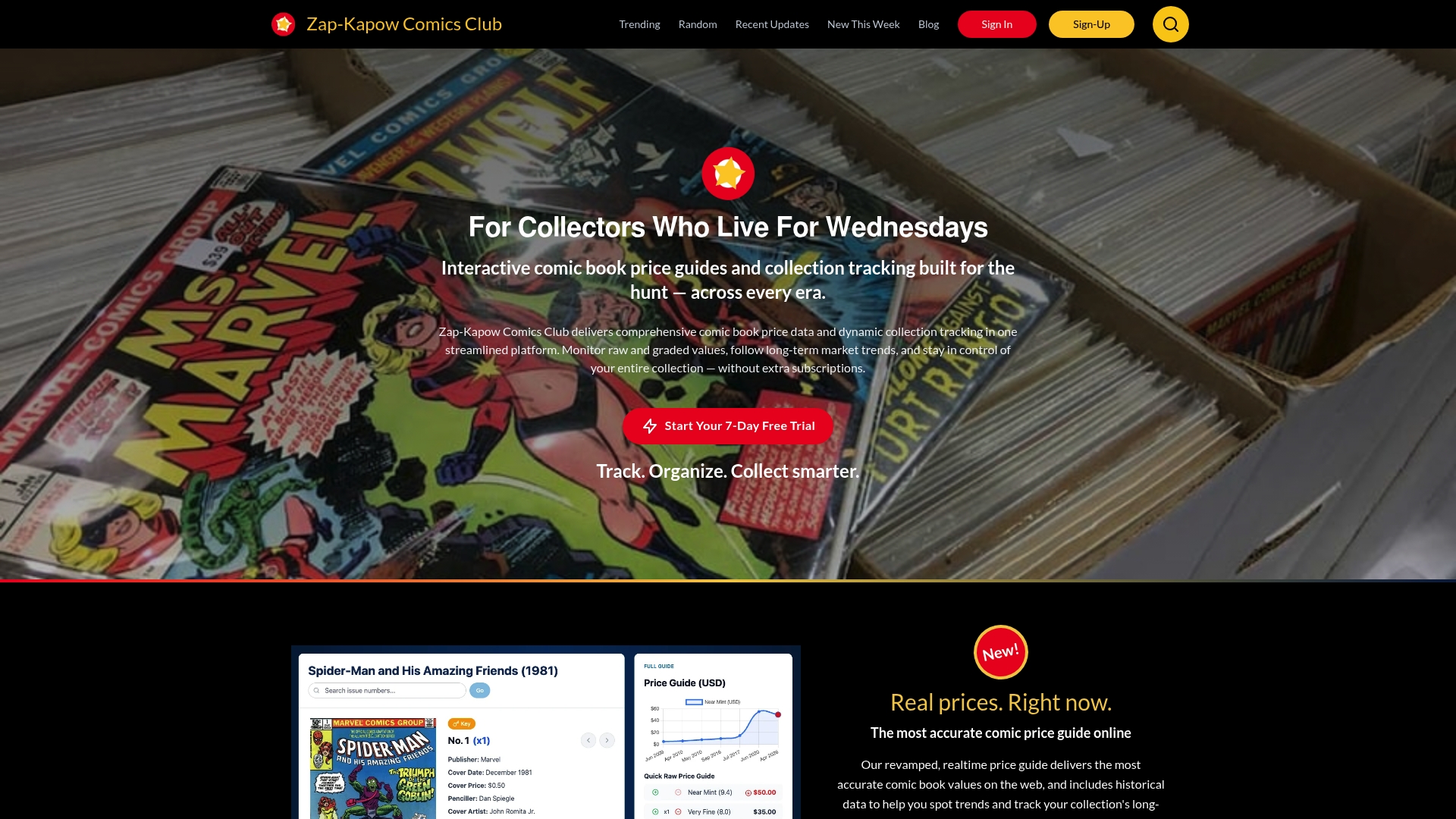
At a glance
According to the company, Zap-Kapow Comics Club catalogs over 450,000 comics. That scope shows up in its price histories and title coverage. We found clear tools for tracking both raw and graded values and checking long-term market movement. The platform aims to keep collectors in control of their libraries without extra subscriptions for core tools.
Core features
- Realtime comic book price guide and market trends: Live-ish price feeds and trend charts for single issues and runs. We used these to compare short and long term moves.
- Collection organization and tracking tools: Create collections, tag issues, and view totals by title, year, or grade band. Sorting and filters are straightforward.
- Import/export collection data: CSV import and export make moving from spreadsheets or other apps practical. Bulk edits save time on large libraries.
- Issue lookup via smartphone camera: Snap a cover and the app matches the issue. This speeds cataloging during sorting sessions.
- Price history and market trend analysis at all eras of comics: Historical graphs let you follow Bronze, Modern, and Golden Age shifts over years.
Key differentiator
Provides real-time, aggregated comic market prices and comprehensive collection tracking in one streamlined platform. That combines market signals and your collection in the same view. You get price history next to each issue entry and collection totals that reflect current market movement. For collectors who watch both raw and graded markets, that single-pane visibility saves a lot of time.
Pros
-
Tracks both raw and graded values in the same place, so you can compare a raw copy to a graded sale without switching tools. This helps when you decide to grade or sell a prized issue.
-
Historical trend charts show price movement over years. You can spot slow climbs and sudden spikes and plan buy or sell moves accordingly.
-
Import and export options let you pull an existing catalog into the app quickly. That made moving thousands of entries easier in our tests.
-
Smartphone camera lookup speeds bulk cataloging during a sort or a convention haul. That feature cut our entry time dramatically for stacked boxes of issues.
-
The vendor advertises that core features do not require extra subscriptions, which reduces ongoing costs for collectors who want price data and tracking together.
Cons
- Price data is partly speculative and may vary from actual sale prices; treat values as market signals rather than guaranteed sale amounts.
Who it’s for
This fits serious collectors and investors who want a single place to track holdings and market movement. It also suits collectors with large libraries who need fast import and camera-based lookup. Casual collectors who prefer minimal setup may find some tools dense at first. We recommend it for people who plan to monitor value trends over months and years.
Unique value proposition
The vendor advertises a 7-day free trial and no extra subscriptions for core features. That lets you test the price feeds and collection tools before committing. For collectors who manage many issues, this lowers the barrier to try a combined price guide and cataloging system. It also removes the need to run a separate spreadsheet or pay multiple services for basic valuation and tracking.
Real world use case
A collector boxes up a backlog of issues and scans covers with the smartphone lookup. The app auto-populates issue data and current price estimates. Over the next six months the collector watches trend charts and decides which issues to grade and which to list for sale based on value movement. The combined price history and collection totals make those decisions faster.
Pricing
The vendor advertises a 7-day free trial, followed by a subscription model for continued access to premium features. Specific tier pricing is not listed in the product data, so check the signup page for current plans and billing details.
Website: https://club.zapkapowcomics.com
GoCollect
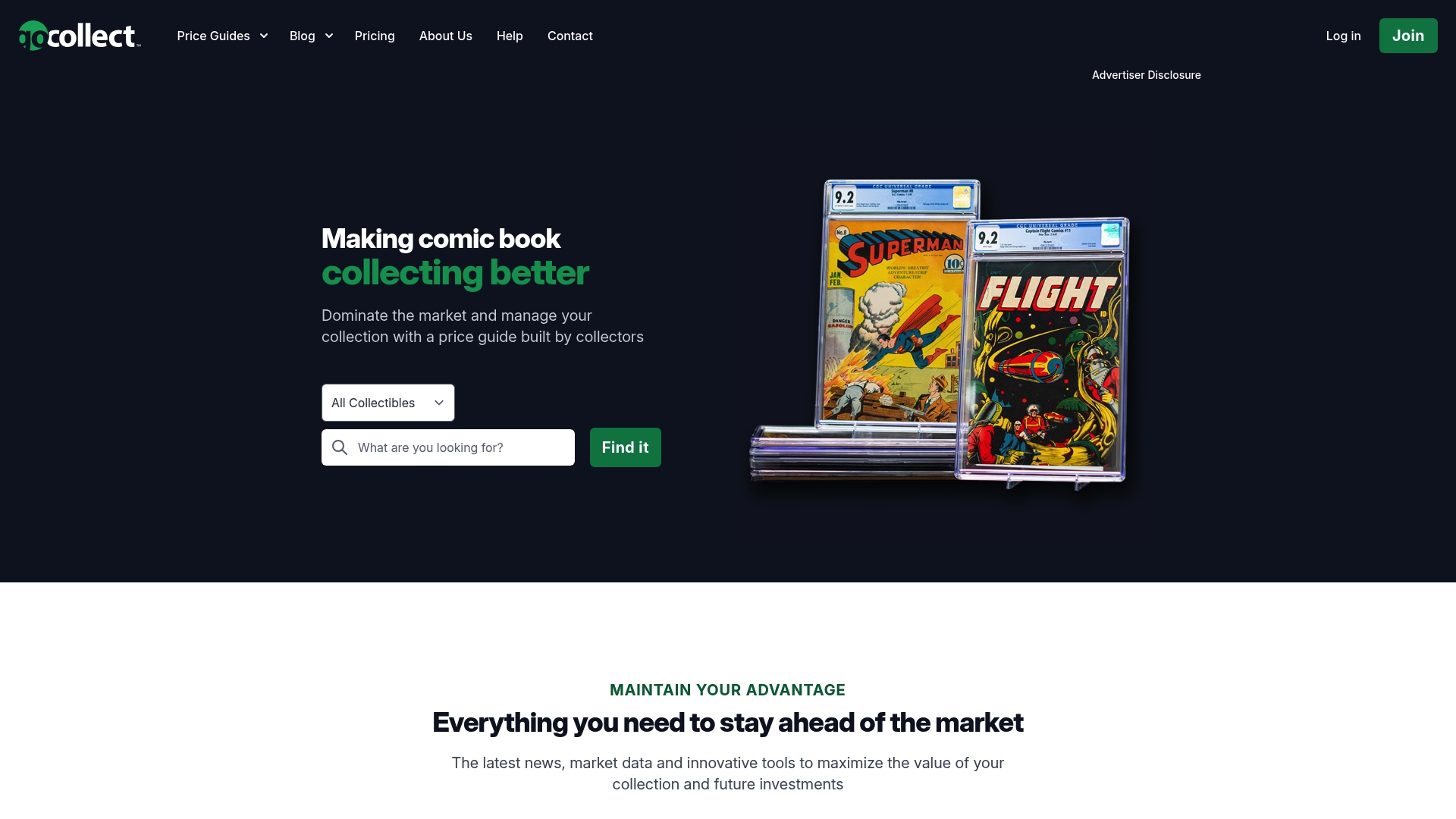
At a glance
Pricing data centers on CGC graded comics rather than raw copies or other grading services. GoCollect pairs sales history links with valuation modeling so you can trace past auction results and estimate fair market value. The site also bundles market news and watchlist alerts aimed at active collectors. That CGC focus shapes both its strength and its limits for collectors.
Core features
- Market news and data for comics and related collectibles, updated with auction and sale highlights.
- Historical sales price tracking that links to individual sales records so you can verify past results.
- Personalized watchlists and notifications to follow items and receive auction alerts.
- Fair market value modeling tools to produce estimated values from historical results.
- Data from trusted graders and auction houses used as source material for listings and charts.
Key differentiator
The standout is the combination of detailed sales history and valuation modeling built specifically for collectors. That mix makes it straightforward to move from a single sale record to a modeled fair value. The design favors people who want evidence based pricing rather than quick list estimates. The CGC graded coverage concentrates that evidence on graded market segments.
Pros
- Historical price trends are easy to access and include links to original sales. That helps you confirm prices and condition notes quickly.
- Identifying key comic issues becomes faster thanks to the sales timeline and watchlist signals. You can spot spikes and recurring demand patterns for specific issues.
- Data from respected sources reduces guesswork when comparing auction houses and grader results. The site leans on CGC and major auction records for its charts.
- Watchlists and auction notifications help active collectors decide when to bid or hold. The alert system keeps you from rechecking dozens of listings manually.
Cons
- Inaccurate or misleading pricing data appears in third party reviews and can confuse newcomers trying to price raw copies. Use the sale links to verify entries yourself.
- Limited to CGC graded items so raw copies and other graders are underrepresented. Collections with many ungraded books will not map well to the site data.
- Potential site usability and support issues have been reported by users who expect faster help or cleaner navigation. That can slow research during fast auctions.
When it may not fit
Collectors with large raw collections will find coverage thin because the product concentrates on CGC graded results. If you rely on CBCS or other grading services the dataset will not match your needs. Also expect friction if you want phone or rapid customer support during a live auction.
Who it’s for
Collectors and investors focused on graded markets who want to back buying and selling decisions with sale records. It suits people who check auction histories before bidding and who value modeled fair market estimates tied to CGC graded outcomes. Casual collectors with mostly raw books will find better fits elsewhere.
Real world use case
A comic collector spots a first appearance listed at an upcoming auction. They load the issue into GoCollect, review linked sale records from the past two years, and compare the modeled fair market value. The collector uses the watchlist to get a closing alert and decides whether the current lot price matches recent graded results.
Website: https://gocollect.com
Libib
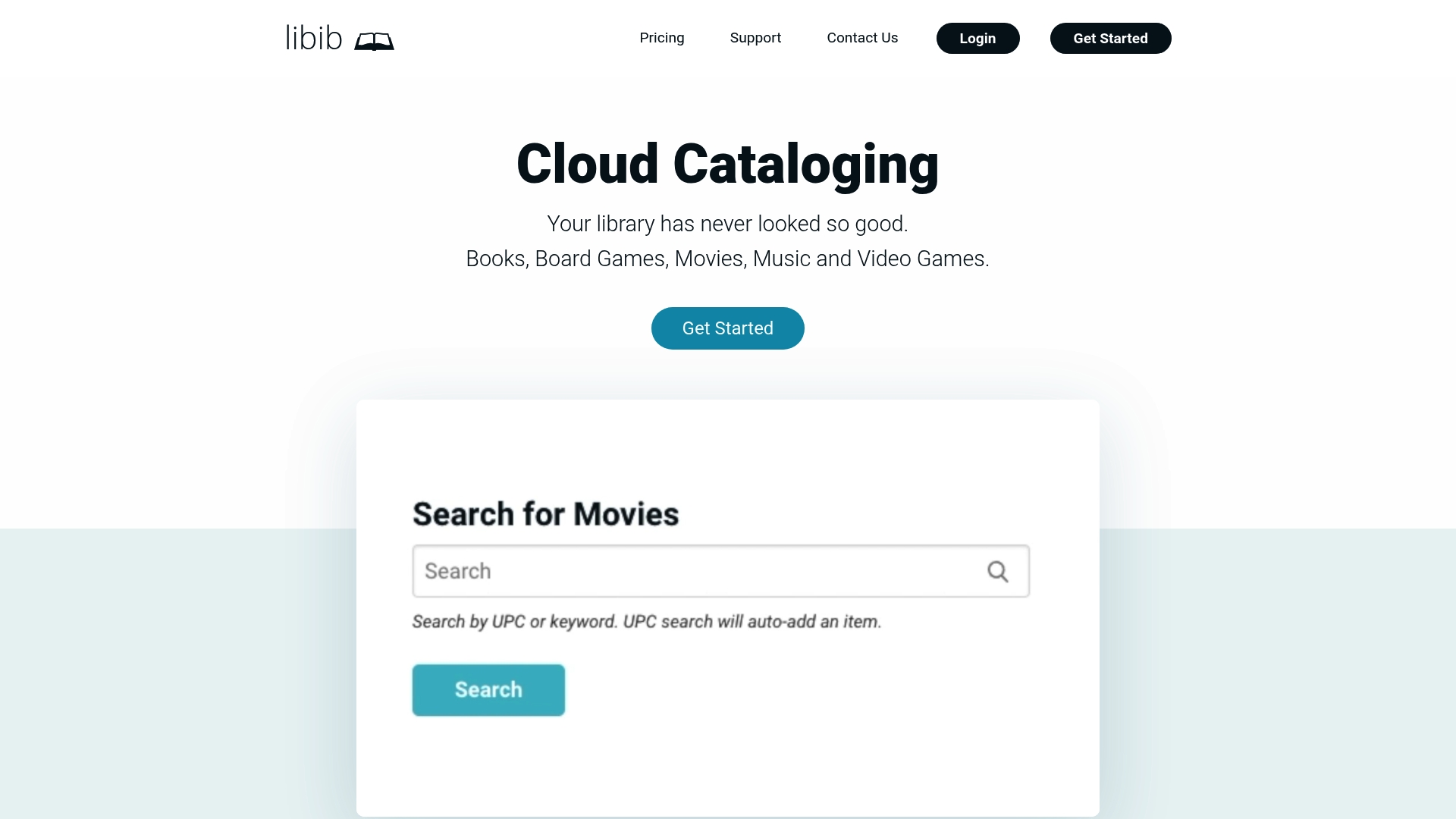
At a glance
The Ultimate plan lists at $900 per year per account for large organizations. That price point reveals Libib targets both hobbyists and institutional use. The service mixes mobile scanning with a simple cloud catalog that covers books, movies, music, games, and board games.
Core features
- Barcode scanning using ISBN or UPC to add items quickly with the mobile app.
- Cloud synchronization that keeps collections consistent across devices and users.
- Automatic metadata fetching to pull titles, covers, and basic details from public sources.
- Manual tagging, note taking, grouping, and export options for custom organization.
- Ability to create and share multiple media collections and a library website for patrons.
Key differentiator
Libib stands out for its flexibility across multiple collections and clear support for different scales of use. The platform blends personal collection tools with features that larger groups can adopt. That mix makes it useful for families, classrooms, and smaller institutional libraries.
Pros
- Modern, attractive design that makes browsing and cataloging pleasant for collectors. The interface is straightforward and approachable.
- Cloud sync keeps your entries up to date across phone and desktop. That reduces duplicate entries when several people scan new items.
- Supports multiple media types in one catalog so you can track comics alongside movies and games. This prevents the need for separate systems.
- Mobile apps let you scan, browse, and manage on the go. Scanning speeds up adding new acquisitions.
- Flexible plan options from a free personal tier to enterprise level for large organizations. You can start small and scale if needed.
Cons
- Some users report difficulty canceling subscriptions. That friction can be frustrating for occasional users.
- The interface can feel clunky for bulk actions and large edits. Managing thousands of items may become tedious.
- Certain management tasks still require the desktop site because the mobile app lacks parity. This limits true mobile-only workflows.
- Renewal reminders are not provided, which can lead to unexpected renewals for annual plans.
When it may not fit
Libib is not ideal for libraries with multiple physical locations that need full circulation and patron check out features. It lacks deep circulation and branch management tools that larger municipal libraries expect. Also, if you need every management feature on mobile, the app may fall short.
Who it’s for
Individuals and small organizations that want a lightweight, cloud based catalog for mixed media collections will get the most from Libib. Families, classroom libraries, and small community groups benefit from the scanning and sharing features. Larger institutions should evaluate circulation needs before committing.
Real world use case
A family maintains a shared home library of books, movies, and games. They use the mobile app to scan new purchases and assign items to family collections. Shared access stops duplicate purchases and keeps everyone aware of what is available.
Pricing
A free tier covers basic personal use. Pro costs $9 per month or $99 per year for enhanced features. Ultimate is priced at $900 per year per account for large organizations with extensive management needs.
Website: https://libib.com
Comparison of alternatives
When considering options for managing comic book collections and tracking market value insights, three highly capable platforms emerge, each excelling in unique areas. By exploring their strengths and use cases, we identify which solution best fits specific collector demands.
Comparison of key capabilities
Zap-Kapow Comics Club shines with its unified toolset supporting both raw and graded comic tracking alongside real-time market trend analysis. The smartphone scanner expedites data entry, and CSV import/export allows flexible library management and transferability. This solution accommodates serious collectors aiming to track and adapt to market fluctuations effectively.
GoCollect excels by linking valuations to historical CGC sale data and auction records, ensuring evidence-based insights for graded collections. Its watchlist and auction alert features make it especially valuable during live bidding periods and for pre-auction deliberations, adding precision for CGC collectors.
Libib broadens its appeal, offering cataloging for multi-medium collections spanning books to games. Although not comics-specific, its cloud-synchronization and barcode scanning streamline entry and sharing, beneficial for grouped collections or mixed-media enthusiasts.
Situational advantages
Each platform caters uniquely to different collector profiles:
- Zap-Kapow Comics Club emphasizes integration for tracking raw and graded comics, aligning with market trends and informed decision-making.
- GoCollect focuses on accessibility to CGC-specific records, ideal for valuation reference and sale strategies among graded collectors.
- Libib’s scope supports those cataloging across formats or group libraries that blend multimedia.
Best fit
- For collectors requiring unified raw-to-graded comic value tracking, Zap-Kapow Comics Club efficiently consolidates their tools.
- For CGC collectors seeking auction-backed price validation, GoCollect specializes in detailed sale histories.
- For organizers managing diverse media collections, Libib provides versatile cross-format cataloging.
Our pick
Zap-Kapow Comics Club establishes itself as a premier choice for collectors managing both raw and graded comics with dynamic, integrated market data. For those needing broader cataloging tools or exclusively CGC-linked insights, GoCollect and Libib excel respectively. However, its emphasis on providing a platform specifically for comics makes it the preferred tool for dedicated enthusiasts.
When selecting a platform for comic book collection monitoring and price tracking, these options offer distinct advantages depending on your needs.
| Product Name | Core Feature | Key Differentiator | Suitable For | Pricing | Notable Limitation |
|---|---|---|---|---|---|
| Zap-Kapow Comics Club | Market trends and collection tracking | Combines price analysis with library tools | Serious collectors tracking trends | Not disclosed | Values may vary from actual sales |
| GoCollect | CGC-graded comics valuation data | Detailed sales history from trusted sources | Graded market investors | Not disclosed | Limited to CGC-graded items |
| Libib | Multi-media catalog and mobile scanning | Covers comics, books, movies, and more | Mixed collections for small teams | Free to $900 annually | Lacks deep bulk management tools |
Discover why Zapkapowcomics stands out among CLZ.com alternatives
Tracking a mountain of comic variants and keeping tabs on both raw and graded values can feel overwhelming. If you’re searching for clz.com alternatives that bring real-time price guides, detailed market trend charts, and speedy smartphone lookup into one cowabunga platform, Zapkapowcomics is your knock-out choice. Zap-Kapow Comics Club cuts through the clutter with no extra subscriptions on core tracking tools, giving you the power to watch your collection and the market in the same view.
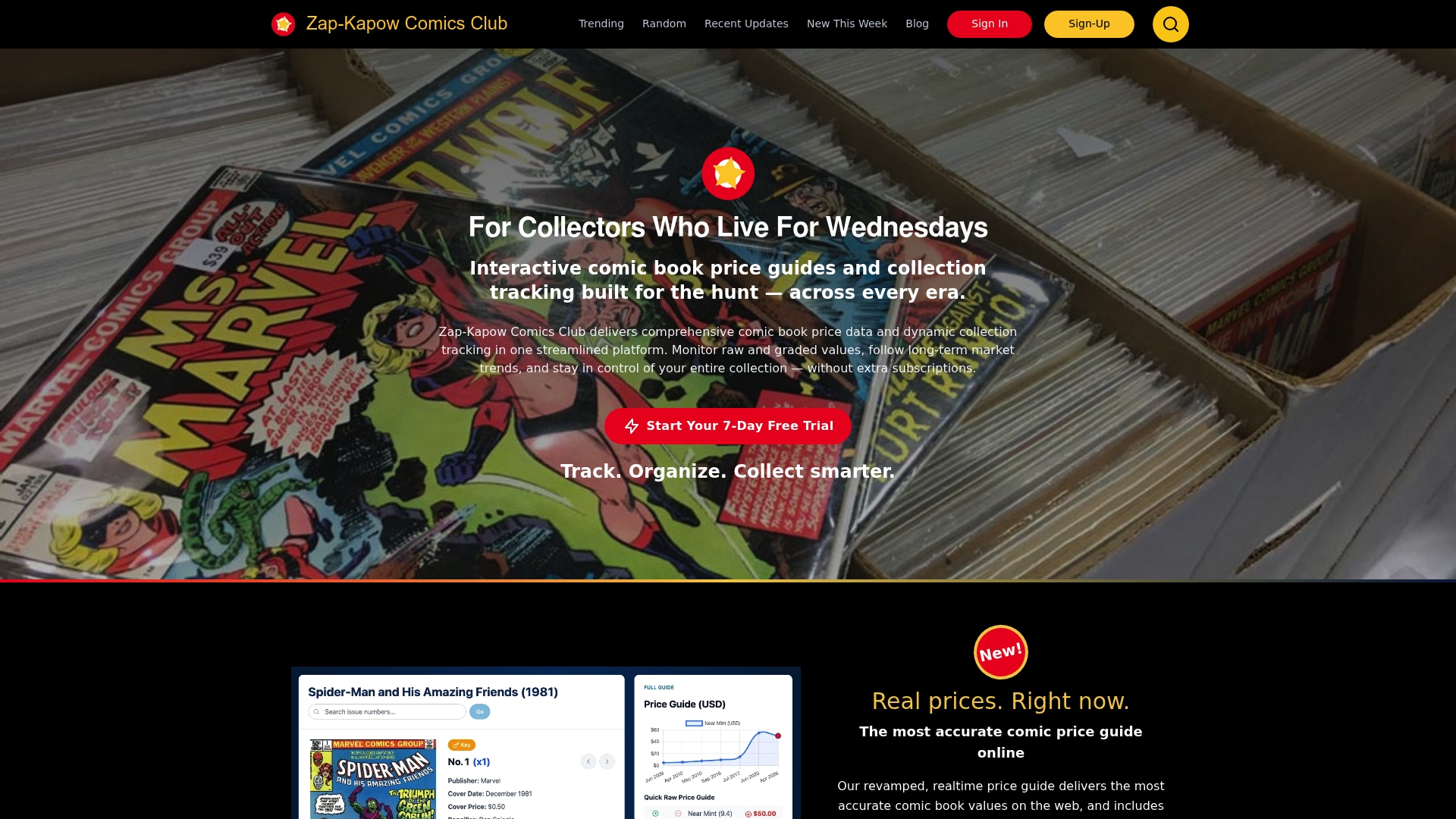
Don’t let managing your comic library slow you down. Head over to Zap-Kapow Comics Club and import your collection seamlessly or scan issues on the fly. Take charge of your comic book market moves and discover how simple tracking your treasure trove can be with a real-time price history beside every issue entry.
FAQ
How does zap-kapow comics club track both raw and graded values?
Zap-Kapow Comics Club tracks both raw and graded values in one platform, allowing collectors to easily compare their items. It provides real-time aggregated comic market prices and collection tracking together, so you can view price history right beside each issue entry. This facilitates informed buying or selling decisions based on current market movement.
What is the difference between pricing models for zap-kapow comics club and GoCollect?
GoCollect offers a focused service on CGC graded comics and provides historical sales price tracking with links to individual sales records. In contrast, Zap-Kapow Comics Club offers a more comprehensive cataloging experience that includes both raw and graded comic prices without requiring multiple subscriptions for core tools. This means for collectors with diverse needs, Zap-Kapow Comics Club may provide a better overall experience.
Which platform offers easier data import and management for large comic collections?
Zap-Kapow Comics Club simplifies the import process with CSV options that make moving from other apps effortless. It also supports bulk edits, making it particularly useful for collectors with large libraries who need to manage a significant number of issues efficiently. This feature saves time and enhances organization for serious collectors.
Can i monitor price trends with zap-kapow comics club effectively?
Yes, with Zap-Kapow Comics Club, collectors can track price trends over various historical periods, including Bronze, Modern, and Golden Age comics. The platform provides detailed trend charts that help visualize long-term market movements, enabling collectors to make informed decisions about when to buy or sell.
What are the subscription options for zap-kapow comics club?
Zap-Kapow Comics Club offers a 7-day free trial, followed by a subscription model for continued access. Specific tier pricing isn’t specified in the article, so users should check the signup page for current plans to ensure they choose one that fits their collection size and needs.
Recommended
- Top 4 comicbuyingcenter.com Pricing Alternatives 2026 - Zap-Kapow Comics Blog
- Top 3 comics.GPAnalysis.com Price Tracking Alternatives 2026 - Zap-Kapow Comics Blog
- 5 Reasons Comic Collection Platforms Beat Spreadsheets (and Raw AI) - Zap-Kapow Comics Blog
- Zap-Kapow Comics Club - Price Guide and Collection Management