Every month, we look for sleepers with two things in common: real, recorded movement and plausible room to run. That means steady percentage gains rather than one-off spikes, patterns across related issues or variants, and creators or concepts that collectors reportedly keep gravitating toward. None of this is guaranteed, of course—but when the data nudges in one direction, it’s worth a closer look.
Heavy Metal (2025) No. 1 (Cover U) — Heavy Metal
Writer: Various | Penciller: Various
Price delta: +400% ($30 → $150; 310 days)
Why it might still be early: Anthology relaunches can be noisy, but this Cover U has separated cleanly from its peers, a hallmark of durable collector preference. The rest of the variant field is moving, just not as aggressively: the Cover Q (Metal) has doubled (+100%, $100 → $200) and the Cover W has also doubled (+100%, $15 → $30). That kind of ladder—strong leader, solid seconds—often precedes another leg up in the top slot if attention keeps concentrating on the debut issue of a revived brand reportedly pushing boutique-format covers.
Watch for: Confirmation that Cover U remains the benchmark. If Q (Metal) or W starts outpacing U on a percentage basis, momentum could rotate. Condition sensitivity is real at the $150 level—tiny defects become price-makers—so track realized prices on high-grade copies versus average ones before committing.
Lost Fantasy (2025) No. 5 (Cover A) — Image Comics
Writer: Curt Pires, Franklin Jonas, Luca Casalanguida | Penciller: Maxi Dall'o
Price delta: +500% ($5 → $30; 165 days)
Why it might still be early: Mid-run heat can be more telling than a debut pop, and No. 5’s standard cover is doing the heavy lifting here. The following issue’s Cover E is also up sharply (+400%, $5 → $25; 125 days), hinting at a run-wide bid rather than a one-issue outlier. According to recent reporting, creator-owned fantasy with stylish visual identities continues to be shopped in other media, and while nothing here requires that catalyst, the dual-issue momentum suggests this arc has found a committed audience.
Watch for: Does the strength persist into subsequent issues, or does it consolidate around No. 5 as the perceived “moment” in the arc? If No. 6 (Cover E) keeps pace or overtakes No. 5, it supports a thesis of broader demand; if No. 5 pulls away, expect collectors to crown it the de facto key of the early run even without a formal first appearance tag.
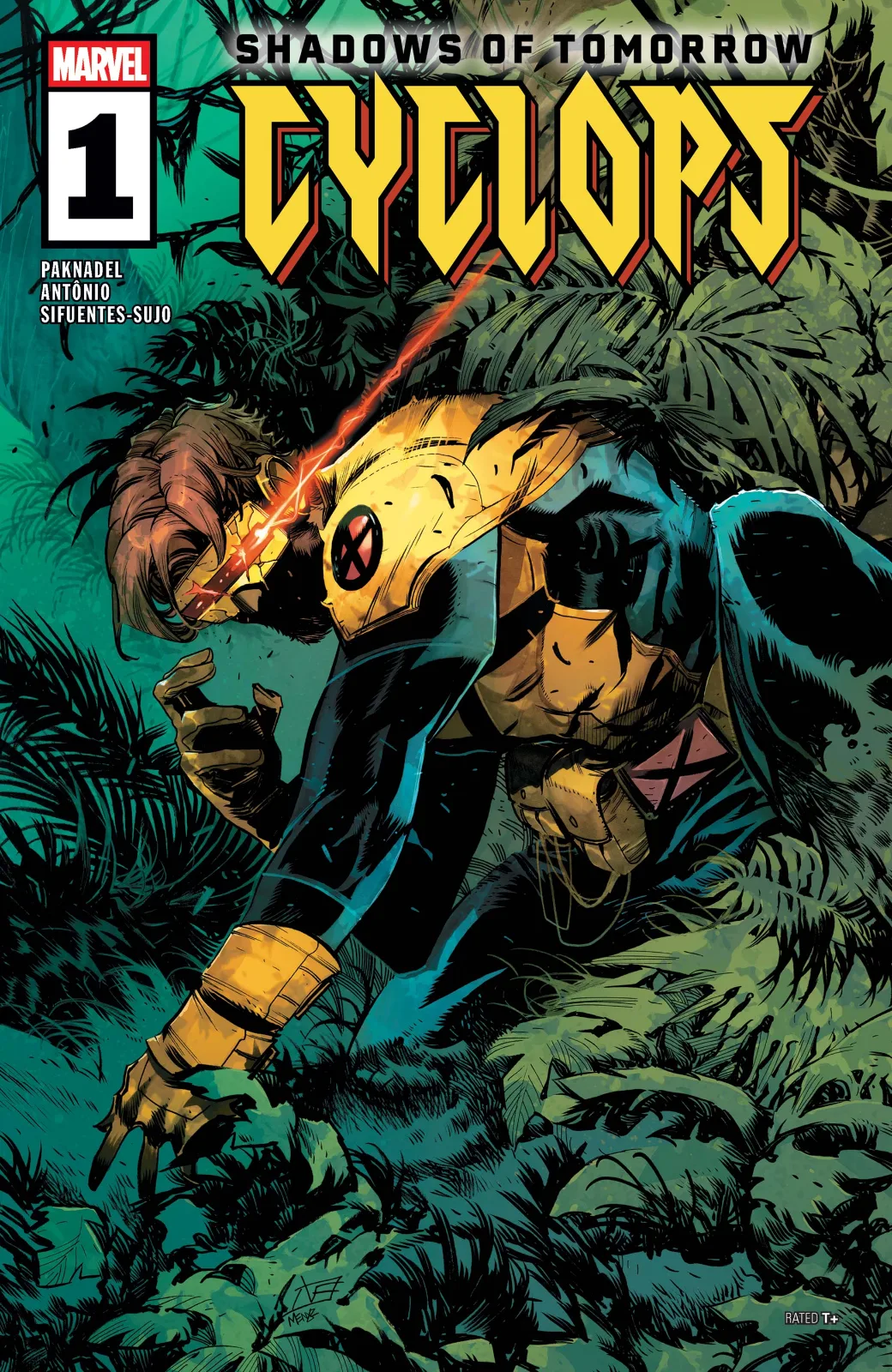
Cyclops (2026) No. 1 — Marvel
Writer: Alex Paknadel | Penciller: Rogê Antônio
Price delta: +300% ($5 → $20; 105 days)
Why it might still be early: A core X-character anchoring a fresh No. 1 tends to draw a wide base of buyers, and this book’s climb from a $5 entry to $20 suggests more than just a Wednesday blip. Reportedly, the X-line is in the midst of ongoing status quo shakeups, and issue ones tied to clearer identities often hold a baseline premium through those cycles. If this series lands, a $20 raw plateau leaves room for further upside without needing blockbuster news.
Watch for: Second prints or subsequent issue momentum. If No. 2 arrives strong—or if later covers pick up traction—it validates sustained readership rather than a debut-only bump. Conversely, any swift retrace back toward mid-teens would argue for a trader’s market; be patient with entries.
Peter Porker, The Spectacular Spider-Ham (1985) No. 1 — Marvel
Writer: Steve Skeates | Penciller: Mark Armstrong
Price delta: +200% ($10 → $30; 104 days)
Why it might still be early: Nostalgia and cross-generational recognition are quietly powerful, and this 1985 debut has both in spades. The absolute price remains approachable compared to modern darlings, yet the triple-up from $10 to $30 shows there’s active capital flowing into the character—reportedly helped along by recent animation-era visibility. If the broader Spider-family continues to pull in casual and seasoned collectors alike, this remains a low-drama way to play that trend.
Watch for: Condition tiers matter on mid-’80s stock—top-end copies can decouple from average raws quickly once attention spikes. Monitor whether higher-grade asks start to stretch beyond the $30 raw trend; that tilt would indicate supply getting thin where it counts.
How To Use This List
Hidden Gems isn’t a shopping cart—it’s a map. These four books are showing verifiable momentum based on recorded changes in asking prices, but momentum can stall. Treat deltas as signals to investigate, not commands to buy. Ask yourself why a book is moving (run-wide interest? a standout cover? a character with renewed mindshare?) and then decide if that thesis still has room before you pay up.
Focus on relative strength. When a run posts back-to-back gainers (Lost Fantasy (2025) Nos. 5–6), that’s more convincing than a single spike in isolation. Cross-check nearby issues and variants to confirm whether demand is broadening or narrowing—leaders that keep leading are usually the safer bet.
Finally, respect risk. Prices can and do retrace, especially after fast advances. Aim for clean copies, avoid chasing after outsized candles, and be comfortable sitting out if the chart’s gotten ahead of itself. The best sleepers reward patience as much as conviction.