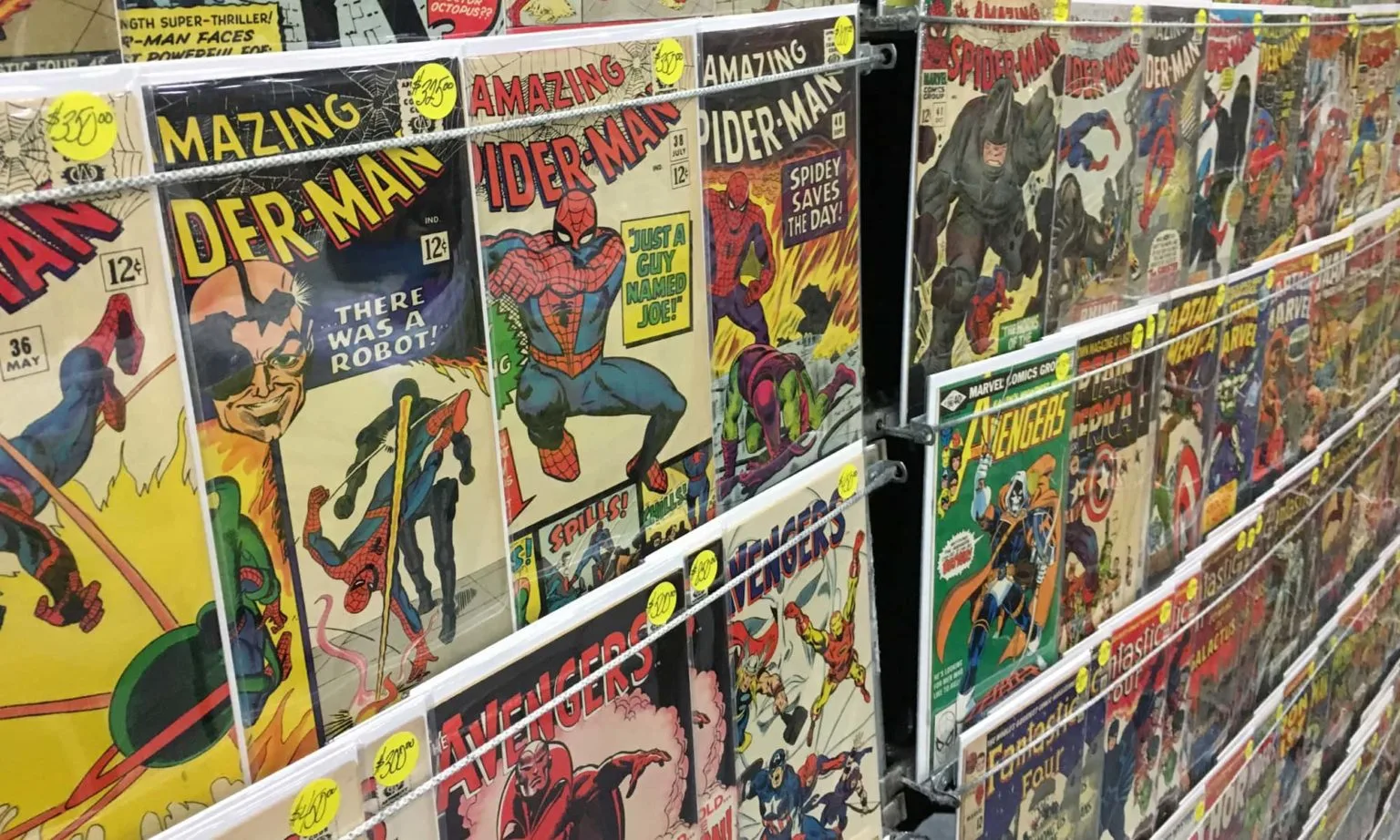
TL;DR – Keep your comics in top condition
- Handle with care: Clean hands, support the spine, turn pages from the middle edge, and avoid stacking weight on covers.
- Use proper bags and boards: Correct-size bags with acid-free boards; mylar for keys and long-term storage.
- Control climate: Aim for roughly 60–70°F and 40–50% relative humidity; avoid attics, garages, and damp basements.
- Block light: Keep comics out of direct sunlight and strong UV; store in dark boxes or use UV-filter sleeves for display.
- Store upright: Short boxes with gentle compression and dividers; do not pack so tight that spines stress.
- Refresh supplies: Replace aging poly bags and worn boards periodically; mylar lasts longer but still inspect yearly.
- Clean safely: Light surface dusting only; skip solvents and adhesives. Consider a pro for pressing or deep cleaning.
- Protect from pests and moisture: Elevate boxes off floors, use desiccants where needed, and keep food and scents away.
- Ship like a pro: Mylar and full-backs, rigid mailers or padded boxes, corner protection, waterproofing, tracking, and insurance.
- Inspect and document: Do periodic checkups, note defects, and track locations so issues are caught early.
But aging isn’t the main reason most comic books loose value over time, it’s all the things that can happen to them during those decades in your garage or basement.
Here are some tips to keep your comic book collection in the best possible shape for future enjoyment and value.
Use Comic Book Bags and Boards
The general rule of thumb when it comes to long-term storage is to use comic book bags and boards. The combination of the two will keep your comic books safe from the dangers of dirt, dust, and future aging.
Stay Cool
When storing your comics, keep them away from any heat or moisture sources. A room temperature and away from windows, vents, and other heat sources is key.
Avoid Unnecessary Handling
This is especially important for those rare, mint condition comics. Don’t pick them up and flip through them. An old comic book can be easily damaged and the oil from your fingers can cause permanent stains.
If you must handle them, make sure to wear clean, cotton gloves. Any paper glove products can still be a source of dirt, dust and tiny fibers that can tarnish the condition of your book.
Keep Your Collection Organized
As your collection grows, it’s important to keep it organized. An organized collection will help to easily spot when something isn’t looking right with your comics.
Protect Them From Direct Sunlight
Sunlight can cause the colors of your comic books to fade, so make sure to store them in a place where they won’t be exposed to sunlight
Get Professional Restoration
Don’t attempt to do it yourself! If you do have books that are in bad condition, consider professional restoration if you want to protect their value. A professional restoration service can be the difference between a sellable book and one that is deemed worthless.
Comic preservation FAQs
What temperature and humidity are best for storage?
Target about 60–70°F with 40–50% relative humidity. Keep conditions stable and avoid rapid swings that cause paper to expand and contract.
Which bags should I use: polyethylene, polypropylene, or mylar?
Poly bags are budget friendly for readers, polypropylene is clearer, and mylar offers the best long-term stability for keys and high-value books.
Do boards matter?
Yes. Use acid-free backing boards that fit the bag size. Thicker full-backs provide added rigidity for expensive or fragile issues.
How often should I rebag and reboard?
Inspect annually. Replace poly bags and worn boards periodically or whenever you see waves, wrinkles, odors, or discoloration. Mylar needs less frequent changes.
Should comics be stored upright or flat?
Upright is preferred in short boxes with gentle pressure and dividers. Avoid overpacking and do not lean books at sharp angles.
Are short boxes better than long boxes?
Short boxes are easier to lift and reduce crush and bend risk when moving. Use long boxes only if shelves fully support their length.
How do I protect against light damage?
Keep comics out of direct sun and strong indoor lighting. For displays, use UV-filter sleeves or glass and rotate books to limit exposure time.
Should I use desiccants or a dehumidifier?
Yes when needed. Place silica gel packets near but not touching books and use a room dehumidifier to keep RH in range. Check and refresh packets regularly.
Can I clean a comic at home?
Only light dusting and eraser crumb cleaning on non-inked areas. Avoid liquids and solvents. For pressing or deeper work, consider a professional.
What is the safest way to ship a valuable comic?
Bag and board in mylar, add a second board, sandwich between rigid cardboard, use a rigid mailer or padded box with corner guards, waterproof wrap, tracking, and insurance.